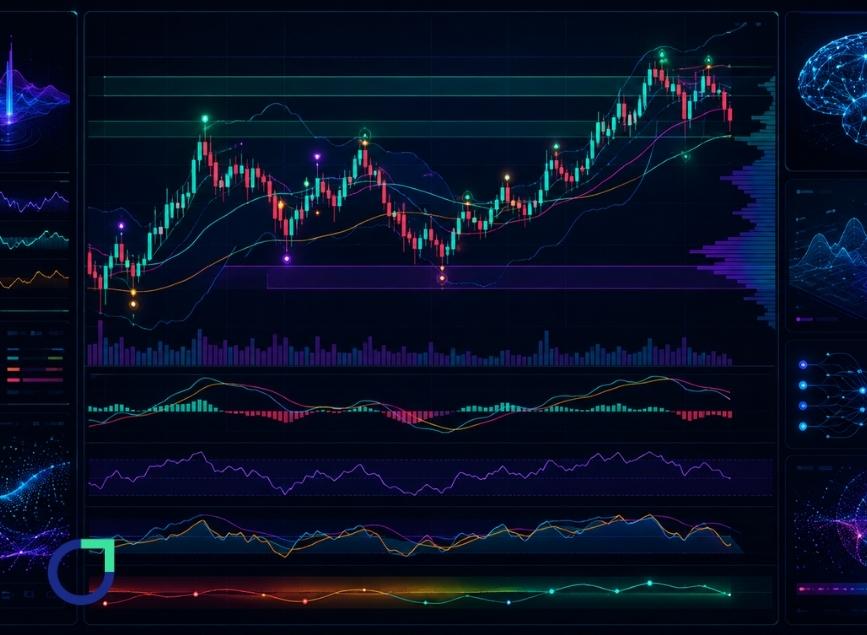
Best AI Trading Indicators for TradingView
Trading methods have changed over the years: traders used to rely on manually reviewing charts and some fundamentals, but technology has improved and now helps them understand and analyse the markets faster and organize their information more efficiently.
One of the latest trends in trading technology is Artificial Intelligence. Many traders use AI to help with analysis, identify potentially good trades, and make better decisions through trading platforms like TradingView.
With the growth of AI in trading, brokers are also adapting by providing traders with better tools and resources to support modern trading strategies. Brokers like Otet provide access to trading environments where traders can apply different strategies, analyze market movements, and use technology alongside their own knowledge.
While AI tools can make market analysis easier, traders still need to understand the risks involved and build their decisions around proper research and responsible trading practices.
What Are AI Trading Indicators?
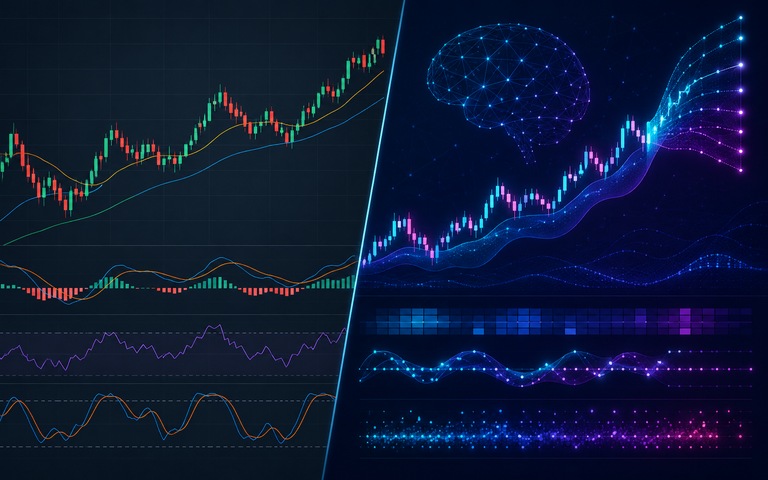
AI Trading Indicators are tools that use data analysis methods and artificial intelligence (AI) to analyze market price movements. Instead of relying solely on fixed formulas, these indicators can process large volumes of price data to identify potential trends or market conditions.
Traditional indicators commonly use a fixed formula with programmed rules. For instance, the Moving Average Indicator, which is a price movement indicator that shows average prices over a set period of time. AI tools can analyze multiple types of information and adjust calculations based on market behavior.
For example, a trader may be analyzing a currency pair that is moving sideways. While analyzing the price data on a chart, the trader may miss opportunities to act on the additional data detected by the AI tool – such as trends and momentum shifts that are not as easily identified or may not be visible when reviewing charts manually.
Many traders use AI trading indicators for TradingView since it provides an environment for traders to use multiple charts, set alerts, and use other forms of analysis in one location.
Beginner traders can also benefit from various AI tools as an added support in their learning process of how to analyze price data. Using AI tools does not mean to avoid learning, but they should be used as an additional, complementary means of supporting the learning process by identifying additional opportunities for the trader to consider.
How Do AI Indicators Work on TradingView?
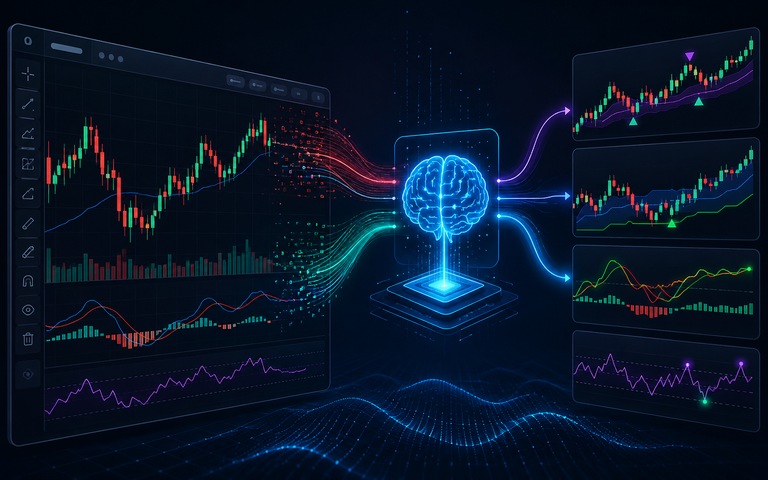
On TradingView, users can apply indicators directly to their charts; in addition, AI-based indicators typically analyze historical price data, market patterns, and technical information to generate signals or visual cues.
The typical process for using an indicator is straightforward; the indicator collects the relevant market data and processes it using its own set of calculations, and displays the data in some form, such as indicating trend direction, potential entry points, or when there is likely to be a change in market conditions.
As an example, if an AI-based indicator observes a specific price movement occurring multiple times in the past just prior to a trend change, it will be able to highlight this same situation whenever it takes place in the future.
The following table shows a basic comparison of how different indicators usually operate:
| Indicator Type | Main Function | Useful For |
| Traditional Indicator | Uses fixed mathematical formulas | Basic market analysis |
| AI Indicator | Studies patterns & data behavior | Advanced pattern recognition |
| Trend Indicator | Shows market direction | Finding possible trends |
| Momentum Indicator | Measures price strength | Understanding movement speed |
Speed is a major advantage of using artificial intelligence (AI) tools. Traders can spend hours analyzing charts, while an AI system can scan large amounts of data in a short period of time and provide a list of specific areas that might deserve further attention by the trader.
This process allows traders to interpret complex market behavior more efficiently, as AI tools convert raw price movements into simplified visual signals that are easier to understand and act upon.
Best Types of AI Indicators for Forex Trading
In the fast-moving world of forex trading, traders mostly want to use tools to speed up how well they react. Different areas of the market can be analyzed by different AI indicators.
Commonly used AI indicators include trend detection indicators to help determine if the market is moving upward, downward, or staying within a range or side.
Another popular type is the pattern recognition indicator that searches for previously observed market patterns and assists traders in finding potential setups.
Signal-based indicators are also used frequently by traders. These indicators will typically notify you when various conditions appear, such as a possible trend change or increased momentum.
A simple chart example:
Market Analysis Support Level
Price Movement
High
|
| *
| * *
| *
| *
| *
|
+———————————–
Time
In this basic example, traders use movement patterns to trade. AI can analyze the same movements by applying larger historical data. The Best Indicators for Trading in Forex are not always the most complicated ones. Many traders prefer tools that fit their trading strategy and are easy to understand.
In addition to these tools, one of the most commonly used AI-driven approaches is AI-Powered Forex Signals. These are trading alerts generated using artificial intelligence and data-driven algorithms that analyse market conditions such as price action, trend direction, momentum, and historical patterns to identify potential trading opportunities.
Some traders also use popular tools such as LuxAlgo and similar TradingView-based AI indicators that focus on trend detection, pattern recognition, and signal generation to support their analysis.
AI Indicators vs Traditional Technical Indicators
AI and traditional indicators each have their own advantages; they simply do it differently.
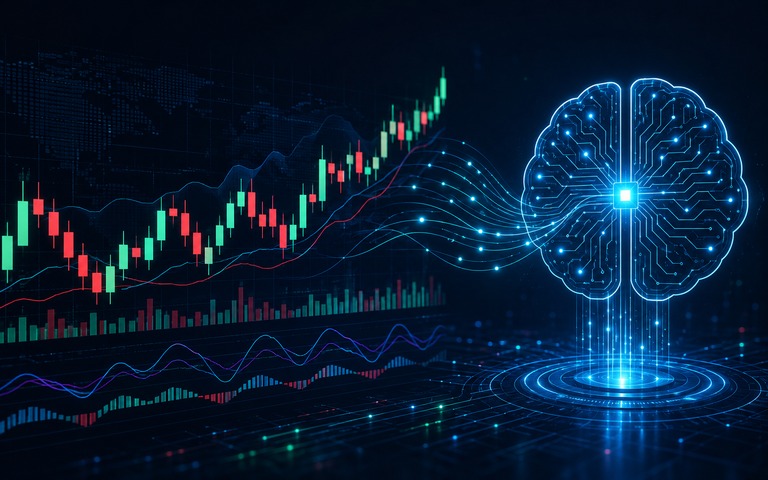
The key difference is how they process data. Traditional indicators can often be considered more predictable because they typically operate under a fixed formula. This provides an easy way to analyze and test. Most traders value this because they are easily comprehensible.
AI indicators tend to be based more on identifying patterns and adjusting to various situations. Instead of being “predictable,” they use algorithms/programming to develop new ways to analyze data, including identifying correlations that are not easily identifiable to human traders.
Here is a simple comparison:
| Feature | Traditional Indicators | AI Indicators |
| Learning Ability | No | Sometimes yes |
| Data Processing | Limited formulas | Larger pattern analysis |
| Complexity | Usually simple | Often more advanced |
| Human Control | High | Still required |
| Best Use | Basic analysis | Additional market insights |
Beyond choosing the right indicators, traders also consider the trading environment they use to apply their strategies. Some traders prefer platforms and account options that offer flexibility, advanced charting features, and tools that match their analysis style. For example, cTrader Accounts are used by some traders who prefer a different trading experience alongside their market analysis methods. The right setup can help traders organize their workflow and make better use of the tools available to them.
Your experience as a trader will influence your use of indicators. A beginner usually will use more traditional tools, while a more experienced trader may be able to incorporate AI tools into their trading style. When selecting an AI indicator TradingView be sure to choose an indicator that suits your needs. An AI indicator may not be the best one for another trader, even though it may work for some.
Before you begin using an indicator, try to understand how the indicators work, instead of just following the indicators. Your choice of what you use to trade will ultimately determine your trading success.
How to Use AI Indicators Without Over-Relying on Signals
Many traders make the mistake of relying exclusively on predictive indicators to help them earn money in the market. The truth is that both traditional & AI-based indicators cannot eliminate uncertainty and risk from the market entirely.
Rather than depending solely on the signals generated by AI tools, traders should use those predictive indicators as just a part of their overall decision-making process when executing trades. For example, just because an AI tool generates a buy signal for an asset, the trader should validate that signal with other factors, including, but not limited to, support and resistance levels, recent news, or overall market direction.
A practical approach could look like this:
- Check the overall market trend.
- Review the AI indicator suggestion.
- Confirm the idea with additional analysis.
- Decide the risk level before entering a trade.
- Monitor the position and adjust if needed.
The best TradingView indicators are usually the ones you’re comfortable using and have a good understanding of how to use them correctly. An easy indicator disciplined to use can be worth more than a complicated rule-based system that’s not used with an appropriate trading plan.
However, testing out the indicator before using it in actual trades can be helpful in determining whether or not you want to use that indicator. For instance, many traders will do their own testing on a demo account so that they will know how an indicator will behave under different types of market conditions.
AI can certainly help make the process of analyzing data easier, but ultimately, human decisions are still needed to make accurate trading decisions. So when you’re trading, you need to be patient, learn how to trade properly, and make your own decisions without emotional attachment.
Conclusion
The introduction of AI indicators has opened up new possibilities for traders looking to enhance their ability to analyze the markets. These indicators provide traders with the tools they need to see and identify patterns, as well as help to organize information, which makes chart analysis faster and easier.
As mentioned, AI indicators should not be seen as a replacement for knowledge and experience. Typically, results obtained from the use of technology combined with correct trading habits and spending time studying the market behavior produce the most beneficial outcome.
Whether you are new to forex or an experienced trader, learning how to use AI tools will assist you in making decisions based on the information you have received and not merely following each available signal. AI tools should be regarded as part of a comprehensive trading plan and not solely relied on.
As AI technology continues to improve, these tools will likely become a more common part of modern trading. However, successful traders will continue to rely on their own mindful decisions, risk management, discipline, and rationality to achieve success in trading.
In conclusion, the Best AI Trading Indicators for TradingView can help traders improve market analysis, but they should always be used with proper risk management and independent decision-making.
FAQ
AI trading indicators can be useful, but their accuracy depends on many factors, including market conditions and how they are used. They should not be considered guaranteed prediction tools.
A good approach is to combine indicator information with personal analysis and risk management. You can also explore related educational resources through our Best Technical Analysis Tools for Forex Traders to understand how different tools support decision-making.
The best option depends on the trader’s strategy, experience level, and goals. Some traders prefer simple tools that show trends, while others choose advanced systems that analyze more market data.
Before choosing any tool, it is important to understand its features and test how it works with your own approach.
Some AI-based tools on TradingView are available for free, while others require payment or subscriptions. Free tools can be useful for learning, but advanced features may come with additional costs.
Traders should focus on finding tools that provide clear value instead of choosing only based on price. The right tool is the one that supports a responsible trading process.
Share
Hot topics

STP, NDD, ECN and DMA: Broker Execution Models Decoded
When picking a forex broker, we don’t just look at the brokerage that has the lowest spreads, bonuses, and other kind of what is apparent for us. There is one...
Read more


Submit comment
Your email address will not be published. Required fields are marked *