What Is a Trading Signal and How to Validate It?
Many beginners find trading confusing. When they open their charts, they often close them because they do not understand how they work. Trading signals are meant to help traders decide what to do next in the market.
A trading signal is a recommendation based on market review. It can suggest when to buy, sell, or stay out of the market; however, not all trading signals are reliable, and knowing how to verify them can improve your trading experience.
In this article, we will explain what a trading signal is, how they are researched and constructed, and how you can verify if they are worth following. We will share common beginner pitfalls to avoid.
What Is a Trading Signal?
A trading signal is a recommendation that triggers a buy or sell action. Signals can be generated by people, a computer system, or an automated algorithm.
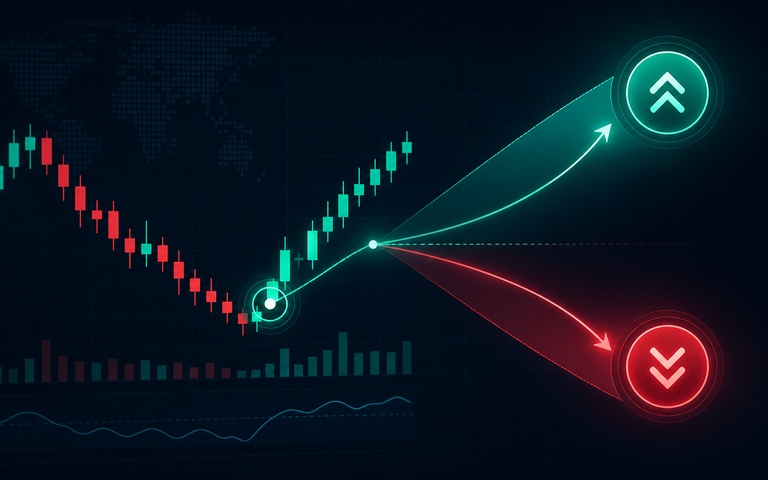
There are three common signals:
Buy signal – Suggests the price may rise, so entering a buy position could be beneficial
Sell signal – Suggests the price may fall, so a sell or short position might be considered
Neutral signal – Suggests no clear direction, meaning it may be better to wait
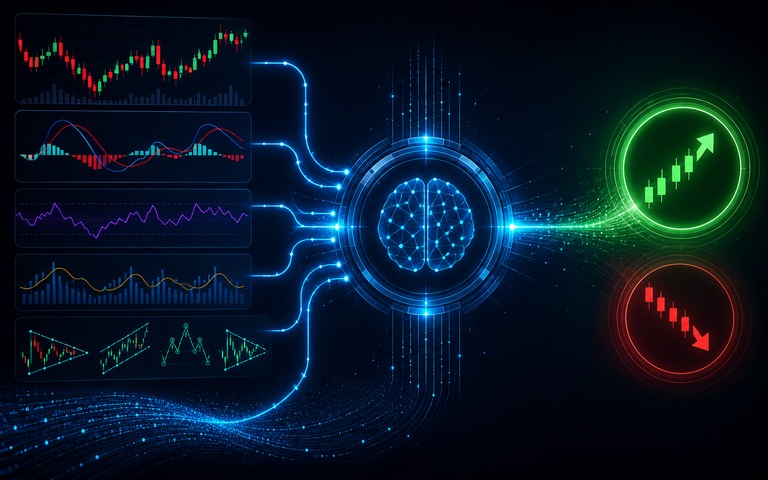
Signals are usually based on technical indicators, chart patterns, market trends, and sometimes a combination of all three. For example, AI-powered forex systems can generate buy and sell signals using large-scale data analysis and machine learning in seconds.
Below is a simple table to help you understand the structure:
| Signal Type | Meaning | Typical Action |
| Buy Signal | Uptrend expected | Open long position |
| Sell Signal | Downtrend expected | Open short position |
| Neutral | Uncertain market | Stay out or wait |
Many traders use tools such as buy and sell signal indicators to identify trading opportunities using tools such as The Best Buy and Sell Signal Indicator. While others use multiple tools before making their trading decisions, many forex beginners are looking for forex trading signals so they can avoid having to analyse charts on their own. While this can be helpful, it should never replace personal understanding.
Another point worth mentioning is that trading signals are not always designed for the same type of trader. Some are created for short-term scalpers who look for quick entries and exits within minutes, while others are better suited for swing traders who hold positions for several days. Understanding this difference helps traders avoid using the wrong type of signal for their strategy.
It is also common for signals to vary depending on market volatility. In highly volatile conditions, signals may appear more frequently, but their accuracy can decrease in such conditions. On the other hand, during stable market conditions, signals may be fewer but often clearer and easier to follow.
How Are Trading Signals Generated?
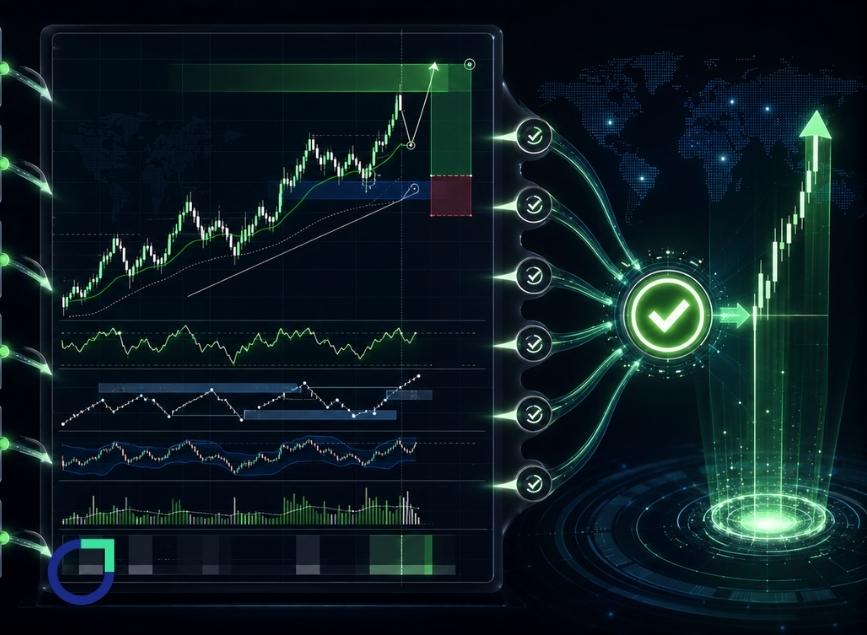
Understanding how signals are developed allows traders to determine their strength. Technical analysis – the use of technical indicators (MA, RSI, MACD) to generate signals when specific conditions occur.
Algorithmic trading systems operate at fixed intervals and are common across many platforms, like cTrader Accounts, and offer advanced tools and execution features. Examples of fundamental analysis-based signals would be interest rate decisions or inflation reports. For instance, if a currency pair reacts to an interest rate announcement from a central bank, the momentum created could trigger a buy signal by the trading system.
Here’s a simple visual breakdown:
Market Data → Indicator Analysis → Signal Generation → Trader Decision
Brokers such as Otet Markets have tools that integrate all three types of signal development methods to provide traders with the best market picture possible.
Many traders also overlook how important data quality is in signal generation. Even if two systems use the same indicators, the results can be very different depending on how clean and updated the data is. For example, real-time pricing feeds tend to produce more accurate signals compared to delayed data sources. This is why professional platforms invest heavily in fast infrastructure and stable connections.
It is also worth noting that human-generated signals often include subjective judgment. While algorithms rely purely on data, analysts may consider news sentiment, geopolitical events, or experience-based insights. Both approaches have strengths and weaknesses, and many modern systems now combine them to improve overall performance.
How to Check if a Trading Signal Is Reliable?
There are different types of signals, so it’s important to distinguish between reliable and unreliable signals.
To judge signals correctly, you should start judging the company that generates the signals. A reputable signal provider will provide statistics and have legitimate past performance. If the provider does not show legitimate past performance, you need to question the provider’s integrity.
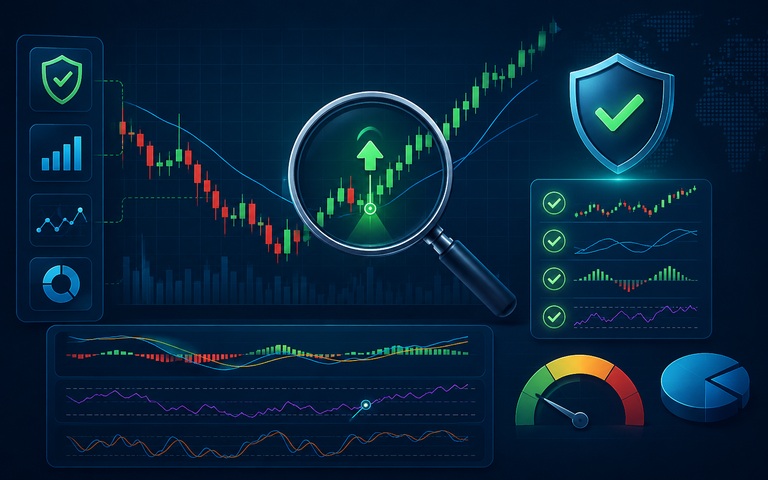
There will usually be more than one indicator that confirms the validity of a signal if it is a strong signal. For example, If RSI, multiple moving averages, and volume all confirm the signal is strong, the signal becomes significantly more reliable.
The best way to determine if a signal is strong is to test it on a demo account before risking real money, and to pay attention to how that signal performs under live market conditions.
Here’s a simple reliability chart:
Reliability Level
High | ██████████ Multiple confirmations + proven strategy
Medium | ██████ Single indicator + partial data
Low | ███ Unknown source + no confirmation
Many platforms that provide AI-powered forex signals will provide backtesting results so that traders can see how well they performed in the past as a means of measuring their reliability.
Another useful method is comparing a signal with historical behavior in similar market conditions. If a setup has worked consistently in past situations, it may have a higher probability of success. However, traders should still remember that history does not guarantee future results, especially in fast-changing markets.
Timing is also a key factor. A strong signal can lose its effectiveness if entered too late. Markets move quickly, and even a delay of a few minutes can change the outcome of a trade. That is why some traders prefer systems that offer real-time alerts rather than delayed notifications.
Finally, emotional discipline plays a big role in reliability perception. Sometimes a signal is actually correct, but the trader exits too early or ignores it due to fear. This can create the impression that the signal is weak, even when the real issue is execution.
Common Mistakes When Following Trading Signals
Signals are often misused by new traders, especially when they first start trading. One common error is a lack of knowledge regarding the signals being used; all signals should be questioned and confirmed, regardless of their quality.
Another common error is over-trading. With many signals to work with, traders enter trades they would not have entered otherwise, which generally creates a loss. As well, some traders fail to consider risk management when using signals to enter trades. They only consider the entry point, not where to place stop losses or what position sizes to take.
Emotion-based trading is also a major concern with traders. While a signal may provide a recommendation to wait, emotions such as excitement or fear often cause traders to make trades before receiving their signals.
To make things clearer, here’s a simple comparison:
| Good Approach | Bad Approach |
| Wait for confirmation | Enter immediately |
| Use stop-loss | Trade without protection |
| Analyze signals | Follow blindly |
| Control emotions | React emotionally |
Another overlooked mistake is ignoring market context. Some traders treat every signal the same way without considering what is happening in the broader market environment. For example, a signal during major news events can behave very differently compared to a calm trading session. Understanding timing and context can significantly improve decision-making and reduce unnecessary losses.
Many new users of trading tools assume they will automatically generate profits. The truth is, no trading tools eliminate risk. The convenience of these systems allows traders to access structured data more easily.
The key is balance use signals as guidance, not as absolute instructions.
Tools and Platforms That Support Trading Signals
Traders have a lot of access to modern trading systems and tools because of technology. Traders now have access to many types of trading signals using apps, platforms, and automation.
For instance, cTrader Accounts come with their own integrated analytics and signal-generating tools, allowing traders to use these tools to learn about different trades and make informed decisions. These systems are in high demand because they integrate both speed of execution and advanced technical charts.
Many services branded as “AI-powered forex signals” will scan many different markets at one time and filter out the strongest possible trades. Additionally, some brokers also have education-based tools and provide an integrated environment to both trial the signal and use it for actual trading.
Conclusion
When properly used, trading signals can be a major benefit. Rather than having to do all the analysis on your own to make a decision faster, a signal will help you identify opportunities that you might otherwise miss.
However, trading signals are not magical fixes. A signal only has as much value as the method behind the signal, with which it was developed, and as much as the trader uses the signal, as well. That’s why validation is critical.
By taking the time to understand how the signals are developed, verifying the signals, and avoiding the common errors, you will find that you can get more value from using trading signals. View trading signals as a guideline rather than a guarantee.
Ultimately, successful trading involves using a combination of tools, knowledge, and discipline, rather than relying solely on a single shortcut.
It is also useful to regularly review your trading journal when using signals, as tracking past decisions can help identify patterns in both successful and unsuccessful trades over time. This continuous feedback loop supports long-term improvement and more disciplined decision-making in different market conditions.
Traders who combine signals with proper research and continuous learning are more likely to develop a stronger understanding of market movements and improve their overall trading approach over time.
FAQ
A trading signal is a suggestion that indicates when to enter or exit a trade based on market analysis. It can come from indicators, algorithms, or expert systems. Learn more about technical analysis tools in Best Technical Analysis Tools for Forex Traders.
They can be profitable if used correctly, but results depend on strategy, risk management, and market conditions.
You can verify it by checking the source, comparing multiple indicators, and testing it in a demo account before trading live.
A good signal is consistent, backed by multiple confirmations, and comes from a transparent and reliable system with proven results.
Beginners can use them as a learning tool, but they should not rely on them completely. Understanding the basics of trading is still important.
No, signals should support analysis, not replace it. Traders still need to understand market behavior and risk management.
Share
Hot topics

STP, NDD, ECN and DMA: Broker Execution Models Decoded
When picking a forex broker, we don’t just look at the brokerage that has the lowest spreads, bonuses, and other kind of what is apparent for us. There is one...
Read more


Submit comment
Your email address will not be published. Required fields are marked *