
What are Partial Fills and Order Rejections and How to Prevent Them?
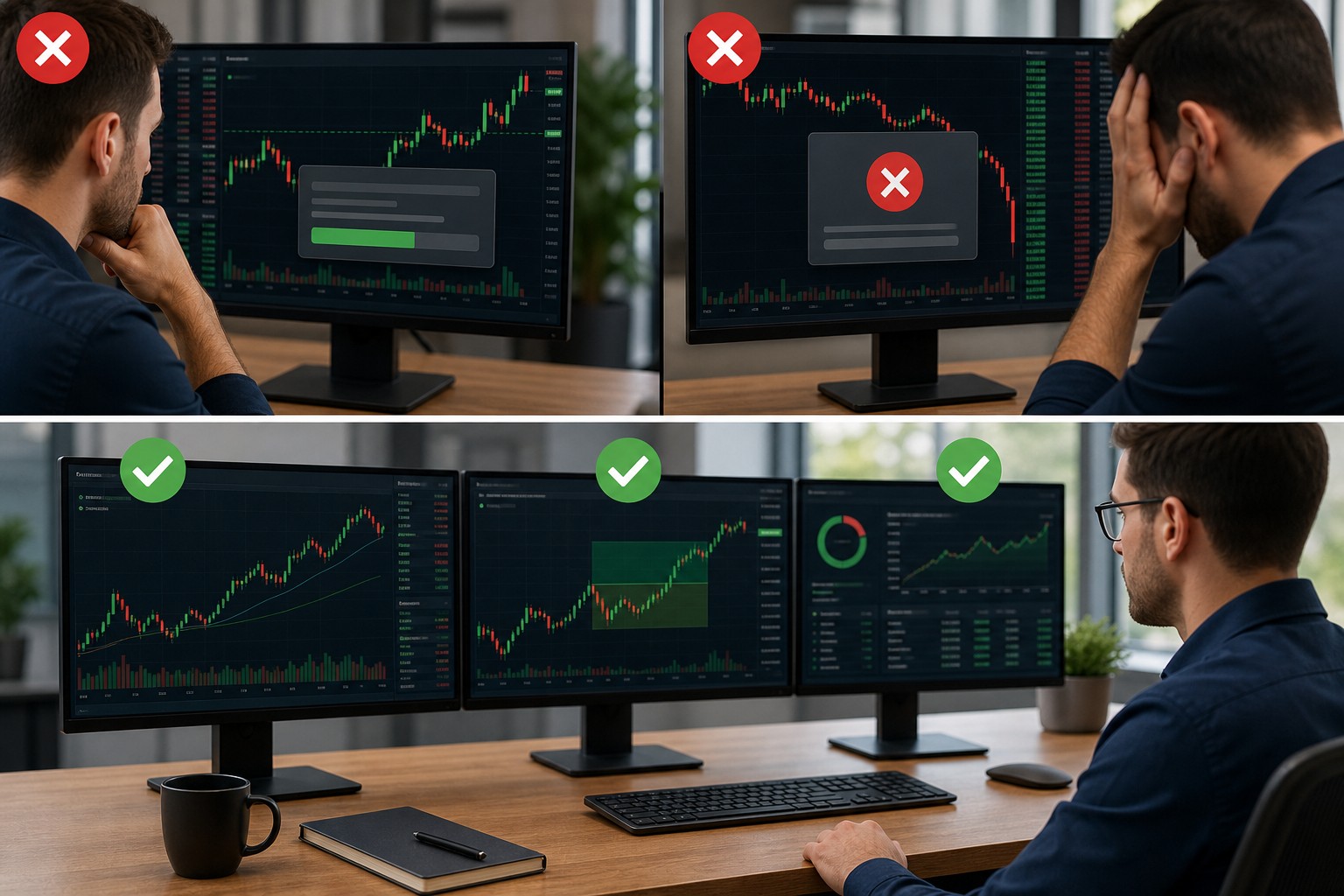
Successful trading depends not only on finding good entry points but also on getting orders executed correctly. A strategy can produce strong signals, but poor execution conditions can change the final result.
Partial fills and order rejections are two common execution issues that traders experience in fast-moving markets. They usually happen because of liquidity conditions, price changes, broker execution models, or incorrect order settings.
Understanding these problems helps traders improve execution quality, manage risk more effectively, and reduce unexpected trading outcomes.
This guide explains what partial fills and rejected orders mean, why they happen, and how traders can prevent them through better order selection, execution settings, and broker evaluation.
What a Partial Fill Actually Is
A partial fill occurs when only part of a trading order is executed because there is not enough available liquidity at the requested price.
Instead of receiving the complete order size immediately, the trader receives a smaller position.
For example:
- A trader places an order for 10 lots.
- Only 6 lots are available at the current price.
- The broker executes 6 lots and leaves the remaining amount waiting or unfilled.
This situation is common in markets where available liquidity changes quickly.
Why Partial Fills Happen
The main reason behind partial fills is limited market liquidity.
Liquidity refers to how easily an asset can be bought or sold without causing a major price change.
Factors that influence liquidity include:
- Trading volume
- Market session
- Instrument popularity
- Economic events
- Order size
Understanding market depth explained helps traders see why large orders may not always be executed at a single price level.
Partial Fills in Different Markets
Partial fills are more common in:
- Large-volume trading
- Institutional markets
- Less liquid instruments
- Fast-moving conditions
For retail forex traders, partial fills may occur less frequently on major currency pairs, but they can still happen during periods of high volatility.
Why Partial Fills Matter
A partial fill can affect:
- Position size
- Risk calculation
- Stop-loss placement
- Trading strategy execution
For example, an EA expecting a full position may behave differently if only part of the order is opened.
This is especially important for automated systems where trade management rules depend on exact position sizes.
What an Order Rejection Means
An order rejection occurs when the broker or trading system refuses to execute an order.
Unlike a partial fill, where part of the order is completed, a rejected order means no trade is opened.
A rejection message may appear because of:
- Price changes
- Insufficient margin
- Trading restrictions
- Invalid order settings
- Market conditions
Common Types of Rejection Messages
Traders may see messages such as:
- Invalid price
- Market closed
- Not enough money
- Trade disabled
- Off quotes
- Requote
Each message points to a different cause.
Understanding the reason behind the rejection is more useful than simply assuming the broker failed.
Why Fast Traders Experience More Rejections
Short-term traders and scalpers are more exposed because they often trade during moments when prices move quickly.
A delay of a few seconds can cause:
- Entry price changes
- Failed orders
- Different execution conditions
This is why execution quality is an important part of any trading strategy.
Rejections and Automated Trading
For Expert Advisors, frequent order rejections can create additional problems.
An EA may:
- Miss trading opportunities
- Enter later at worse prices
- Repeat failed orders
- Increase trading costs
A well-designed EA should include error handling and realistic execution rules.

Common Causes: Liquidity, Price Moves and Requotes
Most execution problems are connected to market conditions or order settings.
Understanding the main causes helps traders prevent avoidable issues.
Low Liquidity Conditions
Liquidity changes throughout the trading day.
Periods with lower liquidity often include:
- Market opening transitions
- Weekend gaps
- Holiday sessions
- Certain exotic currency pairs
During these times:
- Spreads may increase
- Available prices may decrease
- Orders may take longer to execute
Rapid Price Movement
Markets can move quickly during:
- Economic announcements
- Interest rate decisions
- Unexpected news events
When prices change faster than an order can be processed, the requested price may no longer be available.
This can result in:
- Requotes
- Rejections
- Different execution prices
Understanding Requotes
A requote happens when the broker cannot execute the order at the requested price and offers a new price instead.
For example:
- Trader requests a buy at 1.1000.
- Market moves to 1.1003.
- Broker offers execution at the new price.
The trader must accept or reject the new price.
The way this process works depends on the broker’s execution model.
The Role of Execution Model and Max Deviation
The execution model determines how a broker handles price changes between order placement and execution.
Two common approaches are:
- Market execution
- Instant execution
Understanding market versus instant execution helps traders choose the right environment for their strategy.
Market Execution
With market execution, the broker attempts to execute the order at the available market price.
Advantages:
- Faster processing
- Fewer manual confirmations
- Suitable for fast markets
Possible disadvantage:
- The final price may differ from the requested price
Instant Execution
With instant execution, the broker attempts to execute at the requested price.
If the price changes, the trader may receive a requote.
Advantages:
- More price control
Possible disadvantages:
- More rejected orders during volatility
Max Deviation Setting
The max deviation setting controls how much price movement a trader accepts before the order is rejected.
A very low setting may provide price protection but increase rejected trades.
A higher setting may improve execution success but allow larger price differences.
The correct balance depends on:
- Trading style
- Market conditions
- Instrument volatility
- Broker execution quality
How Partial Fills Affect Risk and Position Sizing
Partial fills can create unexpected changes in trade exposure, especially for traders using precise position sizing rules.
A trader may calculate risk based on a full order size, but the actual executed position may be smaller or split across different prices.
This can affect:
- Stop-loss distance
- Risk percentage
- Take-profit calculations
- Trade management decisions
Example of Partial Fill Risk
Imagine a trader plans to open a 5-lot position with a fixed stop-loss.
The market only provides liquidity for:
- 3 lots at the first price
- 2 lots at a different price
The final position may have a different average entry price than expected.
This changes the real risk calculation.
For professional traders and automated systems, understanding order execution is part of effective trade management.
Read more about risk management tools for traders.
Why Position Size Matters
Large orders are more likely to experience execution issues because they require more available liquidity.
Factors that increase partial fill risk include:
- Large position sizes
- Less liquid instruments
- Trading during volatile periods
- Entering during market gaps
Smaller orders in highly liquid markets usually experience fewer problems.
Partial Fills and Expert Advisors
Automated systems must be designed to handle partial execution correctly.
A poorly designed EA may assume:
- Full order execution
- Single entry price
- Immediate position availability
If these assumptions are incorrect, the EA may:
- Place incorrect stop-loss levels
- Miscalculate risk
- Open unnecessary additional positions
Reliable automation requires realistic execution handling.
Settings and Order Types That Reduce Rejections
The right settings can reduce execution problems, although they cannot completely remove market-related risks.
Traders should choose order types and platform settings based on their strategy.
Choosing the Correct Order Type
Different order types have different execution characteristics.
Common order types include:
- Market orders
- Limit orders
- Stop orders
Understanding different types of trading orders helps traders select the right tool for each situation.
| Order Type | Main Purpose | Possible Issue |
|---|---|---|
| Market order | Immediate execution | Price movement |
| Limit order | Specific price entry | May not fill |
| Stop order | Entry after price movement | Slippage risk |
Market Orders
Market orders prioritize execution speed.
They are commonly used by:
- Scalpers
- Short-term traders
- News traders
The disadvantage is that the final execution price may differ from expectations.
Limit Orders
Limit orders provide more control over entry price.
Advantages:
- Better price control
- Reduced entry uncertainty
Disadvantages:
- The order may never execute
This makes limit orders useful for strategies where price precision is more important than immediate execution.
Stop Orders
Stop orders are commonly used for:
- Breakout strategies
- Trend-following systems
However, during fast markets they may experience:
- Slippage
- Delayed execution
- Different entry prices
Adjusting Platform Settings
Traders should review:
- Max deviation
- Order expiration
- Trade size
- Margin requirements
- Automated retry logic
Incorrect settings can increase unnecessary rejections.

Trading Around News and Low-Liquidity Windows
Market conditions have a major impact on execution quality.
Even a reliable broker can experience delays when liquidity suddenly changes.
Why News Creates Execution Problems
Major economic events can cause:
- Rapid price movement
- Spread expansion
- Reduced available liquidity
- Increased order volume
During these moments, traders may experience:
- Requotes
- Partial fills
- Order rejection
Examples include:
- Central bank decisions
- Inflation reports
- Employment data
- Unexpected geopolitical events
Low-Liquidity Periods
Some trading sessions naturally have less market activity.
Examples:
- Market rollover periods
- Holiday sessions
- Late trading hours
During these times:
- Spreads may increase
- Execution may slow
- Available liquidity may decrease
Using Trading Filters
Many professional traders use filters to avoid poor execution conditions.
Examples:
- News filters
- Spread filters
- Volatility filters
- Trading session filters
These tools help prevent entering trades when execution conditions are unfavorable.
A strategy that avoids bad conditions often performs more consistently than one that trades every possible signal.
When Frequent Rejections Signal a Broker Problem
Occasional order rejection is normal, especially during extreme market conditions.
However, repeated execution problems may indicate a larger issue.
Signs of Possible Broker Problems
Traders should investigate if they regularly experience:
- Rejected orders during normal market hours
- Excessive requotes
- Unexpected execution delays
- Frequent platform disconnects
- Large differences between expected and actual fills
Compare Different Conditions
Before blaming a broker, check whether the problem comes from:
- Trading instrument
- Trading session
- Strategy type
- Account settings
For example:
A trader may experience problems with an exotic currency pair but normal execution with major pairs.
Review Instrument Specifications
Different assets have different trading conditions.
Important details include:
- Minimum lot size
- Maximum order volume
- Spread conditions
- Trading hours
- Execution rules
Checking instrument specifications helps traders understand whether their expectations match the market conditions.
Broker Infrastructure Matters
A reliable broker should provide:
- Stable servers
- Clear execution policies
- Transparent trading conditions
- Consistent order processing
Execution quality is an important part of choosing a trading environment.
Improving Execution Reliability: A Practical Approach
Reducing order problems requires a combination of strategy design, technical settings, and broker selection.
A practical checklist:
Before Trading
Check:
✓ Broker execution model
✓ Available liquidity
✓ Trading instrument conditions
✓ Maximum order size
During Strategy Development
Test:
✓ Realistic spreads
✓ Slippage assumptions
✓ Order rejection scenarios
✓ Partial fill handling
During Live Trading
Monitor:
✓ Execution reports
✓ Average fill price
✓ Rejected orders
✓ Market conditions
Good execution management helps reduce the difference between theoretical strategy performance and real trading results.
Conclusion
Partial fills and order rejections are normal parts of financial markets, but they can become serious problems when traders do not understand why they happen.
Partial fills usually occur because of liquidity limitations, while rejected orders are often caused by price movement, execution rules, or incorrect settings.
To reduce these issues, traders should:
- Understand their broker’s execution model
- Choose suitable order types
- Use realistic deviation settings
- Avoid poor liquidity conditions
- Monitor execution quality
A strong trading approach is not only about finding opportunities. It is also about ensuring those opportunities can be executed reliably.
Proper order management and realistic expectations are essential parts of professional trading.
Sources and References
- MetaQuotes — MetaTrader 4 and MetaTrader 5 Trading Platform Documentation
- MQL5 Community — Educational articles about Expert Advisors, execution handling, and order management
- Financial market microstructure resources covering liquidity, order matching, and execution quality
- Broker trading condition documentation covering order types, execution models, and trading specifications
FAQ
An order can be rejected for several reasons, including rapid price movement, insufficient margin, invalid settings, market closure, or broker execution rules.
Not necessarily. A partial fill is a normal market execution event that happens when there is not enough liquidity available at one price level.
It can actually be a better outcome than rejecting the entire order because part of the position is executed.
Requotes cannot always be eliminated because they are caused by fast market movement and changing prices.
Not always. A rejected order does not automatically mean a broker is unreliable.
Rejections can happen because of:
High volatility
Low liquidity
Incorrect settings
Trading restrictions
Share
Hot topics

STP, NDD, ECN and DMA: Broker Execution Models Decoded
When picking a forex broker, we don’t just look at the brokerage that has the lowest spreads, bonuses, and other kind of what is apparent for us. There is one...
Read more




Submit comment
Your email address will not be published. Required fields are marked *