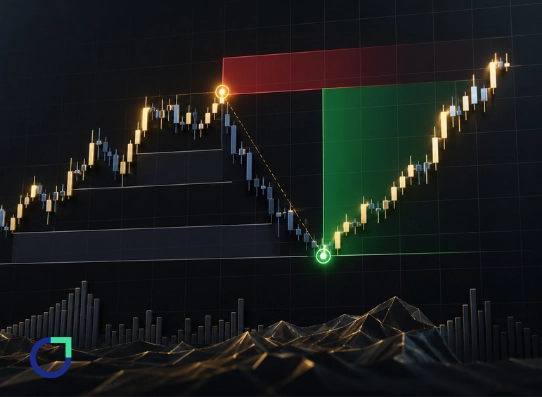
How to Optimize Forex Entries and Exits Like a Pro
As many traders have been searching for that elusive “perfect” trading strategy for years now, the reality of the matter is that the majority of trading strategies rely heavily on timing. Learning how to optimize forex entries and exits plays a crucial role in improving trade outcomes. How often have you found that entering a trade too soon, or exiting a trade too late, has drastically altered the result of your trade even though the overall market direction was moving in a direction that was favourable to your original intention?
Once traders begin optimizing Forex in terms of entry/exit points, they will notice an increase in consistency, making fewer emotion-based decisions and being able to better manage risk. Professional traders tend to pay a lot of focus to their timing with trades since even small variations in execution over the long term can yield significant results.
In this guide, you will learn how traders improve entries and exits, which strategies work best in different market conditions, and how technical tools and risk management help build a stronger forex entry and exit strategy.
What Does “Optimizing Entries and Exits” Mean in Forex?
Trade Entry and Exit Optimization is about timing… The goal is not necessarily to predict every market movement perfectly, but rather to utilize better decision making processes to improve your entry/exit timing. It is also about developing an appropriate structure to reduce your overall trade risk.
A strong entry can immediately improve trade quality by reducing drawdown and creating a better risk-to-reward ratio. A smart exit helps traders protect profits before the market reverses.
Professional traders usually define:
- entry conditions
- stop-loss placement
- profit targets
- exit rules
before entering the market.
For example, two traders may analyze the same bullish setup. One enters too early and gets stopped out during a pullback, while the other waits for confirmation and catches the trend more efficiently.
This is why traders spend so much time trying to optimize forex entries and exits instead of simply chasing random signals.
Some experienced traders also focus heavily on price action and trading without indicators because they prefer reading market structure directly.
Why Timing Matters
In forex trading, small timing differences can create major changes in results.
Entering late often increases risk, while entering too early can lead to false signals and emotional stress.
Good timing helps traders:
- improve consistency
- reduce unnecessary losses
- avoid emotional entries
- manage trades more efficiently
Optimization is not about perfection. It is about improving probability and discipline over time.

Why Entry and Exit Timing Is Critical in Forex Trading
Timing is one of the biggest differences between beginners and experienced traders.
A trader may correctly predict market direction but still lose because of poor timing. For example, entering before confirmation during a temporary pullback can trigger a stop loss before the real move begins.
This is why professional traders focus heavily on patience and confirmation.
Better Timing Improves Risk-to-Reward
Precise entries often allow traders to:
- use tighter stop losses
- improve reward potential
- reduce overall exposure
A better entry naturally creates easier trade management later.
Timing Reduces Emotional Trading
Poor timing usually increases emotional pressure.
Traders who enter too early may panic during retracements. Traders who chase momentum often enter near the end of a move because of fear of missing out.
Professional traders usually wait for:
- candle confirmation
- support or resistance reaction
- momentum alignment
- market structure clarity
before entering trades.
Many traders also use the moving average indicator to help confirm trend direction and improve entry timing.
Best Strategies for Optimizing Forex Entries
Trading Session Timing
Many traders prefer entering during active sessions such as:
- London session
- New York session
- London-New York overlap
These periods usually provide stronger momentum and cleaner movement.
Some traders also pay attention to execution quality on cTrader platforms or while managing a metatrader5 account during active market conditions.
Short-term traders may even compare execution conditions through companies like otet broker when focusing heavily on fast-moving sessions.
Best Strategies for Optimizing Forex Exits
Finding the right entry is one of the most important parts of trading. A strong entry can reduce risk, improve confidence, and create better trade management from the start.
-
Trend-Following Entries
One of the most common entry methods is trading in the direction of the overall trend.
In an uptrend, traders usually look for buying opportunities after temporary pullbacks. In a downtrend, they wait for rallies before looking for short positions.
-
Support and Resistance Entries
Support and resistance levels are widely used for entry timing.
These areas often act as zones where price reacts strongly because many traders are watching the same levels.
-
Breakout Entries
Breakout trading focuses on moments when price breaks through an important level with strong momentum.
This strategy works especially well during:
- high volatility
- major news events
- strong trend continuation
-
Retest Entries
Some traders avoid entering immediately during a breakout.
Instead, they wait for price to return and retest the broken level before entering the trade.
This approach often provides:
- lower-risk entries
- tighter stop losses
- better confirmation
-
Candlestick Confirmation
Traders often wait for patterns such as:
- bullish engulfing candles
- pin bars
- rejection candles
- breakout closes
before entering trades.
| Entry Method | Best Market Condition | Main Advantage |
| Trend Following | Trending Market | Follows momentum |
| Breakout Entry | High Volatility | Captures strong moves |
| Retest Entry | Confirmed Breakout | Lower-risk entry |
| Support & Resistance | Ranging Market | Clear trade structure |
| Candlestick Confirmation | All Conditions | Better confirmation |
-
Using Technical Indicators
Many traders combine price action with technical indicators to improve timing.
One commonly used tool is the moving average indicator, which helps traders identify trend direction and dynamic support or resistance zones.
-
Multi-Timeframe Analysis
Professional traders often analyze multiple timeframes before entering trades.
For example:
- higher timeframe confirms overall trend
- lower timeframe helps refine entries
-
Trading Session Selection
Many traders prefer entering during active sessions such as:
- London session
- New York session
- London-New York overlap
These periods usually provide stronger momentum and cleaner price movement.
-
Simplicity Often Works Better
Many experienced traders eventually simplify their process and focus more on price action or even trading without indicators in certain market conditions.
-
Execution Quality Also Matters
This is why some traders pay attention to execution speed on cTrader platforms or while managing a metatrader5 account during volatile sessions.
Some traders also compare broker conditions through companies like otet broker when focusing heavily on short-term entries and active market conditions.

Risk Management in Entry and Exit Decisions
Risk management is one of the most important parts of trading. Even strong setups can fail if risk is poorly controlled. Experienced traders usually:
- reduce position size during volatility
- avoid excessive leverage
- use structured stop losses
- focus on capital protection
Professional traders understand that survival matters more than chasing aggressive profits.
Emotional Control Matters
Many traders break their own rules because of:
- fear
- greed
- frustration
- impatience
A trader may move a stop loss emotionally or hold a losing trade too long because of hope.
Professional traders accept that controlled losses are a normal part of trading.
Role of Technical Indicators in Entry and Exit Timing
Technical indicators help traders organize market information and improve timing decisions. Popular tools include:
- RSI
- MACD
- ATR
- the moving average indicator
Indicators help traders identify:
- trend direction
- momentum
- volatility
- possible reversals
However, professional traders usually avoid overcomplicating charts. Indicators work best when combined with price action and market structure.
Some experienced traders still prefer trading without indicators because they believe price itself already provides enough information.
Common Mistakes in Forex Entries and Exits
Many traders struggle not because their strategy is terrible, but because they repeat the same timing mistakes constantly.
-
Entering Trades Too Early
One of the most common mistakes is entering before confirmation.
Professional traders are usually more patient and wait for stronger confirmation before entering.
-
Chasing the Market
Fear of missing out causes many traders to enter trades too late after aggressive movement already happened.
-
Ignoring Risk-to-Reward Ratios
Some traders focus only on whether a trade “looks good” without properly calculating downside risk.
-
Moving Stop Losses Emotionally
A trader may refuse to accept a loss and move the stop further away emotionally.
This often turns small losses into much larger ones.
-
Exiting Winning Trades Too Early
Fear affects exits just as much as entries.
Many traders close profitable trades too quickly because they fear losing unrealized gains.
-
Holding Losing Trades Too Long
Some traders refuse to close losing positions because they hope the market eventually reverses.
Hope is not a strategy.
-
Overcomplicating the Chart
Many beginners overload charts with indicators and conflicting signals.
In reality, simplicity usually improves decision-making.
-
Trading Emotionally After Losses
Revenge trading often leads to:
- poor setups
- impulsive entries
- larger mistakes
Professional traders understand that patience after losses is extremely important
Practical Example of Entry and Exit Optimization
Consider a Forex trader looking to open a position on EUR/USD during the London-session. The 4 hour chart shows the overall trend to be bullish and that price is gradually retracing back towards a significant support level.
The trader chooses not to enter right away as they are waiting for confirmation first.
On the 15-minute chart, price forms a bullish rejection candle near support while momentum starts increasing again. This creates a more structured entry.
Step 1: Planning the Entry
Before entering, the trader defines:
- entry price
- stop-loss level
- profit target
- risk percentage
Step 2: Confirming the Setup
The trader notices:
- bullish trend on higher timeframe
- support holding successfully
- strong candle confirmation
- increasing momentum
At the same time, the moving average indicator remains bullish, supporting the overall direction.
Step 3: Managing the Trade
As price approaches resistance, part of the position is closed to secure profit while the remaining trade continues with a trailing stop. Using a reliable trading environment such as Otet Broker can help traders execute their plans efficiently, but proper risk management and discipline remain the key factors behind successful trade management.
Step 4: Optimizing the Exit
Eventually, momentum slows near resistance.
The trader notices:
- weaker candles
- rejection wicks
- slowing momentum
The remaining position is closed before a possible reversal.
This example shows how professional traders optimize forex entries and exits through patience, confirmation, and structured risk management.
Conclusion
Learning how to optimize forex entries and exits can dramatically improve trading consistency and emotional control.
Professional traders focus on:
- timing
- confirmation
- risk management
- patience
- discipline
The goal is not predicting every market move perfectly. The goal is building a repeatable process that creates smarter decisions over time.
A strong forex entry and exit strategy is usually built on simplicity, structure, and controlled execution rather than constant complexity.
FAQ
The best entries usually happen when:
- trend direction is clear
- confirmation appears
- volatility is active
- risk-to-reward looks favorable
Many traders prefer the London and New York sessions because liquidity and momentum are strongest during these hours.
Good exits are usually based on:
- profit targets
- support or resistance levels
- trailing stops
- momentum weakness
- reversal signals
Some traders using cTrader platforms or a metatrader5 account also use automated trade management tools during active sessions.
Many traders struggle because of:
- impatience
- fear of missing out
- emotional trading
- lack of confirmation
- poor risk management
Consistent traders focus more on discipline, structure, and controlled execution instead of trying to catch every market move perfectly.
Share
Hot topics

STP, NDD, ECN and DMA: Broker Execution Models Decoded
When picking a forex broker, we don’t just look at the brokerage that has the lowest spreads, bonuses, and other kind of what is apparent for us. There is one...
Read more




Submit comment
Your email address will not be published. Required fields are marked *