European stocks fall as Middle East tensions lift oil prices
European equity markets retreat amid renewed conflict
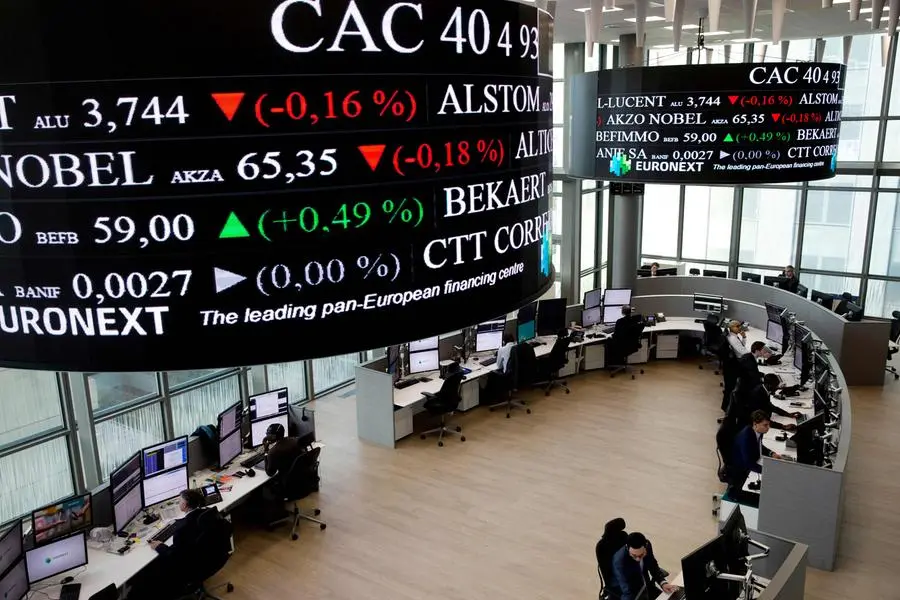
By 03:03 ET (07:03 GMT), the pan-European Stoxx 600 had declined by 0.9%. Germany’s Dax fell 1.3%, France’s CAC 40 slipped 0.9%, and the UK’s FTSE 100 was down 0.4%.
The moves followed a resumption of attacks between Iran and Israel, marking the first direct exchanges between the two since a fragile truce took effect in April. Media reports indicated the latest round began with an Israeli strike on Beirut, where Israel has been engaged in conflict with Iran-backed Hezbollah militants. Tehran then launched retaliatory attacks, prompting further Israeli strikes on targets in central and western Iran, according to its military.
On Monday, Israel said alarms warning of new waves of attacks from Iran had been sounded and that it had intercepted a ballistic missile launched from Yemen, the Wall Street Journal reported. Iran’s Islamic Revolutionary Guard Corps stated it had attacked airbases in southern Israel, also according to the Wall Street Journal.
U.S. President Donald Trump said the strikes would not affect the White House’s ongoing effort to reach a peace deal with Iran, while an Iranian official told MS NOW that such an agreement is “no longer feasible at this stage.”
Oil, bond yields, and interest rate expectations
Brent crude, the global oil benchmark, rose 5.1% to $97.81 a barrel, remaining below prior peaks above $100 but still well above pre-war levels. The renewed increase in energy prices has reinforced worries about an inflation resurgence that could prompt additional interest rate hikes by major central banks, including the European Central Bank.
Eurozone government bond yields climbed to multi-week highs, putting further pressure on equities. Traders now anticipate as many as three ECB rate increases by the end of the year. As yields move inversely to bond prices, the rise suggests a broad repricing of interest rate expectations.
Technology and chipmakers under pressure
Beyond geopolitical risks, investors have been questioning the durability of the recent enthusiasm around artificial intelligence. Underwhelming quarterly results last week from chipmaker Broadcom contributed to this reassessment.
A strong U.S. jobs report on Friday also supported the case for Federal Reserve rate increases in 2026, adding to the headwinds for growth-oriented sectors. European chipmaking stocks fell in early trading, echoing declines in technology shares in Asia and on Wall Street late last week.
FAQ
Why did European stock markets open lower on Monday?
European stock markets fell due to renewed attacks between Iran and Israel, higher oil prices, rising eurozone bond yields, and growing concerns about interest rate increases and the sustainability of the recent artificial intelligence-driven rally.
How much did Brent crude oil prices rise?
Brent crude oil prices rose by 5.1% to $97.81 a barrel, remaining below previous highs above $100 but still significantly above pre-war levels.
What are traders expecting from the European Central Bank?
Traders are now anticipating as many as three interest rate hikes by the European Central Bank by the end of the year, as higher energy prices and inflation concerns influence monetary policy expectations.
Which sector was particularly weak in early European trading?
European chipmaking and technology-related stocks were particularly weak, reflecting disappointment over recent chipmaker earnings and broader declines in tech-heavy markets in Asia and the United States.
Share
Hot topics

STP, NDD, ECN and DMA: Broker Execution Models Decoded
When picking a forex broker, we don’t just look at the brokerage that has the lowest spreads, bonuses, and other kind of what is apparent for us. There is one...
Read more




Submit comment
Your email address will not be published. Required fields are marked *