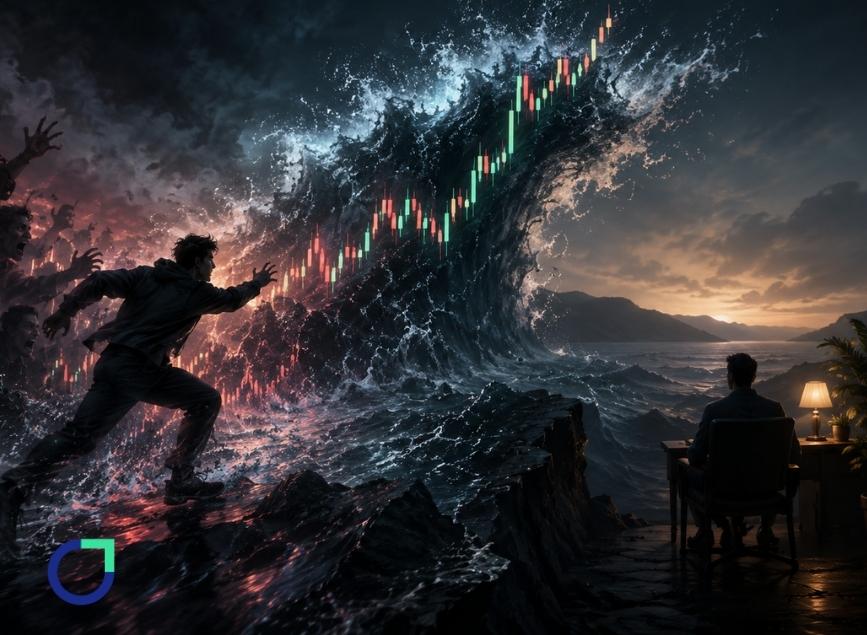
FOMO Trading: What It Is and How to Avoid It
Nearly all traders have felt the panic of missing a market move; you see a price moving fast upwards and feel the need to get into the trade before it’s too late. However this is often caused by an emotional reaction which can lead to poor decisions, and little or no profit from the trade altogether.
FOMO Trading is one of the most frequent psychological issues in financial markets; having a better understanding as to why you feel that way and learning to control your emotions can assist you with making a more logical decision than a quick one and help you become successful as a trader over the longer term.
What Is FOMO in Trading?
FOMO refers to the psychological condition known as “fear of missing out.” In the context of trading, it can be described as a trader’s emotional impulse to want to participate in a trade, simply because they see the market moving in one direction and fear they might miss a chance at making money from the trade.
Picture yourself waiting in line at a restaurant. You weren’t originally going to go, but now that there are many more people in line, you’re starting to wonder if you should be. The market creates the same feelings.
Traders may watch a currency pair “rally” (rise) for hours without entering a position. As the price rises, traders become less confident and more emotional. They drop their trading plan and enter based on the fact that it looks like everyone is making money in this market.
The problem with these emotional trades is that they usually take place after most of the move that would have made money has already happened. By the time they enter the market, there may already be signs that the market is preparing for a pullback.
Professional traders understand that opportunities appear every day. Missing one trade rarely matters over the long run. Maintaining a strong Trader Mindset helps them stay patient instead of reacting emotionally to every market movement.
Read More: Build Consistency and Discipline in Forex
FOMO is not limited to beginners. Even experienced traders occasionally feel pressure when they see large market moves. The difference is that experienced traders usually recognize the emotion before allowing it to influence their decisions.
Why Traders Experience FOMO
Hasty price movements create emotional responses. Emotional responses can trigger FOMO. A major source of FOMO is the fear of missing out because of regrets for not entering sooner and making money. Instead of focusing on possibilities going forward, they focus on profits that did not happen.
Another source of FOMO is social comparison. Observing other traders publicly posting profit and winning results may create the perception that everyone is a winner and you are losing.Sometimes this perception is not correct as people typically do not announce losing trades with the same level of excitement as winning trades.
Volatility also contributes to FOMO as prices can be volatile during a strong trend or major news events; meaning prices may move very quickly during a short timeframe causing the trader to feel they need to make a decision quickly.Greed is another factor; large candles and large price movements create excitement and lead to traders foregoing their risks while trying to make a quick profit.
Previous success creates FOMO too. If a trader has recently made profit by exiting during a breakout; they will start to believe that all breakouts will be profitable. Trust in a previous trade becomes overconfidence due to the belief that the next trade will produce the same success.
Being able to recognize where these emotions are coming from is the first step toward being able to control them..
Signs That FOMO Is Affecting Your Decisions
Recognizing emotional behavior early can prevent many unnecessary losses.
One obvious warning sign is entering trades without waiting for confirmation. Instead of following your strategy, you buy or sell simply because price is moving quickly.
Another common sign is constantly checking charts. Every small movement feels important, creating pressure to participate even when no valid setup exists.
Many traders also begin increasing their position size after missing previous opportunities. They believe a larger trade will compensate for profits they failed to capture earlier.
Changing trading rules in the middle of a session is another red flag. A trader who normally waits for confirmation may suddenly ignore every rule because emotions have taken control.
Poor trade timing frequently accompanies FOMO. Instead of entering during planned pullbacks or technical confirmations, traders buy near short-term highs or sell near temporary lows.
If you regularly ask yourself, “What if the market keeps moving without me?” there is a good chance emotions are influencing your decisions.
Keeping a trading journal makes these patterns much easier to recognize. Over time, many traders discover that their biggest losses occurred during emotionally driven trades rather than carefully planned ones.
Risks of FOMO Trading
Emotional trading is highly dangerous because it replaces discipline for impulsive values; FOMO influences many traders chasing extended price movement around trends run consistent over time because markets do not continue trending upward indefinitely and buying after strong rallies has potential consequences such as sudden pullbacks.
Risk management also tends to disappear. Stop-loss levels become wider, position sizes increase, and traders begin taking unnecessary risks in hopes of catching large profits.
Emotional trading creates inconsistency as well. Some trades follow the plan while others are entered impulsively. This makes it almost impossible to evaluate whether a trading strategy actually works.
Another hidden risk is emotional exhaustion. Constantly worrying about missed opportunities places significant mental pressure on traders. Over time, this stress can reduce concentration and confidence.
Many beginners focus almost entirely on profit potential. They repeatedly ask questions like How Much Can Earn from Trading Per Month? without realizing that protecting capital and managing emotions are what allow consistent profits to develop over time.
Financial losses are only one consequence of FOMO. Repeated emotional decisions can also damage confidence, making traders doubt even high-quality opportunities that genuinely match their strategy.
| Emotional Trading | Disciplined Trading |
| Chases fast price moves | Waits for confirmation |
| Fear of missing out | Patience and planning |
| Inconsistent entries | Rule-based decisions |
| Large emotional swings | Stable mindset |
| Higher risk-taking | Controlled risk management |
How Successful Traders Control FOMO
The most successful traders are not people who never experience fear or excitement. They simply learn how to prevent those emotions from controlling their decisions.
Profitable traders are not those that do not have emotions like fear and excitement. They have learned how to manage these emotions, so that they do not impact their decision-making.
One of the greatest strategies in this regard, is acknowledging that missed trades are part of the process. There are thousands of setup opportunities in all markets, and no trader gets all of them. This acknowledgement reduces the pressure to chase every move.
Traders also rely on set rules of entry. Before they make an entry trade, they know the requirements for an entry. If the criteria for making the entry are not present, they will wait to make their entry until they see the criteria.
Patience becomes an edge in the market because while emotions will cause traders to rush to the market, disciplined traders will spend more time looking to enter the market than actually entering. Interestingly, often the fewer trades that disciplined traders take, the higher their success rate.
A second helpful habit is a checklist to complete before making an entry. Questions such as: “Does this setup meet my trading plan?”, and “Is my risk in accordance with my trading plan?” promote logical thinking rather than emotional decision-making.
Technology plays a large role in the disciplined trader. Many traders use cTrader Accounts to set up watch lists, alert levels to their price, and build scenarios prior to the stock reaching critical market levels. This decreases the chances of making impulsive decisions during volatile markets.
Traders that are successful understand that consistency means more than excitement. Their goal is not to trade every day, but to trade and be successful when they see an actual opportunity arise.
Building a Disciplined Trading Plan
A trading plan acts like a roadmap. Without one, every market movement feels important, making emotional decisions much more likely.
The first step is defining clear entry rules. Decide exactly what conditions must be present before opening a position. These may include trend direction, support or resistance levels, confirmation candles, or indicator signals.
Exit rules are equally important. Before entering a trade, determine where profits will be taken and where the stop-loss will be placed. Making these decisions in advance reduces emotional interference later.
Position sizing should also be written into the plan. Risking the same small percentage of capital on every trade helps maintain consistency and prevents a single emotional decision from causing major damage.
A disciplined plan should also define when not to trade. Markets are not always offering high-quality opportunities. Sometimes the best decision is to stay out and wait.
Reviewing performance regularly is another valuable habit. At the end of each week or month, examine both winning and losing trades. Look for patterns that reveal whether decisions followed the plan or were influenced by emotion.
Flexibility should not be confused with inconsistency. A good trading plan can evolve as experience grows, but it should never change simply because of one losing trade or one missed opportunity.
Psychological Techniques to Stay Objective
Controlling your emotions does not mean you don’t have emotions. Every trader will have experiences of fear, happiness, disappointment, and confidence. The goal is to separate those feelings from your trading decisions.
Taking a short pause before entering any position is one way to maintain control of your emotions and trading. Waiting even 1-2 minutes can provide you with enough time to reflect if the trade actually aligns with your trading plan.
Mindfulness is another way to improve decision-making. By paying attention to the emotions that you are experiencing, it is easier to identify impulsiveness before you act.
Many traders have also found that maintaining a healthy everyday routine enables them to trade better as well. Getting enough sleep, becoming physically active, and scheduling time for breaks will also improve concentration and reduce emotional fatigue.
Limiting your exposure to social media can greatly assist in avoiding excessive emotions. The constant viewing of screenshots that depict a large profit creates unrealistic expectations and increases the pressure to trade unnecessarily.
It is just as important to create results that are realistic. You do not make money every day in the financial markets like you do in some other workplaces. For example, you may go through an entire trading day without making a single trade, but it can still be one of the best days you have experienced in the market.
Continuing your education also helps develop emotional discipline. Trading with quality, trusted educational materials such as otet reminds you to develop your skill set and not to chase quick profits that will keep you from achieving your goals.
The more confident you are with a strategy, the less likely you are to give up because emotions are affecting your judgment.
Conclusion
FOMO, or fear of missing out on a particular opportunity, is one of the largest emotional obstacles for traders, but it does not have to dictate your trading choices.
Emotional mistakes can be reduced significantly by identifying warning signs quickly, developing a structured trading plan, and emphasizing long-term consistency versus short-term exhilaration.
Every time you miss an opportunity, it may seem like it was very important; however, successful trading is based on very disciplined decisions made hundreds of times, and not just one lucky trade.
The market is always producing new opportunities, so patience, proper preparation, and sound risk management will produce superior results when compared to trying to catch up to rapidly increasing prices. Emotional control will typically be just as important to you than the technical analysis part of your job in the long run.
FAQ
FOMO in trading is dangerous because it leads traders to completely disregard their trading plan and make impulsive decisions that result in poor entry points and larger risk, and, ultimately, an inconsistent track record of performance over time.
Traders new to the market can reduce FOMO by creating a written plan for their trading strategy, using confirmed setups, adhering to sound risk management practices, and acknowledging that sometimes you will miss trades.
Yes. Social media is a great depiction of successful trades and other traders' successes while leaving out losers or trading failures. When a trader is continually exposed to such posts, they will feel pressured emotionally to make impulsive trades.
Signs of emotional trading may include making trades in fast-moving markets, increasing position sizes without any basis, not following trading rules, moving stops emotionally, and not waiting for confirmation before entering a trade.
Share
Hot topics

STP, NDD, ECN and DMA: Broker Execution Models Decoded
When picking a forex broker, we don’t just look at the brokerage that has the lowest spreads, bonuses, and other kind of what is apparent for us. There is one...
Read more
Submit comment
Your email address will not be published. Required fields are marked *