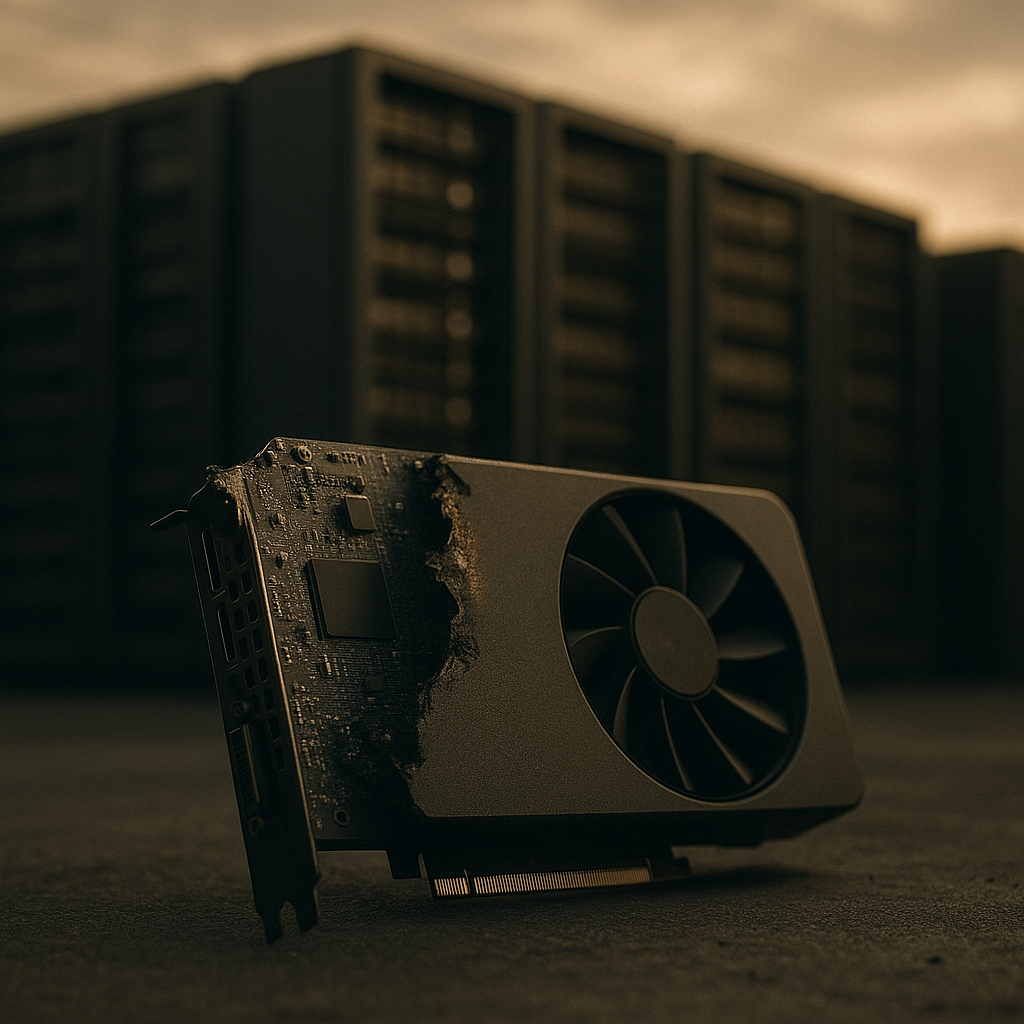
Nvidia Kyber Rack Architecture Reportedly Delayed to 2028
Kyber Delay and Manufacturing Challenges
SemiAnalysis reported that Nvidia’s Kyber NVL144 rack architecture, originally planned to debut in 2027 alongside the Vera Rubin Ultra rack-scale system, has been pushed back to 2028. Kyber is designed as a server cabinet that houses 144 of Nvidia’s most powerful chips in a single unit, enabling them to operate as one large-scale computer suitable for advanced AI training and inference workloads.
The design places graphics processing units in vertically mounted compute trays rather than in horizontal configurations, with the aim of increasing density and reducing latency. According to SemiAnalysis, the delay stems from difficulties manufacturing a key circuit board at the center of the system, specifically a complex, multi-layer PCB midplane that connects electronic modules within the rack.
The research firm also indicated that NVL576, a larger configuration that links eight Kyber racks via optical connections, is likely delayed or will be limited to small production volumes. Nvidia did not respond to CNBC’s request for comment.
Impact on Nvidia Roadmap and Competitive Landscape
According to SemiAnalysis, the Kyber setback adds to existing pressures across Nvidia’s product portfolio and highlights tension between the company’s fast annual launch cadence and manufacturing constraints. A proposed interim workaround—bolting together two of Nvidia’s current-generation racks to approximate Kyber-level performance—has been cancelled following pushback from cloud service providers and hyperscalers over operational complexity and design concerns.
SemiAnalysis stated that Nvidia is now left with no proven solution to expand the scale-up world size for Rubin Ultra and argued this could provide a technical opening for rivals such as Advanced Micro Devices and Google, whose in-house chips are already winning business from top AI labs.
Despite the reported Kyber delay, Nvidia’s current-generation Rubin systems are in full production and are expected to begin shipping this fall to eight cloud partners, including Amazon Web Services, Microsoft Azure, and Google Cloud. SemiAnalysis also projects that Nvidia’s data-center compute revenue will run 20% above Wall Street consensus in the second half of fiscal 2027. Shares of Nvidia were last down less than 0.1% at $194.79 in premarket trading.
FAQ
What is Nvidia’s Kyber architecture?
Kyber NVL144 is a rack-scale server cabinet that integrates 144 of Nvidia’s top-end chips into a single unit, designed to function as one large computer for training and running advanced AI models, using vertically mounted GPU compute trays to enhance density and reduce latency.
Why has Kyber been delayed?
According to SemiAnalysis, Kyber has been delayed to 2028 due to manufacturability challenges with the PCB midplane, a specialized multi-layer circuit board that interconnects modules inside the system.
How does the delay affect Nvidia’s Rubin Ultra plans?
SemiAnalysis reports that with Kyber delayed and a backup dual-rack design cancelled after customer pushback, Nvidia currently has no proven solution to scale up Rubin Ultra to larger world sizes, potentially affecting its high-end AI system roadmap.
Are Nvidia’s current Rubin systems still on schedule?
Yes. SemiAnalysis states that current-generation Rubin systems are in full production and are expected to begin shipping this fall to eight cloud partners, even as the Kyber NVL144 system faces a reported delay to 2028.
Share
Hot topics

STP, NDD, ECN and DMA: Broker Execution Models Decoded
When picking a forex broker, we don’t just look at the brokerage that has the lowest spreads, bonuses, and other kind of what is apparent for us. There is one...
Read more




Submit comment
Your email address will not be published. Required fields are marked *