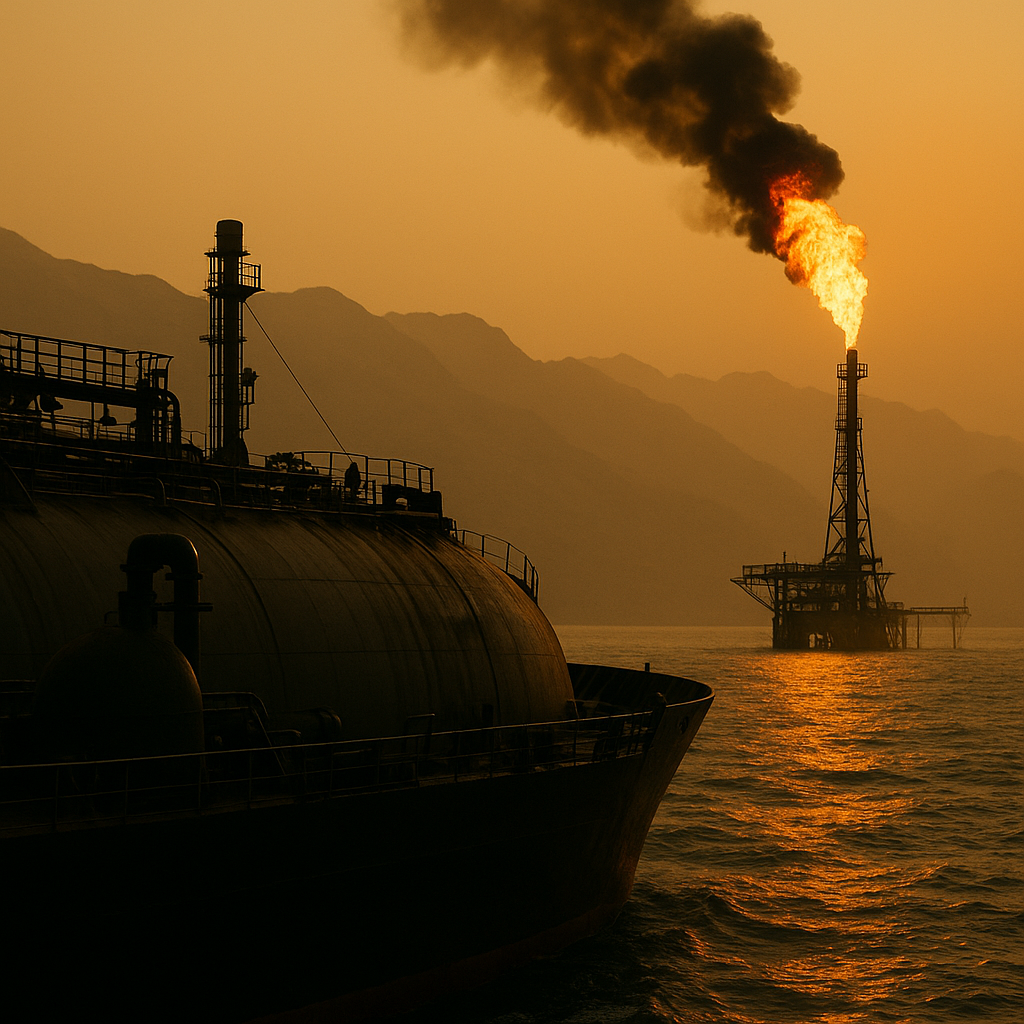
Oil Prices Extend Gains as Hormuz Security Fears Intensify
As of 21:18 ET (01:18 GMT), Brent Oil Futures expiring in September rose 0.7% to $84.68 per barrel, while West Texas Intermediate (WTI) crude futures advanced 0.9% to $80.32 per barrel. Both benchmarks were on track for their fourth straight day of gains after surging nearly 10% to one-month highs earlier in the week when the Iran conflict reignited.
Heightened Military Tensions and Shipping Risk
Markets remained focused on the security of the Strait of Hormuz, a critical chokepoint through which roughly one-fifth of global oil and liquefied natural gas shipments usually pass. Concerns have intensified that prolonged hostilities could disrupt these flows and tighten global supply.
The latest price gains followed a new wave of U.S. strikes launched on Wednesday against Iranian military targets linked to attacks on commercial shipping. Washington stated that the operation was intended to degrade Iran’s ability to threaten maritime traffic in the Gulf.
Tehran, in turn, said it was engaged in an “existential war” with the United States and warned that regional energy exports could face further disruption if the conflict continues. The renewed confrontation has largely reversed the optimism that had emerged after a temporary easing of tensions last month.
Inventory Data and Demand Indicators
Prices were further supported by U.S. inventory data. The U.S. Energy Information Administration reported on Wednesday that crude oil inventories fell by 1.7 million barrels in the week ended July 10, broadly in line with market expectations. Gasoline stockpiles declined by 1.5 million barrels, reflecting firm demand during the peak summer driving season.
In contrast, distillate inventories, which include diesel and heating oil, rose unexpectedly by 4.6 million barrels. This divergence in product balances added nuance to the demand picture even as headline crude stocks moved lower.
The International Energy Agency, in its July Oil Market Report, said that while oil flows through the Strait of Hormuz had partially recovered in June, the renewed hostilities this month have clouded the outlook. According to the agency, the escalation could derail earlier expectations for the oil market to return to surplus in 2027 if disruptions persist or intensify.
FAQ
What is driving the recent rise in oil prices?
The recent rise in oil prices is primarily driven by escalating U.S.–Iran tensions and military actions that have increased the perceived risk of disruptions to oil and gas shipments through the Strait of Hormuz, alongside supportive U.S. crude inventory data.
How have Brent and WTI prices moved this week?
As of 21:18 ET (01:18 GMT) on Thursday, September Brent futures were up 0.7% at $84.68 per barrel and WTI crude futures were up 0.9% at $80.32 per barrel, with both benchmarks posting gains for four consecutive sessions and having surged nearly 10% to one-month highs earlier in the week.
Why is the Strait of Hormuz important for energy markets?
The Strait of Hormuz is a key maritime chokepoint through which roughly one-fifth of global oil and liquefied natural gas shipments typically pass, meaning any disruption can significantly affect global supply and price expectations.
What did the IEA say about the medium-term outlook?
The International Energy Agency noted that while flows through the Strait of Hormuz partially recovered in June, the latest hostilities have increased uncertainty and could undermine earlier projections for the oil market to move back into surplus by 2027.
Share
Hot topics

STP, NDD, ECN and DMA: Broker Execution Models Decoded
When picking a forex broker, we don’t just look at the brokerage that has the lowest spreads, bonuses, and other kind of what is apparent for us. There is one...
Read more



Submit comment
Your email address will not be published. Required fields are marked *