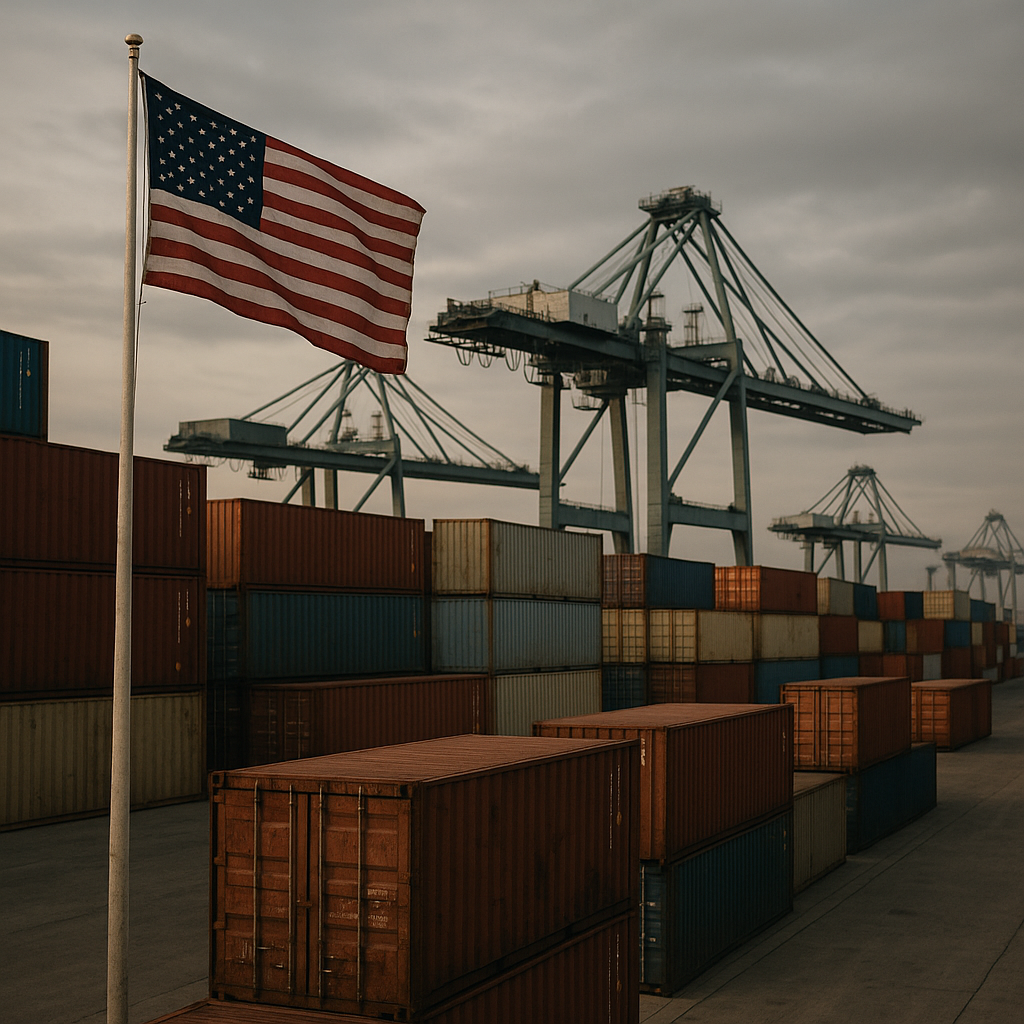
U.S. Imposes New Forced-Labor Tariffs on 60 Trade Partners
New Section 301 Tariffs Replace Expiring Global Duty
The U.S. Trade Representative on Thursday introduced tariffs on the top 60 U.S. trade partners, covering 99.4% of American imports. The move follows a Supreme Court ruling in February that found President Donald Trump’s earlier emergency-powers tariffs unlawful, prompting a temporary 10% global tariff under Section 122 of the Trade Act, which expires July 24.
Under the new regime, economies that have adopted or committed to import prohibitions on goods made with forced labor face a 10% tariff, while those that have not are subject to a 12.5% rate. The action is based on Section 301 of the Trade Act of 1974 and is described by Washington as a response to partners’ failure to impose and enforce bans on forced-labor goods. According to commentary cited from the Peterson Institute for International Economics, the investigation functions as a mechanism for exporting America’s import ban on Chinese goods and for recreating a tariff regime previously struck down by the Supreme Court.
Global Reactions from Key Trading Partners
Australia received a 12.5% tariff on its exports to the U.S., along with China (including Hong Kong), Singapore and South Korea, on the basis that these economies allegedly failed to prevent goods made with forced labor from entering the U.S. market. Australian Trade Minister Don Farrell called the tariffs “unjustified” and inconsistent with the countries’ free trade agreement, stating that Australia’s measures against forced labor and modern slavery are among the strongest globally.
Brazil, also placed in the 12.5% tier, described the tariffs as “arbitrary” and “unjustified.” President Luiz Inácio Lula da Silva said Brazil remained open to negotiations but would look to other markets if necessary. The new 12.5% duty is being added to a separate 25% Section 301 tariff imposed earlier this month, bringing the total barrier to 37.5%, close to the 50% rate ruled unlawful last year.
Chile argued that the measure conflicts with its labor standards and the evidence it provided during the investigation, and noted that the U.S. resolution does not allege Chilean exports are made with forced labor. The government said it would seek exclusions for key export products.
Canada faces the lower 10% tariff tier with an exemption for USMCA-compliant goods. Minister for Canada-U.S. Trade Dominic LeBlanc said the move was “not unexpected,” adding that Canada shares the U.S. objective on forced labor and will continue “engaging constructively.” New Zealand reiterated its disagreement with the findings but confirmed that existing exemptions for about 30% of its U.S.-bound exports, including beef and kiwifruit, remain in place.
Malaysia, Taiwan, Indonesia and India continue to face 10% additional tariffs. Economist Intelligence Unit’s Tianchen Xu told CNBC that the impact on major Asian economies is likely to be limited, as most types of electronics from consumer devices to chips have consistently been exempt under U.S. tariffs.
No major U.S. trading partner has announced retaliatory measures in response to the new forced-labor tariffs.
FAQ
What legal authority is being used for the new tariffs?
The tariffs are imposed under Section 301 of the Trade Act of 1974, replacing a temporary global tariff previously applied under Section 122.
Which countries face the higher 12.5% tariff rate?
Australia, Brazil, China (including Hong Kong), Singapore and South Korea are among those facing a 12.5% tariff, based on U.S. claims that they have not adequately prevented goods made with forced labor from entering the American market.
How extensive is the coverage of the new tariffs?
The tariffs apply to the top 60 U.S. trade partners and cover 99.4% of American imports.
Have any countries announced retaliation?
According to the available information, no major U.S. trading partner has announced countermeasures in response to the forced-labor tariffs.
Share
Hot topics
STP, NDD, ECN and DMA: Broker Execution Models Decoded
When picking a forex broker, we don’t just look at the brokerage that has the lowest spreads, bonuses, and other kind of what is apparent for us. There is one...
Read more


Submit comment
Your email address will not be published. Required fields are marked *