Asian stocks slip as tech selloff deepens and rate concerns rise
Tech sector drives declines in Japan and South Korea
South Korea's KOSPI was the weakest performer in Asia, falling as much as 6% amid steep losses in local chipmakers. Samsung Electronics Co Ltd and SK Hynix Inc both dropped more than 8% at one point before paring some of their initial declines. Sentiment was further pressured after Labor Minister Kim Young-Hoon told Reuters that the country's largest technology firms should share more of their artificial intelligence-related profits with suppliers, subcontractors, and workers. Kim had previously helped broker a last-minute pay deal between Samsung and a major union, averting a strike and securing substantial payouts for memory chip workers.
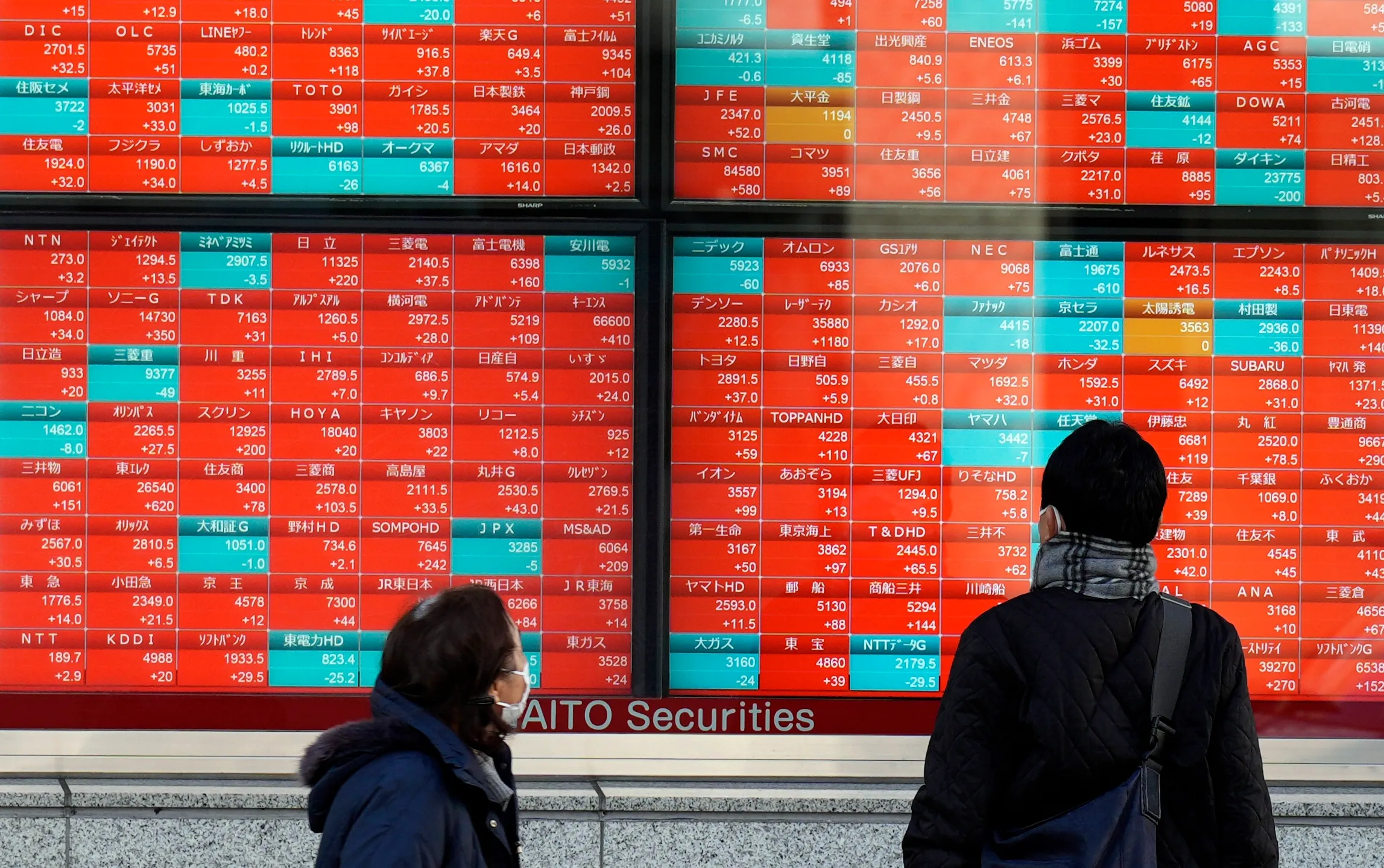
In Japan, the Nikkei 225 lost 1.6%, weighed down by weakness in technology and chipmaking shares that had recently rallied on optimism around AI. SUMCO Corp., Ibiden Co Ltd, and Renesas Electronics Corp were among the worst performers on the index. By contrast, the broader TOPIX index was flat, supported by gains in industrial and consumer stocks, which helped offset the drag from the technology sector.
Monetary policy expectations and global backdrop
Japanese equities were additionally pressured by rising speculation that the Bank of Japan could raise interest rates in June. BOJ Governor Kazuo Ueda indicated earlier in the week that the central bank would discuss a rate hike later this month. Stronger-than-expected April wage income data, released on Friday, suggested the BOJ may have more scope to tighten policy, with wages and inflation remaining its key considerations.
Across the region, broader Asian markets were mostly lower. Hong Kong's Hang Seng index fell 0.8%, also weighed down by technology losses, while China's Shanghai Shenzhen CSI 300 and Shanghai Composite indexes traded in a tight range. Australia’s ASX 200 declined 0.6%, and Singapore’s Straits Times index slipped 0.1%.
U.S. market signals were mixed, with Wall Street ending the previous session uneven as investors sold technology and bought into more cyclical sectors. In Asian trading, Nasdaq 100 futures declined nearly 1%, while S&P 500 futures fell 0.5%, pointing to potential further pressure on technology shares. Market participants awaited U.S. nonfarm payrolls data for May, due later on Friday, for additional indications on the strength of the U.S. economy. Ongoing uncertainty surrounding the U.S.-Iran war and renewed hostilities in the Middle East also remained a source of caution.
Futures for India’s Nifty 50 indicated a flat open ahead of a Reserve Bank of India rate decision expected later in the day. The central bank is widely anticipated to keep interest rates unchanged but may adopt a more dovish tone amid mounting economic headwinds linked to the Middle East conflict.
FAQ
Which markets recorded the largest declines in Asia?
South Korea's KOSPI recorded the largest losses, falling as much as 6%, while Japan's Nikkei 225 dropped 1.6%.
What triggered the selloff in technology and chipmaking stocks?
The selloff was driven by profit-taking after recent gains, extended declines in chipmaking and AI shares, and a global rotation out of technology into more economically sensitive sectors.
Why are Japanese markets sensitive to Bank of Japan policy expectations?
Speculation about a potential BOJ rate hike in June, reinforced by stronger-than-expected April wage income data and comments from Governor Kazuo Ueda, increased concerns about tighter financial conditions, putting pressure on Japanese equities.
What key global events are investors watching?
Investors are focused on U.S. nonfarm payrolls data for May for signals on the U.S. economy, as well as ongoing uncertainty related to the U.S.-Iran war and renewed Middle East hostilities.
Share
Hot topics

STP, NDD, ECN and DMA: Broker Execution Models Decoded
When picking a forex broker, we don’t just look at the brokerage that has the lowest spreads, bonuses, and other kind of what is apparent for us. There is one...
Read more




Submit comment
Your email address will not be published. Required fields are marked *