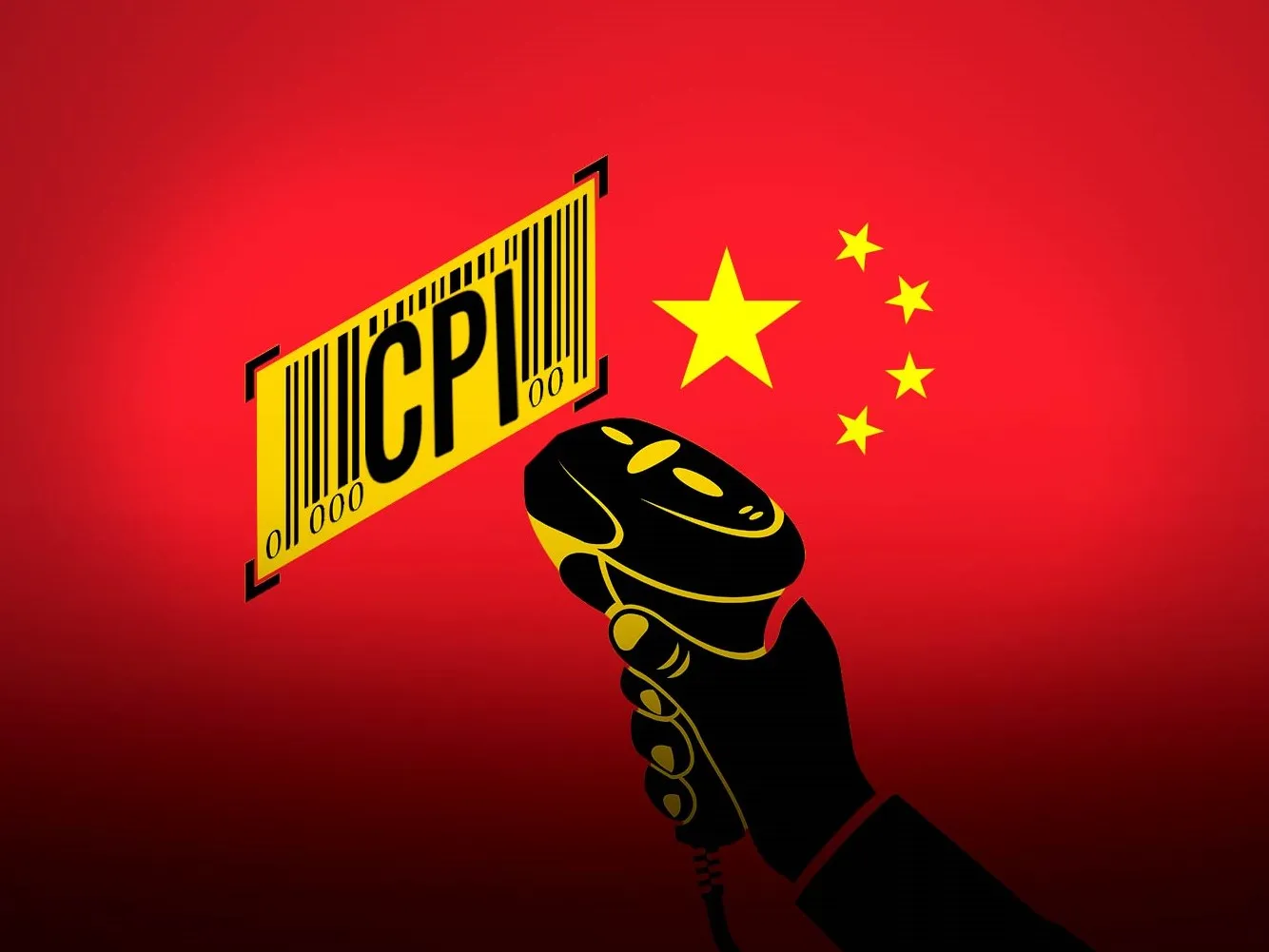
China CPI Underwhelms While PPI Hits Fastest Pace Since 2022
Consumer Inflation Shows Weak Domestic Demand
China’s consumer price index (CPI) rose 1.2% year-on-year in May, according to government data released on Wednesday. The reading was marginally below market expectations of 1.3% and unchanged from April’s annual increase, indicating limited momentum in domestic price pressures.
On a month-on-month basis, CPI declined 0.1%, a smaller drop than the expected 0.2% fall. The subdued print points to ongoing softness in household spending, as local demand remains constrained by broader economic uncertainty associated with the Middle East conflict.
Private consumption has been under strain in recent years amid a prolonged property downturn, and policy efforts by Beijing to stimulate demand have so far had limited effect, according to the report. The conflict in the Gulf region has added another source of uncertainty for Chinese consumers.
Analysts at Capital Economics stated that consumer price inflation is “already showing signs of tapering off” and forecast that it will “fall outright in the months ahead,” signaling the potential return of consumer price deflation.
Producer Prices Accelerate on Energy Supply Disruptions
While consumer inflation remained subdued, factory gate prices rose sharply. China’s producer price index (PPI) increased 3.9% year-on-year in May, in line with expectations. This marked a strong acceleration from the 2.8% rise recorded in the previous month and was the highest PPI reading since August 2022.
The surge in PPI was primarily driven by higher oil and petrochemical prices. These increases stemmed from supply disruptions caused by the U.S.-Israel war on Iran, which has affected crude shipments through the Strait of Hormuz. Iran is a major supplier of crude oil to China, and the closure of this key shipping route has curtailed deliveries.
Beyond crude oil, imports of specialty chemicals and materials have also been disrupted by the Iran conflict, contributing to higher input costs for Chinese manufacturers. Despite these upstream price pressures, Capital Economics analysts noted that the impact on consumer prices has so far been limited and reiterated their expectation that CPI deflation will return in the coming months.
FAQ
What was China’s CPI reading for May?
China’s CPI rose 1.2% year-on-year in May, slightly below expectations of 1.3%, and fell 0.1% month-on-month.
How did producer prices perform in May?
China’s PPI increased 3.9% year-on-year in May, up from 2.8% in the prior month, marking the strongest reading since August 2022.
What factors are pushing up producer prices?
Higher oil and petrochemical prices, driven by supply disruptions from the U.S.-Israel war on Iran and the closure of the Strait of Hormuz, as well as disruptions to imports of specialty chemicals and materials, are fueling producer price inflation.
Are higher producer prices feeding into consumer inflation?
According to Capital Economics, higher producer prices have so far had limited spillover into consumer prices, and the firm expects CPI deflation to return in the coming months.
Share
Hot topics

STP, NDD, ECN and DMA: Broker Execution Models Decoded
When picking a forex broker, we don’t just look at the brokerage that has the lowest spreads, bonuses, and other kind of what is apparent for us. There is one...
Read more



Submit comment
Your email address will not be published. Required fields are marked *