Asian Stocks Mixed as Middle East Tensions Ease and Rate-Hike Bets Support Dollar
Asian Markets Under Pressure Despite U.S.-Iran De-escalation
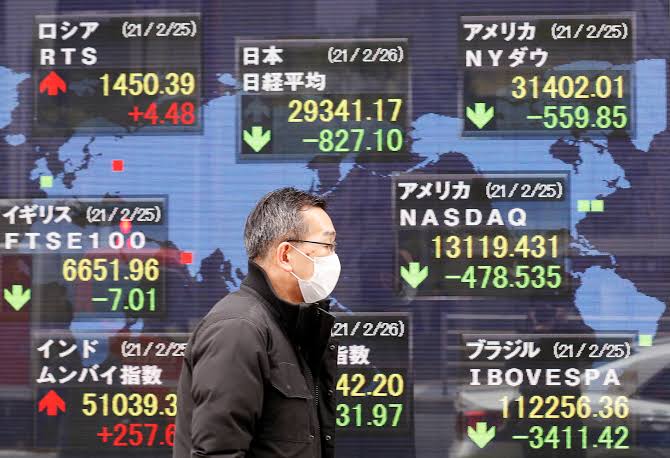
Asian stocks were subdued on Monday, June 29, after Iran and the United States agreed to halt renewed hostilities that had threatened an interim peace deal and supported oil prices. South Korea's KOSPI fell nearly 2%, and Japan's Nikkei slipped 1%, leaving MSCI's broadest index of Asia-Pacific shares down 0.3%.
In contrast, futures pointed to a firmer open in Western markets. S&P 500 and Nasdaq futures rose 0.5%, while European futures were up 0.13%. Nick Twidale, chief market strategist at ATFX Global in Sydney, said markets appeared to be "lacking a bit of direction" and characterized Monday as likely to be "a bit of a flow-driven day without major moves to either side."
The pause in hostilities follows several days of tit-for-tat strikes after an Iranian projectile hit a cargo vessel in the Strait of Hormuz last week, with both sides accusing each other of breaking an interim ceasefire. The 14-point interim peace accord, agreed on June 17, was designed to halt fighting — which the U.S. and Israel started on February 28 — and reopen the key maritime route while talks proceed on issues including Iran's nuclear programme.
Vasu Menon, managing director of investment strategy at OCBC, said markets have become accustomed to swings in U.S.-Iran talks and described his firm as "moderately constructive" on the second-half investment outlook, citing ample liquidity and "decent" economic and earnings news flow.
Oil, AI Valuations, and Rate-Hike Expectations Shape Market Sentiment
Oil prices, which had given up most of their war-driven gains as markets priced in a potential easing of supply constraints, ticked higher on Monday amid continued uncertainty around the peace accord. Brent crude futures traded 0.5% higher at $72.37 a barrel, while U.S. West Texas Intermediate crude rose 1% to $69.92 a barrel.
Investors are also assessing stretched valuations in AI-related firms after years of gains. Micron's strong earnings forecast and Apple's recent price hikes highlighted both opportunities and pressures in the sector. Strategists at BofA Global Research said markets were undergoing a tactical rotation away from mega-cap AI stocks into smaller, more cyclical segments, indicating early signs of broader market participation after a period of concentrated gains.
The Bank for International Settlements cautioned on the durability of the current AI investment surge, pointing to supply bottlenecks and fierce competition that could lead to overinvestment similar to past boom-and-bust cycles. Jose Torres, senior economist at Interactive Brokers, noted that rising infrastructure costs were pushing firms to seek additional cash, heightening risks if AI investments fail to meet expectations. This has led traders to favor defensive and cyclically oriented equity segments in recent weeks.
On the macroeconomic front, easing but still elevated oil prices are seen as insufficient to relieve pressure on the U.S. Federal Reserve. Markets are now pricing at least one rate hike this year, a reversal from expectations of two cuts before the conflict began. BofA strategists forecast three hikes, citing a firm labour market, new Fed Chair Kevin Warsh and persistent inflation.
Higher rate expectations supported the dollar, with the dollar index at 101.33, just below last week's one-year high. The Japanese yen stood at 161.77 per dollar, constrained by concerns over potential Tokyo intervention as it hovers near a 40-year low. The stronger dollar weighed on gold, which fell 0.87% to $4,052.96 per ounce and is on track for a 13% decline in the second quarter, its largest quarterly drop since 2013.
FAQ
What is driving the current moves in Asian equity markets?
Asian equities are being influenced by a combination of factors: a tentative pause in U.S.-Iran hostilities, concerns over AI-related stock valuations, sector rotation toward defensive and cyclical shares, and rising expectations of U.S. interest rate hikes, which are supporting the dollar and tightening financial conditions.
How have oil prices reacted to developments in the Middle East?
Oil prices have risen modestly, with Brent crude up 0.5% at $72.37 and U.S. West Texas Intermediate up 1% at $69.92, as markets balance the risk to supply from recent hostilities against expectations that the interim peace accord could ultimately ease constraints in the Strait of Hormuz.
Why is the U.S. dollar near a one-year high?
The dollar is supported by increased market expectations of at least one U.S. Federal Reserve rate hike this year, and BofA’s forecast of three hikes, reflecting a firm labour market and persistent inflation. These expectations have pushed the dollar index to 101.33, close to last week’s one-year high.
What is happening to gold prices?
Gold is under pressure from the stronger dollar and higher rate expectations, trading down 0.87% at $4,052.96 per ounce and heading for a 13% quarterly decline, its largest since 2013.
Share
Hot topics

STP, NDD, ECN and DMA: Broker Execution Models Decoded
When picking a forex broker, we don’t just look at the brokerage that has the lowest spreads, bonuses, and other kind of what is apparent for us. There is one...
Read more

Submit comment
Your email address will not be published. Required fields are marked *