
Most Volatile Currency Pairs in Forex and How to Trade Them
The primary reason traders enter the Forex market is due in part to volatility. Some may prefer fast-moving charts for increased opportunity while others avoid them due to their increased risk. Regardless of whether one chooses to trade with volatility or avoid it, being able to understand volatility is essential to being a successful trader.
There are some currency pairs that tend to move at a slow, steady pace and there are also currency pairs that can have large swings in a matter of minutes. Some of the factors that affect currency volatility include economic reports or news releases, changes in interest rates, political events, market sentiment and/or global disasters. Volatility can present both opportunity and risk for traders.
This guide will outline modern day currency volatility, what causes it, how traders go about trading with extreme movements in the Market, what the Most Volatile Currency Pairs are, methods to manage risk when trading the Most Volatile Currency Pairs, and methods/train to be equally as Active when trading in Highly Active Market Conditions.
What Does Currency Volatility Mean in Forex?
Volatility in the foreign exchange market describes which pair of currencies will fluctuate in price and whether or not they will do so rapidly. If you have a currency pair that experiences a significant change in value over just a short period of time, it would be pegged as severely volatile; whereas pairs that maintain their value with relatively limited fluctuations would be categorised as ‘low volatility’ currency pairs.
To help put this into perspective, picture two different types of roads: one road is straight and narrow with no turns whatsoever, whereas the other has many sharp turns and frequent changes in directions; that’s similar to what it’s like trading your currency for a volatile currency. The markets will move incredibly quickly which could occur from 1 moment to another – literally!
An example of how velocity impacts trades is how much stability EUR/USD typically has, compared to GBP/JPY that generally has large swings and aggressive movements within the market place. Regardless of whether you are looking at GBP/JPY, you may see the price increase (or decrease) from one point to another by more than 100 pips in a single trading session; especially when there are major economic releases being released into the market place.
Understanding the impact of volatility is greatly important to traders because it will directly affect their decision making process. In addition, it directly impacts placement of stops, profit targets, timing, position size, and risk management overall.
Most beginners place emphasis solely on direction i.e., will this market go up or down? More seasoned or experienced traders will not only focus on which direction is correct but will also keep track of what kind of velocity that direction will have. Even if you are 100% correct on which direction the market is going, if your risk settings are very tight with extremely high volatility; you will more than likely have your trading account wiped out.
Traders of all types have used various forms of indicators such as ATR (average true range), or a method of measuring daily volatility (what that means is the larger the ATR value, the larger the daily moves of that particular currency pair would be considered to be and therefore they are all relatively active and/or volatile currency pairs).
Another important concept is the pip. If you are still learning the basics of forex pricing, understanding what is Pip in Forex calculations can help you better understand how volatility impacts real trades.
Volatility creates opportunity because traders need movement to generate profit. This is one reason many traders actively search for Volatile Forex Pairs. However, volatility also increases risk. Fast markets can trigger emotional decisions, slippage, and unexpected losses if traders are not disciplined.
Some traders prefer calm markets because they feel easier to manage. Others enjoy highly active sessions because stronger price movement can create more setups. Neither approach is automatically better. The key is understanding how volatility works and choosing a trading style that fits your personality.
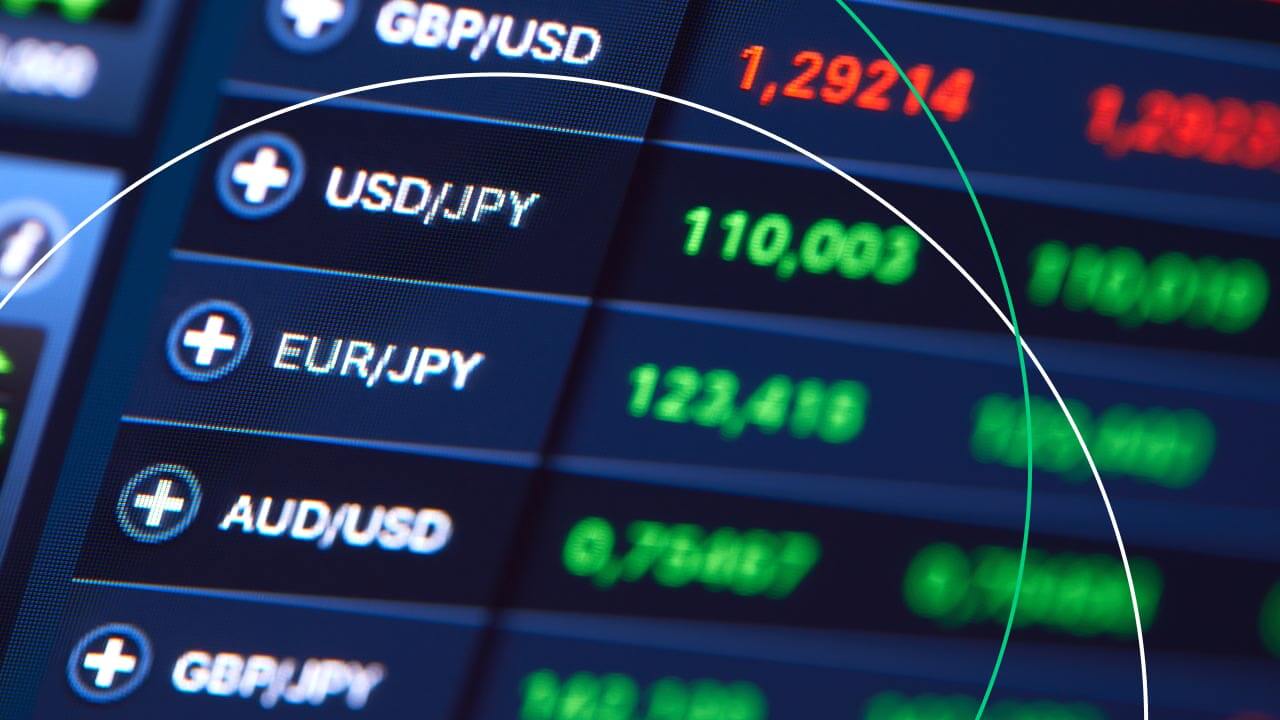
What Makes a Currency Pair Volatile?
Not all currency pairs behave the same way. There are pairs that trade very quietly throughout the day and there are pairs that can have huge fluctuations within a matter of minutes. The discrepancies in fluctuations between various currency pairs can be attributed to many factors including economic, political, and market factors.
Economic news is one of the largest contributors to volatility in currency markets. Interest rate decisions from central banks, inflation reports, gross domestic product numbers, and employment figures all can create substantial movements in financial markets.
For instance, if the Federal Reserve were to make a surprise announcement regarding an interest rate change, it would not be surprising to see USD currency pairs move very quickly and dramatically.
In addition, central banks have a strong influence on market volatility as well. Through their monetary policy, the Federal Reserve, the European Central Bank, and the Bank of England all can create expectations and influence financial markets with their words when they speak.
Political events impact the financial markets as well. Election events, wars, sanctions, and global uncertainty create fear in the markets typically leading to greater levels of volatility.
Furthermore, liquidity plays a major role in determining the level of movement in any currency pair. Pairs such as EUR/USD are considered “highly liquid” and tend to trade with greater ease because of the volume of buyers and sellers in the market. Conversely, “illiquid” currency pairs tend to have sudden spikes or gaps in pricing.
The various trading sessions will create varying degrees of volatility. The London and New York trading sessions generally are where the greatest amount of trading occurs leading to the highest levels of price movement.
| Trading Session | Typical Volatility |
| Asian Session | Lower |
| London Session | High |
| New York Session | High |
| London + New York Overlap | Very High |
Commodity prices can influence currencies as well. CAD is heavily connected to oil prices, while AUD often reacts to metals and Chinese economic activity. Some currencies are naturally more volatile because of political instability, inflation problems, or economic uncertainty. Exotic pairs often experience stronger movement for this reason. No single factor controls volatility all the time. Usually, several conditions combine together to create explosive price movement.
Most Volatile Currency Pairs in Forex
There are some currency pairs that have smooth, consistent movements, but others are known for exhibiting sudden movement, fast trends, and aggressive trend reversals. One of the most widely known and traded currency pairs is GBP/JPY (The Dragon), where fast and aggressive price movements are the norm due to a combination of two very strong currencies. This pair consists of a lot of volatility and has a greater range from the high to the low, which creates strong momentum and large price fluctuations through intraday trading.
Another very active currency pair, as well as GBP/JPY, is GBP/USD; this pair is active during both the London and New York trading sessions. Economic news released from either the UK or US frequently has a significant impact on the market.
The gold symbol in forex is XAU/USD, and it is known for extremely large price swings during uncertain market conditions. Gold volatility usually increases during inflation fears, geopolitical tensions, or economic crises.
USD/JPY is usually calmer than GBP/JPY, but it can still become highly volatile during major global events because the Japanese yen is considered a safe-haven currency.
EUR/JPY is another active cross pair that often produces strong trends during risk-on and risk-off market conditions.
Exotic pairs such as USD/TRY or USD/ZAR are also among the Most Volatile Currency Pairs because they are heavily influenced by inflation, politics, and lower liquidity.
Many traders actively search for the Most Volatile Currencies for Trading because larger movements create more opportunities. However, experienced traders understand that volatility should never be confused with easy profit.
Even trading platforms matter during fast-moving conditions. Traders using a metatrader5 account often monitor execution speed and spread behavior carefully because small differences become more noticeable during volatile sessions.
Volatile Major vs Cross vs Exotic Currency Pairs
The majority of forex pair divisions are categorised as: Major, Cross and Exotic.
Major pairs always include USD as part of their composition such as: EUR-USD, GBP-USD, and USD-JPY. Major FX pairs typically have high liquidity as well as tight spreads, meaning they are inexpensive to trade.
Cross pairs are made up of currency pairs that do not include the USD and typically move with greater volatility as a result of multiple economies being involved, for example: GBP-JPY, EUR-JPY, and EUR-GBP.
Many traders who trade for volatility focus primarily on trading cross currency pairs as they typically have greater price action than major currency pairs.
Exotic Pairs are comprised of a major currency plus that of a developing nation; for example: USD-TRY or USD-MXN; and typically exhibit low liquidity while exhibiting unpredictable price action.
For new traders, major pairs are typically the better choice for developing trading skills and developing a trading strategy due to their ease of analysis and lower overall trading costs compared to cross and exotic pairs.
While new traders may favour major currency pairs, cross currency pairs can provide traders with higher volatility, and thus will require more developed discipline and emotional control. Exotic currency crosses tend to be advanced due to their unpredictability.
Different trader styles often prefer different market types; for example, scalpers may focus on fast moving cross pairs, while swing traders may prefer slower moving major currency pairs.
Why Traders Prefer Volatile Currency Pairs
Volatility can look intimidating, but many traders actively search for highly active markets every day because movement creates opportunity.
A currency pair moving 150 pips daily naturally offers more trading opportunities than one moving only 30 pips.
This is why day traders and scalpers often focus on the Most Volatile Currency Pairs.
Volatile markets also create stronger momentum. In slower conditions, price may move sideways for hours. Active markets often produce cleaner breakouts and more powerful trends.
Many traders enjoy volatile conditions because:
- trends develop faster
- breakout opportunities appear more often
- intraday movement becomes larger
News traders especially prefer volatile markets because economic reports can create explosive movement within minutes.
However, experienced traders understand that volatility increases both opportunity and risk at the same time.
Some traders simply enjoy the energy of fast-moving markets, while others prefer calmer conditions because they feel emotionally easier to manage.
The important thing is choosing markets that match your personality, strategy, and emotional discipline.
Risks of Trading Volatile Currency Pairs
Volatile markets create bigger opportunities, but they also increase risk. Prices can reverse suddenly after economic news or unexpected market reactions.
Fast-moving pairs usually require wider stop losses because normal price swings are larger. Traders who use stops that are too tight often get removed from trades too early.
Volatility also increases emotional pressure. Traders may panic, chase trades, or overreact during aggressive market movement.
When there are volatile markets, traders can expose themselves to increasing risk by using high leverage, where large losses can occur in a very short time-frame. The markets also have higher occurrences of slippage and false breakouts during periods of extreme activity. Therefore, professional traders commonly use patience and disciplined trading skills when trading in highly volatile markets and apply proper risk management strategies.
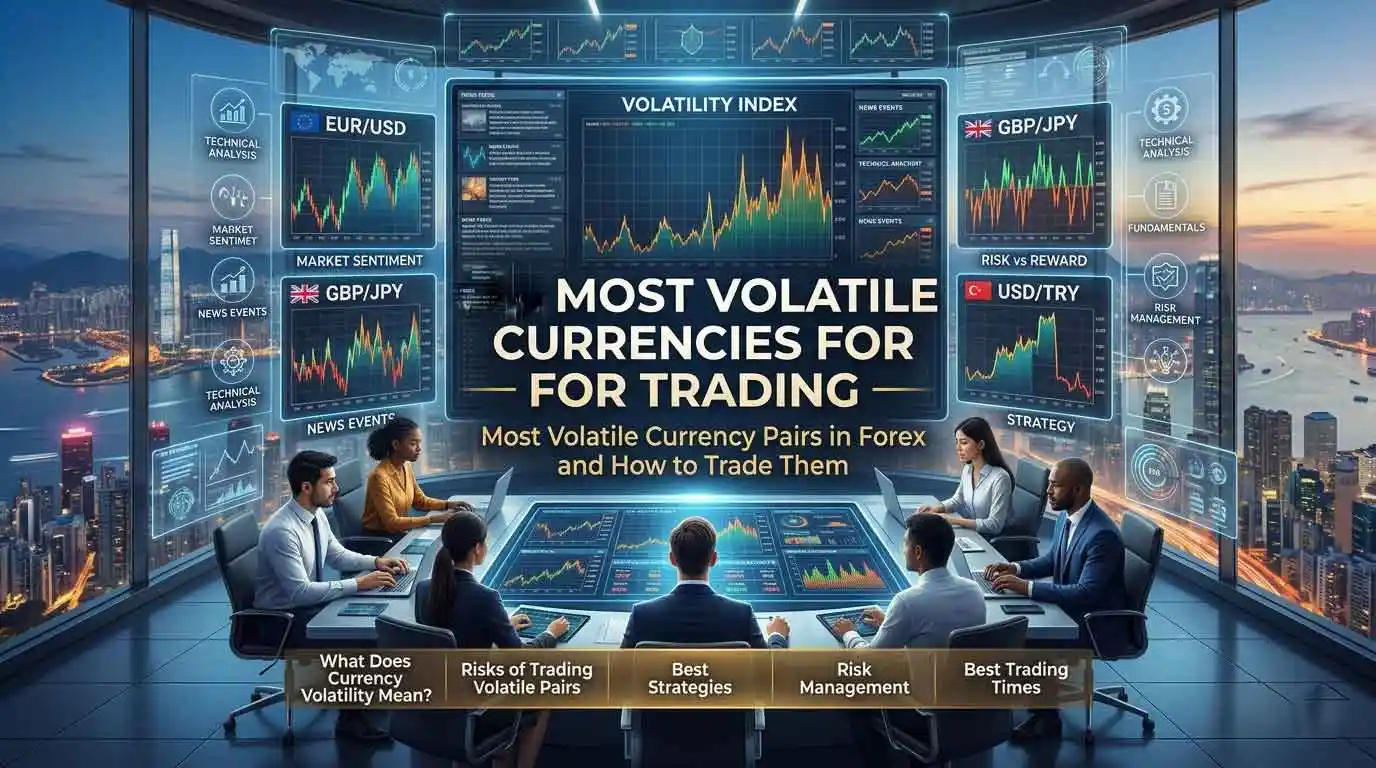
Best Strategies for Trading Volatile Currencies
Structure and discipline are key elements for trading in a high volatility currency pair! One of the more popular approaches to trading high volatility currency pairs is breakout trading, where traders enter a position as soon as there is an established break in the price through key levels of support or resistance.
In addition, trend-following strategies also tend to work well with high volatility currencies because of the strong directional movements created in this market, especially when managed through a MetaTrader 5 account.
Lastly, there are many short-term traders that utilize scalping methods to quickly enter and exit the market during times of increased activity.
Other common trading methods used by high volatility currency traders include use of economic news (like interest rate decisions or employment figures) as triggers to enter or exit trades, use of momentum indicators, use of average true range (ATR) indicators, and the use of multi-timeframe analysis for better trading decisions.
Ultimately, selecting any one strategy to trade high volatility currencies is based upon a trader’s personal trading style, trading background and ability to manage his/her own emotions when trading.
How to Manage Risk in Volatile Markets
The importance of risk management grows larger as we see increased volatility in the market. An easy way to reduce your risk is to reduce the size of the position you are trading. It is important to implement stop losses because price action can reverse quickly due to fast-moving markets. Most professional traders risk a small percentage of their total account for each trade they make and will use the least amount of leverage possible to avoid incurring large losses from the sudden swings in the market.
Understanding what is happening economically and trading the announcement when it occurs will help provide you with adequate time to determine how the announcement will affect volatility in the market. Managing your emotions when you trade is as important as using technical analysis for your trade entries. Professional traders are concerned with protecting their capital first, with emotional decision-making second.
Best Times to Trade Volatile Currency Pairs
Volatility changes throughout the day depending on trading sessions and market activity. The London session is usually one of the most active periods because it handles a large share of global forex trading volume.
The New York session also creates strong movement, especially for USD pairs during major economic releases. The overlap between London and New York is often considered the most volatile period because liquidity and trading activity are both very high.
The Asian session is generally calmer, although JPY pairs can still become active during regional news events. Experienced traders at Otetmarkets focus on trading during active market hours where volatility creates clearer opportunities rather than random movement.
Conclusion
Volatility can be defined as a key feature of the forex marketplace where traders either avoid or actively pursue it depending on their perception of risk versus opportunity. The perception of volatility is therefore subjective in nature.
The use of Most Stable Currency Pairs can help generate very strong trending moves, rapid breakout activity, and much greater upside potential; however, these same conditions also require appropriate amounts of discipline, patience, and risk mitigation strategies from the trader.
Understanding the factors that create volatility in a particular currency pair can assist with creating a basis for quantifying how well a trader will do consistently. Such factors will include the following: economic events, the central banks’ policies, political uncertainties, market sentiments and conditions, and liquid markets.
Although some traders will find it easier to trade stable conditions others may prefer trading in very volatile markets creating accelerated price movements and their resultant increased volatility. For new traders, utilizing only trading with the major currency pairs combined with the appropriate risk management plan is generally viewed as the optimal route to becoming successful in forex trading.
In conclusion, forex trading is not about being profitable on every trade instead it’s about establishing a risk management plan, maintaining disciplines through implementation of a proven trading plan until such time that the trader can become better at making the right trades, in addition to creating a long term view of how each succeed over time.
FAQ
Some of the most volatile pairs in forex include GBP/JPY, GBP/USD, EUR/JPY, XAU/USD, and exotic pairs like USD/TRY.
These markets often experience larger daily movement because of economic sensitivity, market sentiment, or lower liquidity.
GBP/JPY is widely considered one of the most aggressive forex pairs because of its strong daily movement and sensitivity to global sentiment.
Exotic pairs such as USD/TRY or USD/ZAR can also become extremely volatile during periods of economic or political instability.
Trading volatile markets usually requires:
- proper risk management
- smaller position sizes
- emotional discipline
- structured trading plans
Many traders use breakout strategies, momentum trading, and trend-following systems when trading active markets.
It is also important to understand concepts like what is Pip in Forex because volatility directly affects pip movement and overall risk exposure.
Traders using a metatrader5 account often monitor execution quality carefully during highly active sessions.
You can also compare spreads and execution conditions through brokers such as otetmarkets before trading fast-moving markets.
Share
Hot topics

STP, NDD, ECN and DMA: Broker Execution Models Decoded
When picking a forex broker, we don’t just look at the brokerage that has the lowest spreads, bonuses, and other kind of what is apparent for us. There is one...
Read more




Submit comment
Your email address will not be published. Required fields are marked *