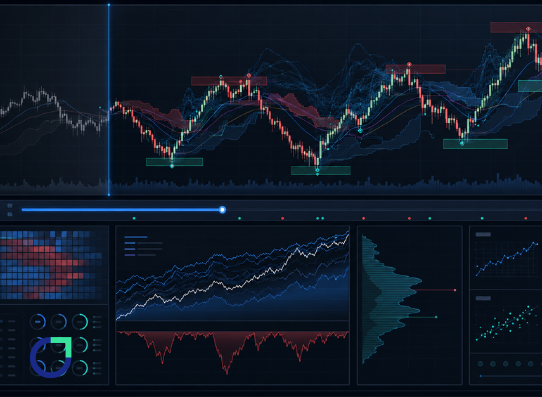
Backtesting Forex Strategies for Higher Accuracy
Many traders lose money not because their strategy is terrible, but because they never properly test it before risking real capital.
A setup may look amazing after a few winning trades, but forex markets constantly change. Without testing a strategy across different market conditions, traders usually have no idea whether the system actually works long term.
The backtesting of Forex strategies is integral for traders considering that it provides statistics for how a particular strategy would have fared from its inception to the present using actual historical data. Using historical price data allows traders to eliminate emotionality and guesswork when determining consistency, risk, and performance of a given strategy.
What Is Backtesting in Forex Trading?
Backtesting is an important step when developing a new trading strategy. When you first develop your trading strategy, you will want to test it out with historical market data to see how it would perform if you were to use it today. To do this, traders take their previous strategies and apply them to past charts so that they can see how the trades would have played out.
The purpose of backtesting is not to give you an automatic crystal ball for predictng future prices, but to help determine if your trading strategy:
- consistency
- structure
- realistic profitability
- manageable risk
before using real money.
Why Traders Use Backtesting
if you don’t use backtesting, your trading can quickly become emotional and you might attempt to trade too many times based purely on your short-term performance without knowing exactly how successful your strategy will actually be in the long term. By using backtesting you will:
- build confidence
- understand weaknesses
- improve discipline
- reduce emotional decision-making
This is one reason experienced traders rarely use untested strategies.
Backtesting Helps Build Realistic Expectations
One common beginner mistake is expecting a strategy to win constantly.
Backtesting quickly shows that even strong systems experience:
- losing streaks
- drawdowns
- difficult market periods
Understanding this helps traders stay calmer during live trading.
Historical Data Matters
The quality of historical data plays a huge role in accurate testing.
Professional traders usually test strategies across:
- trending markets
- ranging conditions
- high volatility periods
- low volatility environments
This creates a more realistic evaluation.
Backtesting Is Common Across All Trading Styles
Different traders use backtesting differently.
For example:
- scalpers test short-term entries
- swing traders analyze trend continuation setups
- algorithmic traders test automated systems
Even traders focused on trading without indicators often backtest pure price action strategies to measure consistency across different market conditions.
Why Backtesting Is Important for Forex Traders
Backtesting is important as it assists traders to make decisions from data rather than relying on emotions.
Without a backtest many traders have a false sense of how a strategy will perform and go into the market with unrealistic expectations and lack of confidence.
Reduces the Emotional Side of Trading
Emotional Control Is A Benefit of Backtesting
When traders know how a strategy performed in the past they can make more disciplined decisions when trading live and normally do not experience panic as much when having short-term losing streaks.
Improved Discipline During Live Trading
Traders can discover all the problems with a strategy before risking their own money by backtesting.
When a strategy is backtested some issues/weaknesses may be revealed.
- poor risk-reward ratios
- weak entry timing
- inconsistent market conditions
- excessive drawdown
Finding these issues early can save traders significant losses later.
Confidence Improves Execution
Many traders hesitate during live trading because they do not fully trust their system.
A properly tested strategy often improves confidence because traders already understand:
- expected win rate
- historical performance
- average drawdown
- potential weaknesses
This reduces second-guessing during execution.
It Helps Traders Refine Strategies
Professional traders rarely use the first version of a strategy forever.
Instead, they:
- test
- analyze
- adjust
- improve
over time.
Backtesting creates a structured way to improve trading systems gradually.
Risk Management Becomes Clearer
Testing also helps traders understand:
- stop-loss behavior
- position sizing
- risk exposure
- average trade duration
This creates more realistic risk management.
It Prevents Blind Strategy Copying
Many beginners copy strategies online without testing them personally.
Professional traders usually avoid this mistake because they understand every strategy behaves differently depending on:
- market conditions
- timeframe
- risk settings
- execution style
Backtesting creates independent understanding instead of blind trust.
How Forex Backtesting Works Step by Step
Backtesting may appear difficult to new traders because of the intricacies but, when a trader has previously done a backtest and has experienced the steps and procedures, subsequent tests normally become easy for that trader.
In order to ensure a professional backtesting process some professional traders will commonly follow a standard operating procedure.
When creating a backtesting strategy the first thing that needs to be done to accomplish that is to gather (accumulate) historical market data to then backtest your strategy against.
Traders gather historical market data for:
- price charts
- candlestick data
- spread information
- timeframe history
The better the historical data is the better your results and the closer they are to replicating real-world results of your system.
Once you have historical market data, you’ll be ready to define your trading rules that will serve as the foundation for your backtesting.
- entry conditions
- stop-loss placement
- take-profit targets
- risk management rules
Without structure, backtesting becomes inconsistent.
Applying Strategy to Past Data
After defining rules, traders apply the strategy to historical charts.
They analyze how the system would have behaved during:
- trends
- consolidations
- volatile conditions
- major news periods
This helps measure consistency.
Recording Trade Outcomes
Professional traders usually record every trade carefully.
This often includes:
- entry price
- stop-loss level
- trade result
- risk-to-reward ratio
- market condition
Tracking data properly improves analysis later.
Analyzing Performance Metrics
After enough trades are tested, traders analyze the results.
Important metrics usually include:
- win rate
- drawdown
- profit factor
- average return
- risk exposure
These numbers help determine whether the strategy is realistic long term.
Types of Forex Backtesting Methods
There are several ways traders backtest forex strategies. Each method has advantages and limitations depending on the trader’s style and experience.
Manual Backtesting
Manual backtesting involves studying charts candle by candle and applying trading rules manually.
Many traders prefer this approach because it improves:
- chart reading
- pattern recognition
- market understanding
Manual testing also helps traders become more familiar with price behavior.
Automated Backtesting
Automated backtesting uses algorithms or software to test strategies automatically.
This approach is popular among:
- algorithmic traders
- quantitative traders
- EA developers
Automated systems are able to test more data in a shorter timeframe than manual testing.
Automated Systems
There are many different software solutions available to help traders with backtesting. Examples of popular testing platforms include:
- historical replay tools
- statistical analysis
- execution simulation
- performance tracking
Some traders use cTrader platforms for backtesting because they provide chart replay features, automation support, and advanced testing environments.
Best Tools for Forex Backtesting
Backtesting tools help traders analyze strategies more efficiently and organize performance data more clearly.
MetaTrader Platforms
MetaTrader remains one of the most widely used backtesting environments.
Many traders use:
- MT4 for simplicity
- MT5 for advanced features
These platforms support:
- automated systems
- historical data testing
- expert advisors
cTrader
Many traders prefer cTrader platforms because they offer:
- advanced charting
- cleaner interfaces
- strategy optimization tools
- strong automation support
This makes testing smoother for many users.
TradingView
TradingView is popular for:
- chart analysis
- replay features
- visual testing
- multi-timeframe review
It is especially useful for discretionary traders.
Spreadsheet Tracking
Some traders still use spreadsheets to track:
- trade results
- win rates
- drawdowns
- risk metrics
Simple tracking methods can still provide valuable insight.
Indicator-Based Testing
Many traders also test systems built around tools from the Top 10 forex indicators to compare how different indicators behave across market conditions.
How Professionals Use Backtesting to Build Strategies
Professional traders rarely rely on random strategies.
Most successful systems are developed through:
- testing
- adjustment
- repetition
- long-term evaluation
Consistent Performance is Key for Professionals Traders that are professional tend to emphasize their performance consistency over their actual trading positions’ success.
Long term profitability does not require a strategy to win on every trade. Methodologies are Evaluated Under Many Conditions.
Methods are generally evaluated using multiple parameters including but not limited to:
- trending markets
- ranging conditions
- volatile sessions
- low volatility periods
This helps avoid overfitting.
They Accept Losing Trades
Backtesting teaches traders an important lesson: losses are normal.
Even strong systems experience:
- losing streaks
- temporary drawdowns
- difficult periods
Understanding this improves emotional discipline.
Professionals Keep Adjusting
Markets evolve constantly.
This is why professional traders continue:
- reviewing data
- testing adjustments
- refining execution
instead of assuming one strategy works forever.
Some traders using broker environments connected to otetmarkets also combine backtesting with demo execution before moving strategies into live conditions.
How to Improve Accuracy in Backtesting Results
Accurate backtesting depends heavily on discipline and realistic testing conditions.
Use High-Quality Data
Poor historical data creates misleading results.
Professional traders usually prefer:
- accurate pricing data
- realistic spreads
- long testing periods
Avoid Curve Fitting
One major mistake is over-optimizing strategies until they fit past data perfectly.
A strategy that looks perfect historically may fail completely in live markets if it becomes too optimized.
Test Large Sample Sizes
Testing only a few trades is not enough.
Professional traders often test:
- dozens of trades
- multiple market conditions
- long historical periods
before trusting results.
Keep Rules Consistent
Changing rules during testing creates unrealistic results.
Consistency matters heavily during proper backtesting.
Practical Example of Forex Strategy Backtesting
Imagine a trader using a simple trend-following strategy on EUR/USD.
The rules might include:
- buying above a moving average
- using a fixed stop-loss
- targeting a 1:2 risk-to-reward ratio
The trader then tests the strategy across six months of historical data.
After recording results, they may discover:
- the strategy performs well during trends
- it struggles during sideways markets
- drawdowns remain manageable
This information helps the trader improve the system before risking real capital.
Without backtesting, the trader would never clearly understand the strategy’s strengths and weaknesses.
Conclusion
Backtesting is one of the most important parts of professional forex trading because it helps traders evaluate strategies using data instead of emotions. Successful backtesting forex strategies usually focus on consistency, risk management, realistic expectations, and disciplined analysis rather than searching for perfect systems.
Professional traders use backtesting to improve confidence, identify weaknesses, refine execution, and build structured trading plans.
Your strategy may go through a long period of losing trades, but with sound testing, you will understand your strategy’s performance during different types of market conditions.
Using thorough and structured testing over time, you are frequently able to determine which traders use structured processes and which use emotional decision-making.
FAQ
Backtesting is when traders take market data from prior time periods and apply their trading systems to see how they performed historically based on the results of backtesting.
Backtesting helps traders:
- improve confidence
- reduce emotional trading
- identify weaknesses
- evaluate risk more realistically
before risking real capital.
Popular backtesting tools include:
- MetaTrader
- TradingView
- cTrader platforms
- spreadsheet tracking systems
The best choice depends on trading style and strategy complexity.
Share
Hot topics

STP, NDD, ECN and DMA: Broker Execution Models Decoded
When picking a forex broker, we don’t just look at the brokerage that has the lowest spreads, bonuses, and other kind of what is apparent for us. There is one...
Read more



Submit comment
Your email address will not be published. Required fields are marked *