
Centralized vs Decentralized Exchanges: A Complete Comparison
When you first enter the crypto market, one of the most important decisions you’ll make isn’t which coin to buy — it’s where to buy it. Two very different types of platforms are available to you: centralized exchanges (CEX) and decentralized exchanges (DEX).
On the surface, they both let you trade cryptocurrency. But underneath, they work in completely different ways — and the differences matter. They affect how safe your funds are, how much privacy you have, how easy the experience is, and how much control you actually hold over your own assets.
This guide breaks down everything you need to know about CEX vs DEX: how each one works, their strengths and weaknesses, a full side-by-side comparison, and a clear framework for deciding which one is right for you.
What Is a Cryptocurrency Exchange?
A cryptocurrency exchange is an online platform where users can buy, sell, trade, or swap digital assets. Rather than finding another person to trade with directly, exchanges bring buyers and sellers together in one place — making transactions faster, more reliable, and more efficient.
On a crypto exchange, you can typically:
- Buy cryptocurrency using fiat currency (USD, EUR, GBP, etc.)
- Sell digital assets and withdraw to your bank account
- Swap one cryptocurrency for another
- Access advanced products like futures trading, staking, or lending
Most people start with spot trading — buying or selling crypto at the current market price. It’s the simplest form of crypto trading, with no leverage and no complexity. Once familiar with spot trading, many users explore the more advanced tools their exchange offers.
Types of Crypto Exchanges (CEX and DEX)
All crypto exchanges fall into one of two categories:
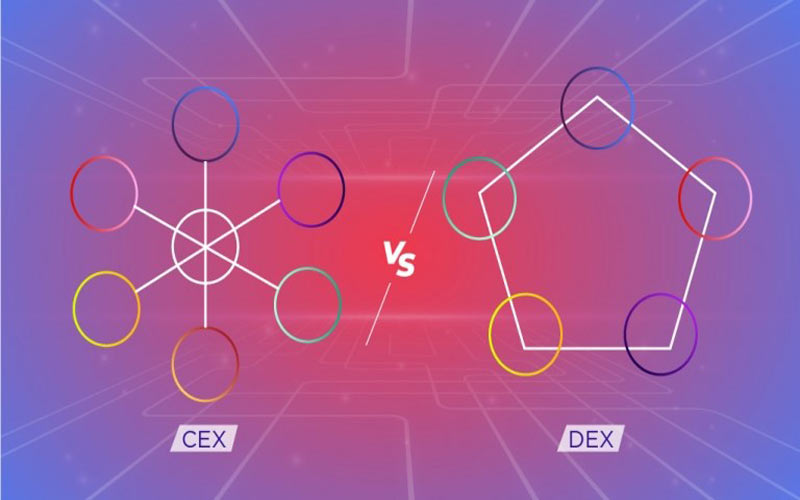
- Centralized Exchanges (CEX): A company operates the platform, manages your account, holds your funds, and processes every trade on your behalf.
- Decentralized Exchanges (DEX): No company is involved. Trades happen directly between users through blockchain smart contracts, and you keep full control of your funds at all times.
Both types serve the same core purpose — enabling crypto trading — but the technology, user experience, and risks involved are fundamentally different. Understanding those differences is what this guide is about.
What Is a Centralized Exchange (CEX)?
A centralized exchange (CEX) is a crypto trading platform run by a company that manages everything on behalf of its users: account creation, identity verification, fund storage, order matching, and security. When you trade on a CEX, the exchange acts as the middleman — processing every transaction between buyers and sellers.
You’ve probably heard of the most well-known CEX platforms: Binance, Coinbase, and Kraken are among the largest. Getting started on any of them follows a similar process — create an account, complete KYC verification (submitting your ID and personal details), deposit funds, and start trading.
How Does a CEX Work?
When you deposit funds into a centralized exchange, those funds move into wallets controlled by the exchange — not by you. The exchange then records your balance in its internal system and allows you to trade against other users on the platform.
Order matching happens on the exchange’s servers, not on a blockchain. This is why CEX platforms are so fast — trades execute in milliseconds, with no waiting for blockchain confirmations. The exchange maintains an order book that matches buy and sell orders in real time, ensuring trades are filled at the best available price.
Pros of Centralized Exchanges
- Beginner-friendly experience: CEX platforms are designed for ease of use. Clean interfaces, guided onboarding, and intuitive mobile apps make them accessible to people with no prior trading experience.
- High liquidity: Large CEX platforms process billions in daily trading volume. This means tight spreads, fast order execution, and the ability to trade large amounts without significantly affecting the price.
- Fiat support: Centralized exchanges let you buy crypto with a bank transfer, debit card, or credit card — and withdraw back to your bank account when you’re ready. This is the primary on-ramp for most new crypto users.
- Customer support: If you lose access to your account, have a problem with a transaction, or need help with anything, there’s a support team available to assist you.
- Advanced trading features: Beyond basic spot trading, most major CEX platforms offer futures, margin trading, staking, copy trading, lending, and professional charting tools.
Read More: what is spot trading?
Cons of Centralized Exchanges
- You don’t control your funds: On a CEX, the exchange holds your private keys — not you. This is summarized in the well-known crypto phrase: “not your keys, not your coins.” You’re trusting the company to keep your assets safe and honor your withdrawals.
- Exchange hacks are a real threat: Because CEX platforms hold large amounts of user funds in one place, they are attractive targets for hackers. Several major exchanges have been breached over the years, with billions of dollars in user funds lost.
- Privacy is limited: CEX platforms require full identity verification. Your personal details, trading activity, and financial history are tied to your real-world identity and may be shared with governments or regulators.
- Account restrictions can happen: A centralized exchange can freeze or suspend your account at any time — due to regulatory requirements, compliance reviews, or regional restrictions. Users have lost access to funds with little or no warning.
- Counterparty risk: If the exchange becomes insolvent or shuts down — as has happened before — recovering your funds may be extremely difficult or impossible.
What Is a Decentralized Exchange (DEX)?
A decentralized exchange (DEX) is a trading platform where users buy and sell cryptocurrency directly from their own wallets, without any company involved in the process. Instead of a middleman, DEX platforms use blockchain smart contracts — self-executing code that automatically processes trades when predefined conditions are met.
Because DEXs never take custody of your funds, you retain full control of your private keys and assets throughout every transaction. No company holds your crypto, which means no company can freeze your account, restrict your withdrawals, or lose your funds in a hack. Popular DEX platforms include Uniswap, dYdX, and PancakeSwap.
How Does a DEX Work?
Instead of a traditional order book managed by a company’s servers, most DEX platforms use a model called an Automated Market Maker (AMM). In this system, liquidity is provided by other users who deposit pairs of tokens into liquidity pools. When you make a trade, you’re swapping against these pools rather than against another individual trader.
Every transaction on a DEX is processed directly on the blockchain. This means trades are transparent and verifiable by anyone — but also that they take longer to confirm and require you to pay gas fees (network transaction costs) each time you trade.
To use a DEX, you connect your personal crypto wallet (such as MetaMask) to the platform. Your wallet signs the transaction, the smart contract executes it, and the swapped tokens arrive back in your wallet — all without the DEX ever holding your funds.
Pros of Decentralized Exchanges
- Full custody of your funds: Your assets never leave your wallet. No exchange holds your funds, which eliminates custodial risk entirely. Even if the DEX platform were to shut down tomorrow, your funds would be unaffected.
- Greater privacy: Most DEXs require no identity verification. You can trade without submitting a government ID, personal address, or banking information — appealing to users who value financial privacy.
- No account restrictions: Without a central authority, no one can freeze your account, restrict your trading, or block access to your funds based on your location or regulatory pressure.
- Access to new and emerging tokens: New crypto projects typically launch on DEXs before they’re listed on centralized platforms. This gives early adopters access to tokens at an earlier stage — though this also increases the risk of encountering scam projects.
- DeFi integration: DEXs are native to the decentralized finance ecosystem. Trading on a DEX allows seamless access to lending protocols, yield farming, liquidity mining, and other DeFi applications.
Cons of Decentralized Exchanges
- Steeper learning curve: To use a DEX safely, you need to understand crypto wallets, private key management, gas fees, token approvals, and how to identify malicious contracts. For beginners, this can be a significant barrier.
- No customer support: If you send funds to the wrong address, approve a malicious contract, or lose access to your wallet, there is no support team to help you. Blockchain transactions are irreversible.
- Smart contract risks: DEX platforms rely entirely on smart contract code. If that code has a vulnerability, it can be exploited. Millions of dollars have been lost to DEX exploits and rug pulls.
- Lower liquidity for smaller tokens: While major pairs on top DEXs now have competitive liquidity, smaller or newer tokens often suffer from thin pools — leading to high slippage and worse execution prices.
- No fiat support: DEXs only support crypto-to-crypto trading. You cannot deposit regular currency or withdraw to a bank account. This makes them unsuitable as a starting point for new users.
- Gas fees add up: Every transaction on a DEX requires paying a network fee. During periods of high blockchain activity, these fees can be significant — sometimes exceeding the value of smaller trades.
Read More: best cryptocurrency exchange
CEX vs DEX: Key Differences
Now that you understand how each type of exchange works, here’s a full side-by-side comparison of the most important factors:
| Feature | Centralized Exchange (CEX) | Decentralized Exchange (DEX) |
| Fund Control | Exchange holds your funds | You hold your own funds |
| KYC / Identity | Required | Usually not required |
| Ease of Use | Beginner-friendly | Requires technical knowledge |
| Liquidity | High | Variable — sometimes lower |
| Customer Support | Available | None |
| Privacy | Low | High |
| Trading Speed | Very fast | Depends on blockchain |
| Fiat Support | Yes — bank transfer, card | No direct fiat support |
| Primary Security Risk | Exchange hacks, insolvency | Smart contract exploits |
| Account Restrictions | Possible (regulatory) | Not possible |
| Access to New Tokens | Limited — listed by exchange | Wide — anyone can list |
The table above makes one thing clear: CEX and DEX aren’t competing for the same user. They serve different needs, different levels of experience, and different priorities. The right choice depends on what matters most to you.
Which Is Better for You?
There’s no universal answer — both types of exchanges have genuine strengths, and the better option depends entirely on your situation. Here’s a practical framework for deciding.
Choose a CEX if…
- You’re new to crypto and want a simple, guided experience with customer support
- You need to buy crypto with fiat currency for the first time
- You prioritize fast execution, deep liquidity, and access to advanced trading tools
- You’re comfortable trusting a regulated platform with the custody of your funds
- You want access to products like futures trading, staking, or copy trading
Choose a DEX if…
- You want complete control over your funds and private keys at all times
- You value financial privacy and prefer to trade without identity verification
- You’re an experienced user comfortable with wallets, gas fees, and smart contracts
- You want early access to new tokens before they’re listed on centralized platforms
- You’re already using DeFi protocols and want to stay within that ecosystem
Can You Use Both?
Absolutely — and many experienced crypto users do exactly this. A common approach is to use a centralized exchange for active trading, fiat conversions, and high-liquidity pairs, while keeping long-term holdings in a personal wallet and accessing DeFi opportunities through a DEX.
This hybrid strategy lets you take advantage of the speed and convenience of a CEX for day-to-day trading, while maintaining self-custody of your most valuable assets. It’s the approach many seasoned traders consider the best of both worlds.
The CEX vs DEX debate isn’t really about which type is better — it’s about which type is better for you, right now, given your goals and experience level.
Centralized exchanges win on convenience: they’re easier to use, support fiat currency, offer better liquidity, and provide customer support if something goes wrong. The trade-off is that you’re trusting a company with your funds.
Platforms like Otet Markets offer a centralized trading experience designed for traders who want fast execution, strong liquidity, and a professional interface — without the complexity of managing their own wallets.
Decentralized exchanges win on control: they give you full custody of your assets, stronger privacy, and access to the broader DeFi ecosystem. The trade-off is that everything — security, accuracy, and decision-making — falls entirely on you.
Most people start with a CEX and explore DEXs as their knowledge grows. Whatever path you take, understanding how these platforms work — and where they can fail — is the foundation of trading safely in the crypto market.
FAQ
Companies run the centralised exchanges and have control over accounts, transactions and the funds stored within those accounts.
Users can trade directly with one another using a smart contract on the blockchain without relying on a central company as they would on a centralised exchange via decentralised exchange.
Centralized exchanges are usually:
• easier to use
• faster
• more beginner-friendly
Decentralized exchanges usually provide:
• greater privacy
• self-custody
• more direct control over funds
Your individual priorities and lots of experience will determine which option is best for you.
Decentralized exchanges can reduce the level of dependence on a centralised company, creating new kinds of risk.
Users become responsible for:
• wallet security
• private keys
• transaction verification
However, centralised exchanges may provide better support services, but they may still be exposed to risks such as hacking or restricting users from withdrawing funds.
Share
Hot topics

STP, NDD, ECN and DMA: Broker Execution Models Decoded
When picking a forex broker, we don’t just look at the brokerage that has the lowest spreads, bonuses, and other kind of what is apparent for us. There is one...
Read more




Submit comment
Your email address will not be published. Required fields are marked *