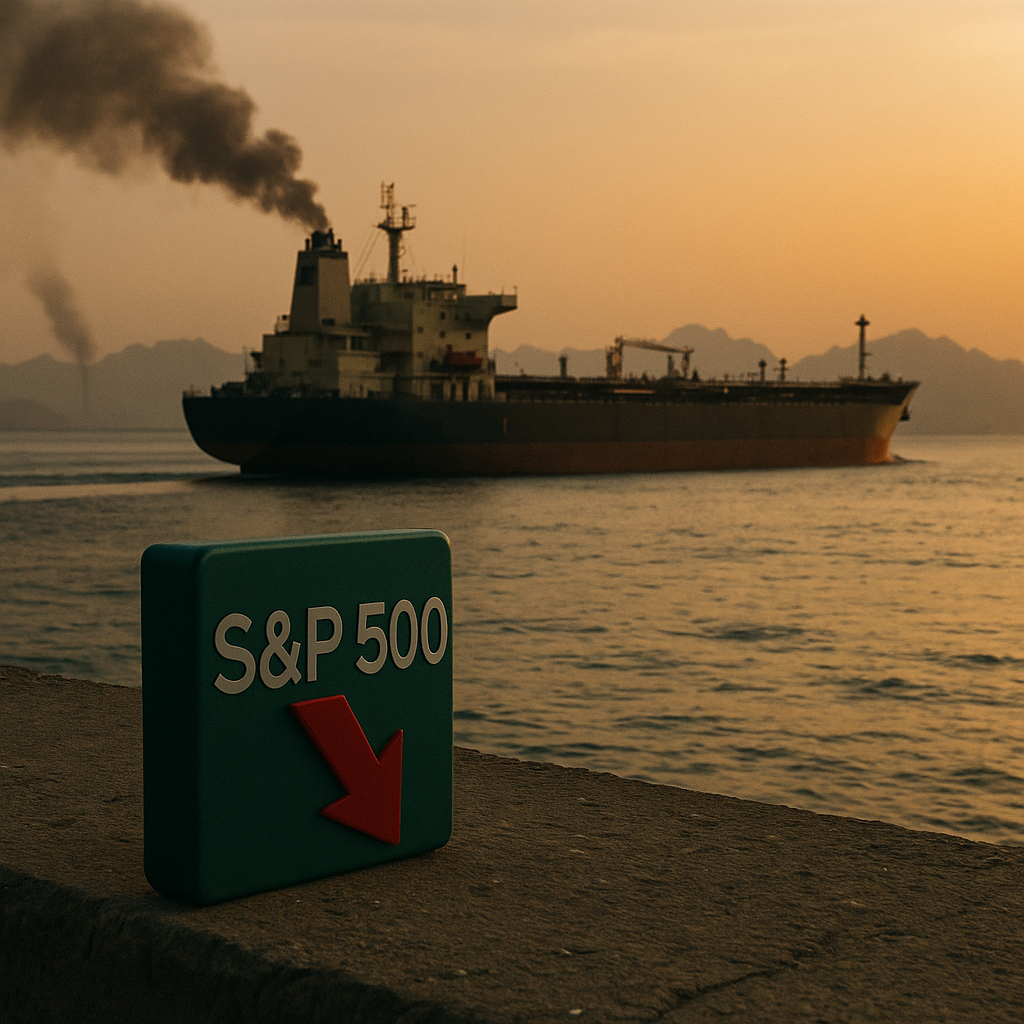
U.S. Futures Slip as Middle East Tensions, Earnings Season Weigh on Sentiment
Futures and Oil React to U.S.-Iran Tensions
By 05:45 ET on Monday, S&P 500 futures were down 0.25%, Nasdaq-100 futures had fallen 0.9%, and Dow futures were 0.12% lower. The moves followed renewed military exchanges between the United States and Iran, along with conflicting statements about commercial access to the Strait of Hormuz, a strategically important global energy route.
U.S. Central Command (CENTCOM) said it had carried out additional attacks against Iran over the weekend, while Iran reportedly retaliated with strikes on U.S. facilities in the Middle East. Tehran said the Strait of Hormuz had been closed to commercial shipping, while U.S. authorities maintained that the waterway remained open. The status of the strait should therefore be presented as disputed rather than definitively closed.
Oil prices rose sharply after the latest escalation, increasing concerns about supply disruptions, energy-driven inflation, and the possibility of a more hawkish Federal Reserve. Crude futures gained more than 3%, although Brent remained below some of the highs recorded during earlier stages of the U.S.-Iran conflict. The developments followed President Donald Trump’s statement that the ceasefire with Tehran was over, alongside his comment that Iran had contacted the United States about further discussions.
Tech-Sector Volatility and Earnings Season Risks
The sharper decline in Nasdaq-100 futures pointed to greater pressure on technology and semiconductor shares, following a severe overnight selloff in Asian chip stocks. SK Hynix shares fell 15.4% in Seoul, marking the stock’s largest decline on record and contributing to a 9% drop in South Korea’s KOSPI.
The reversal came immediately after SK Hynix’s high-profile Nasdaq debut. Its American Depositary Receipts were priced at $149, opened 14% higher at $170, and ended their first trading session at $168. The company’s U.S.-listed shares then fell 7.9% in early Monday trading, reflecting profit-taking, caution ahead of second-quarter results, and broader concerns about elevated artificial intelligence-related valuations.
The semiconductor sector will remain under close scrutiny this week as investors await second-quarter results from major industry companies, including ASML Holding and Taiwan Semiconductor Manufacturing Company (TSMC). More broadly, the second-quarter earnings season is seen as a key test of whether strong corporate profits and guidance can justify high equity valuations against a backdrop of higher energy costs, geopolitical disruption, and persistent inflation risks.
Five major U.S. banks—JPMorgan Chase, Bank of America, Goldman Sachs, Wells Fargo, and Citigroup—are scheduled to report second-quarter results on Tuesday, July 14. Morgan Stanley will report on Wednesday, July 15. Other major companies due this week include Johnson & Johnson and ASML on Wednesday, followed by UnitedHealth Group, GE Aerospace, Netflix, and TSMC on Thursday. Monday’s cautious premarket tone contrasted with Friday’s positive close, which had left the S&P 500 near record territory.
FAQ
What were U.S. stock futures indicating ahead of Monday’s open?
At 05:45 ET, S&P 500 futures were down 0.25%, Nasdaq-100 futures had fallen 0.9%, and Dow futures were 0.12% lower, indicating a weaker opening at that point in premarket trading.
What caused the increase in market risk aversion?
Renewed military exchanges between the United States and Iran, uncertainty surrounding commercial access to the Strait of Hormuz, and concerns about higher oil prices prompted a risk-off response.
How did oil prices react to the latest developments?
Oil prices rose sharply amid renewed concerns about supply disruptions and energy-driven inflation, although Brent remained below some of the highs reached during earlier phases of the U.S.-Iran conflict.
Why is the upcoming earnings season especially important?
The second-quarter earnings season will provide a major test of whether strong corporate profits and guidance can justify elevated equity valuations despite geopolitical disruption, higher energy costs, and persistent inflation risks.
Share
Hot topics

STP, NDD, ECN and DMA: Broker Execution Models Decoded
When picking a forex broker, we don’t just look at the brokerage that has the lowest spreads, bonuses, and other kind of what is apparent for us. There is one...
Read more




Submit comment
Your email address will not be published. Required fields are marked *