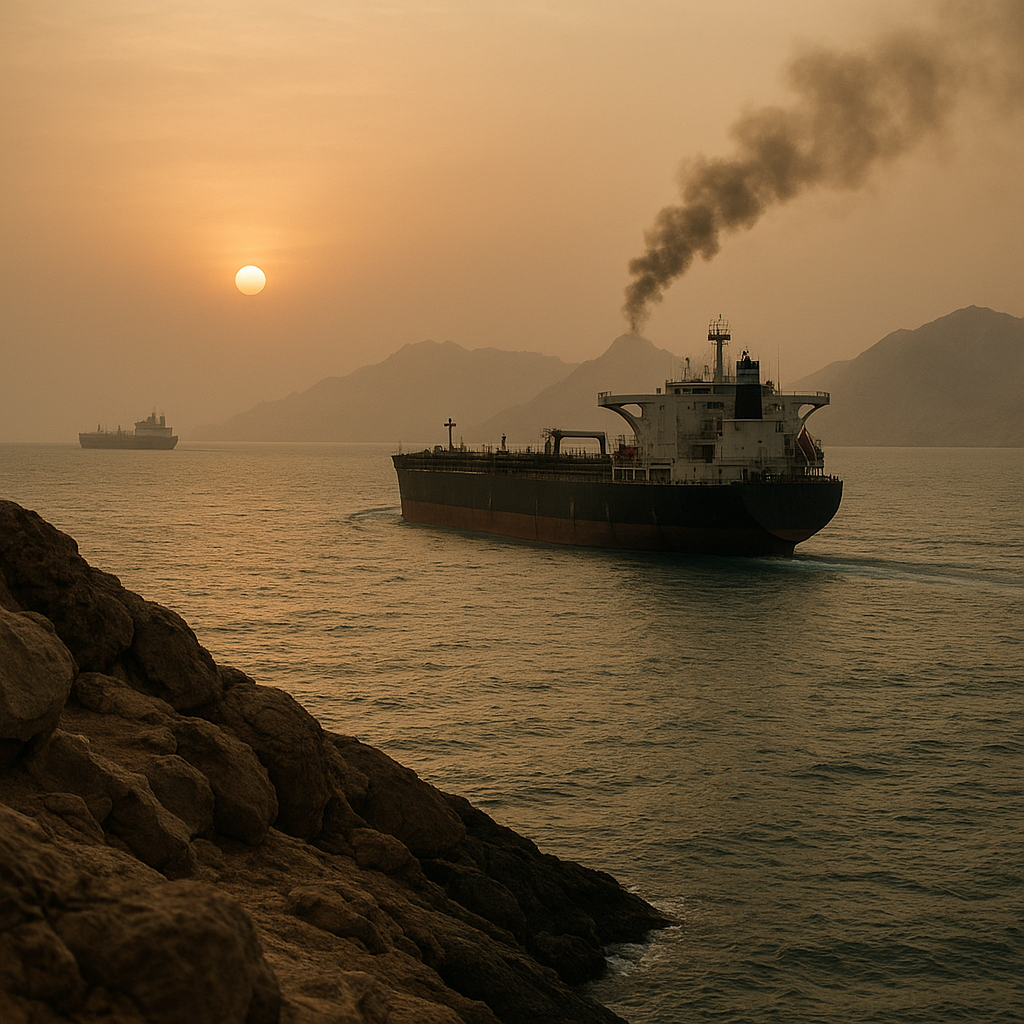
Iranian tankers exit Hormuz blockade as markets await U.S.-Iran deal
Iranian crude flows resume ahead of Geneva signing
Two National Iranian Tanker Company supertankers, Diona and Hero 2, both under U.S. sanctions, exited the U.S. Navy blockade perimeter carrying a combined 3.8 million barrels of Iranian crude, according to Kpler shipping data. A third Iran-linked tanker with 1 million barrels of crude also crossed the blockade line on Wednesday, bringing the total to nearly five million barrels.
Michelle Wiese Bockmann, senior maritime intelligence analyst at Windward, said the apparent departures suggest that other tankers engaged in Iranian trade may also be preparing to resume activity. Kpler estimated that up to 118 laden tankers could leave the region within 15 days after a deal is signed, although this would likely represent a one-time clearance of the backlog rather than a sustained traffic recovery.
The U.S. and Iran signed a Memorandum of Understanding on Monday to end the nearly four-month war, with a formal signing ceremony planned for Friday in Geneva. The pact is expected to reopen the Strait of Hormuz and waive sanctions on Iran’s oil sales, allowing Tehran to begin selling oil and fuel immediately once the agreement is finalized, according to reporting cited from the Wall Street Journal.
Cautious repositioning amid persistent risk premiums
The Strait of Hormuz, which previously handled about one-fifth of global oil flows, has been effectively closed during the conflict due to U.S. Navy blockades on Iranian ports and Iranian actions against vessels from perceived adversary nations. This has stranded hundreds of ships and disrupted global energy flows.
Lloyd’s List Intelligence noted that the maritime sector is reacting with “wary disbelief” rather than optimism. Some shipowners, impacted by high freight rates and elevated war-risk insurance premiums, have begun repositioning vessels toward Gulf ports in anticipation of restocking demand, while many others are holding back.
Insurers are maintaining high war-risk premiums and are seeking “solid evidence” that the Strait will remain safe, according to Lloyd’s analysts. They described any pause in hostilities as a “fragile reprieve rather than a return to normality.” Nevertheless, some very large crude carrier (VLCC) owners are attempting to secure a “first-mover advantage” by directing tankers toward the Middle East Gulf.
Windward reported that dozens of VLCCs have sailed from the South China Sea and across the Indian Ocean toward United Arab Emirates ports, where at least 30 ships were already anchored. For now, traffic through the Strait is expected to remain minimal, with both blockades still in place until the Geneva signing. Tim Wilkins, managing director of Intertanko, said the U.S. Navy has reminded the industry that “nothing has changed and will not until the agreement is signed.”
Niels Rasmussen, chief shipping analyst at BIMCO, said most shipowners are waiting for more details before planning new transits, seeking assurance that crossings will be both permitted and safe.
FAQ
What volumes of Iranian crude have exited the blockade so far?
At least three tankers carrying nearly five million barrels of Iranian crude have exited the blockade, including two supertankers with 3.8 million barrels and a third tanker with 1 million barrels.
When is the U.S.-Iran agreement expected to be formally signed?
The formal signing ceremony is scheduled for Friday in Geneva, following a Memorandum of Understanding signed on Monday.
How many laden tankers could leave the region after the deal is signed?
Kpler estimates that 118 laden tankers could exit the region within 15 days after the agreement is signed.
How are insurers responding to the potential reopening of the Strait of Hormuz?
Insurers are keeping war-risk premiums high and are asking for solid evidence that the waterway will remain safe before adjusting their risk assessments.
Share
Hot topics

STP, NDD, ECN and DMA: Broker Execution Models Decoded
When picking a forex broker, we don’t just look at the brokerage that has the lowest spreads, bonuses, and other kind of what is apparent for us. There is one...
Read more




Submit comment
Your email address will not be published. Required fields are marked *