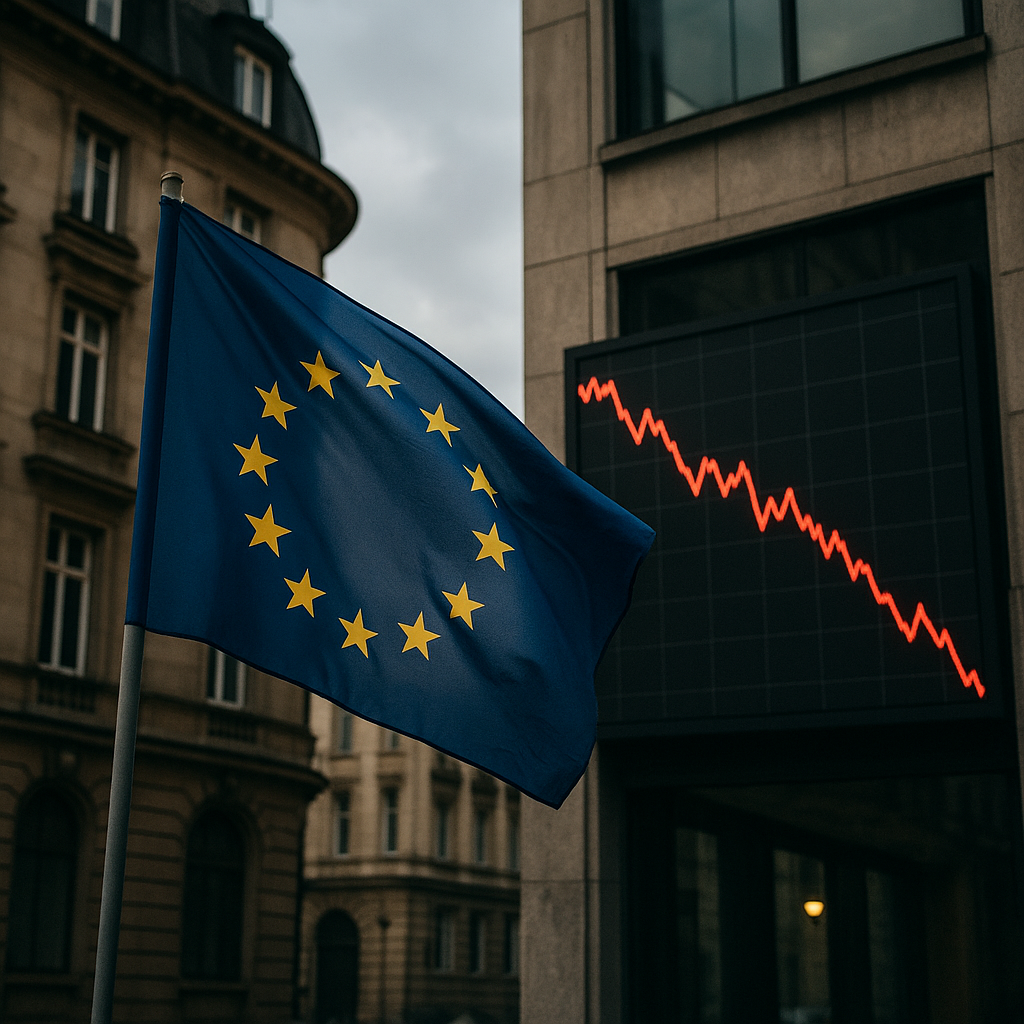
European stocks decline as Middle East tensions push oil higher
European indices open sharply lower
By 03:04 ET (07:04 GMT), the pan-European Stoxx 600 had fallen by 1.2%. Germany’s Dax was down 1.4%, the U.K.’s FTSE 100 had shed 1.1%, and France’s CAC 40 was lower by 1.1%. The broad-based declines reflected weaker sentiment across major European markets.
Dampening sentiment were comments from U.S. President Donald Trump, who told reporters on Monday that a fragile ceasefire between Washington and Tehran was on “massive life support.” Earlier, Trump had rejected Iran’s response to an American proposal to end the fighting, calling it “unacceptable” and later a “piece of garbage.”
Tehran described its counteroffer as “generous and responsible,” with much of the focus on reopening the Strait of Hormuz. The narrow waterway off Iran’s southern coast has been effectively closed for weeks, constraining global oil supply flows and intensifying concerns over a potential global energy crisis.
Oil rally fuels inflation and rate concerns
“The Middle East returned to the headlines over the weekend, and any normalization of Hormuz shipping now looks delayed,” said Felix Vezina-Poirier, Chief Strategist at BCA Research, in a note. The extended disruption in the Strait of Hormuz has underpinned a renewed rise in crude prices.
Brent crude futures, the global oil benchmark, were last up 2.0% at $106.30 a barrel, considerably above pre-war levels of around $70 a barrel. The latest uptick has reinforced worries about a further surge in inflation, as higher energy costs feed through to broader price pressures.
These inflation concerns have strengthened expectations that central banks will respond by raising interest rates. In bond markets, European government bond yields moved higher, as yields tend to rise when prices fall. The increase in yields added additional downward pressure on equities across the continent, compounding the negative impact of geopolitical uncertainty and elevated energy prices.
FAQ
Why did European stocks fall on Tuesday?
European stocks declined due to heightened tensions between the U.S. and Iran, renewed uncertainty over a peace deal, rising oil prices, and higher European government bond yields.
How much did major European indices decline?
By 03:04 ET (07:04 GMT), the Stoxx 600 was down 1.2%, Germany’s Dax fell 1.4%, the U.K.’s FTSE 100 dropped 1.1%, and France’s CAC 40 declined 1.1%.
What is happening with oil prices?
Brent crude futures were up 2.0% at $106.30 a barrel, significantly above pre-war levels of about $70 a barrel, driven by ongoing disruption in the Strait of Hormuz.
How are bond markets reacting?
European government bond yields have risen, reflecting falling bond prices, and this move has exerted further downward pressure on regional equity markets.
Share
Hot topics

STP, NDD, ECN and DMA: Broker Execution Models Decoded
When picking a forex broker, we don’t just look at the brokerage that has the lowest spreads, bonuses, and other kind of what is apparent for us. There is one...
Read more



Submit comment
Your email address will not be published. Required fields are marked *