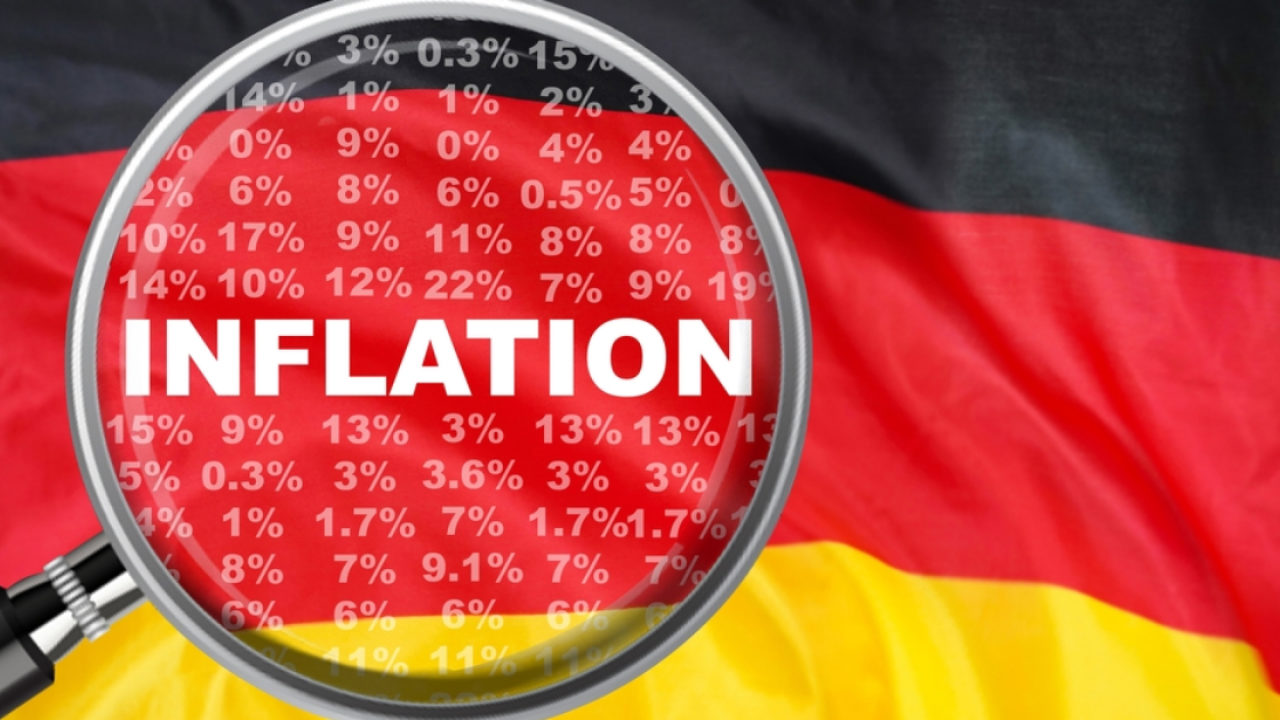
Germany Inflation Rises to 2.9% in April 2026
Headline Inflation Reaches Highest Level Since January 2024
Preliminary figures show that Germany’s annual consumer price inflation rose to 2.9% in April 2026. This compares with a 2.7% rate recorded in March and marks the highest reading since January 2024. The outturn came slightly below market forecasts of 3%.
The main driver behind the acceleration was a 10.1% surge in energy prices, which has been linked to the Iran war. This strong increase in energy costs contrasts with more moderate developments in other components of the consumer basket.
Food inflation also moved higher, with annual price growth in this category rising to 1.2% in April from 0.9% in March. In contrast, services inflation eased, slowing to 2.8% from 3.2% previously, indicating some moderation in price pressures in that segment.
Core and EU-Harmonized Inflation Developments
The core inflation rate, which excludes the more volatile food and energy components, declined to 2.3% in April. This represents its lowest level since June 2021, suggesting an underlying easing of price pressures once these volatile categories are stripped out.
On an EU-comparable basis, Germany’s harmonized index of consumer prices showed annual inflation of 2.9% in April. This reading is the highest since January 2024 and remains above the European Central Bank’s 2% inflation target.
The divergence between rising headline inflation, driven by energy and food, and easing core and services inflation underscores differing dynamics across price components. While external factors affecting energy markets have pushed overall inflation higher, underlying domestic price pressures appear to be on a downward trend.
FAQ
What was Germany’s consumer price inflation rate in April 2026?
Germany’s consumer price inflation rate was 2.9% year-over-year in April 2026, up from 2.7% in March.
What was the main driver of the inflation increase?
The main driver was a 10.1% surge in energy prices, which has been linked to the Iran war.
How did core inflation behave in April 2026?
Core inflation, which excludes food and energy, fell to 2.3%, its lowest level since June 2021.
How does the EU-harmonized inflation rate compare with the European Central Bank’s target?
Germany’s EU-harmonized annual inflation rate stood at 2.9% in April 2026, above the European Central Bank’s 2% target.
Share
Hot topics
What is a Doji Candlestick? Complete Guide to Trading Indecision Patterns
Introduction If you’ve looked closely at a price chart, you might have spotted candles that stand out from the others. Some have long bodies that indicate powerful buying or selling...
Read more


Submit comment
Your email address will not be published. Required fields are marked *