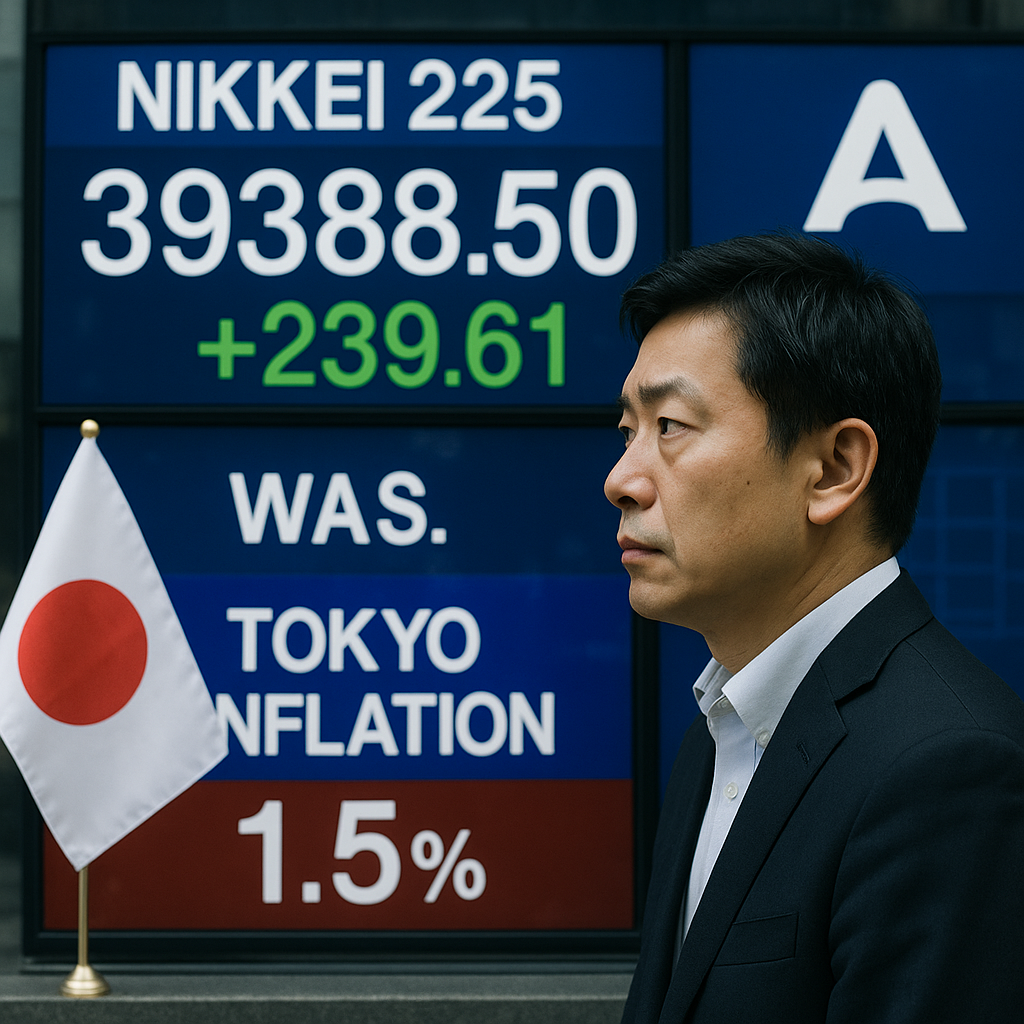
Asian Stocks Gain in Thin Holiday Trading as Wall Street Hits Records
Asian Markets Track Wall Street Records
Asian equities advanced on Friday, following a strong U.S. session in which the S&P 500 and NASDAQ Composite both closed at record highs. The U.S. rally was driven by upbeat corporate earnings and a pullback in oil prices. After the U.S. market close, Apple reported quarterly results that beat expectations, further lifting sentiment around technology stocks.
Trading activity in Asia was relatively muted, with major markets in China, Hong Kong, Singapore, and India closed for public holidays. Among open markets, Japan’s Nikkei 225 rose 0.6%, while the broader TOPIX index traded flat. Australia’s S&P/ASX 200 gained 0.9%.
April delivered strong monthly gains across the region. South Korea’s KOSPI rallied over 30% last month, while Japan’s Nikkei surged more than 15%. China’s Shanghai Composite index climbed nearly 6% in April, and India’s Nifty 50 added 7.5%, as investors reacted to optimism around AI-related growth and easing concerns following a temporary U.S.-Iran ceasefire.
Geopolitical Risks and Oil Market Dynamics
Gains in Asian markets were tempered by elevated geopolitical risks surrounding the U.S.-Iran conflict. Reports indicated that U.S. President Donald Trump was set to receive a briefing on potential military options against Iran, heightening concerns of further escalation. Iran warned that any new U.S. attack would trigger “long and painful strikes” on American positions in the region.
The Strait of Hormuz remained effectively shut, disrupting a key route for global oil shipments and tightening supply expectations. Brent crude had surged to more than $126 per barrel earlier on Thursday, its highest level in four years, before retreating later in the day.
Japan Inflation and BOJ Policy Outlook
Macroeconomic data from Japan showed modest inflation in Tokyo, with underlying price pressures softening. Headline consumer prices in the capital rose 1.5% year-on-year in April, edging up from 1.4% in March. Core CPI, which excludes fresh food, also increased 1.5%, down from 1.7% previously and below market forecasts of 1.8%.
Inflation remains below the Bank of Japan’s target, underscoring fragile demand conditions. The BOJ recently kept interest rates unchanged but signaled a hawkish tilt, and markets are pricing in the possibility of a rate hike as early as June.
FAQ
Which major Asian stock indices rose on Friday?
Japan’s Nikkei 225 increased 0.6%, the broader TOPIX index traded flat, and Australia’s S&P/ASX 200 rose 0.9%. Several key markets, including China, Hong Kong, Singapore, and India, were closed for holidays.
What drove the positive sentiment in global equity markets?
Record closes in the U.S. S&P 500 and NASDAQ Composite, supported by strong corporate earnings, a pullback in oil prices, and better-than-expected quarterly results from Apple, contributed to positive sentiment.
How did geopolitical tensions affect markets and oil prices?
Heightened tensions between the U.S. and Iran, including potential U.S. military options and Iranian warnings of retaliation, kept investors cautious. The effective shutdown of the Strait of Hormuz disrupted a vital oil route, pushing Brent crude above $126 per barrel on Thursday before prices later retreated.
What did the latest Tokyo inflation data show?
Tokyo’s headline CPI rose 1.5% year-on-year in April, up from 1.4% in March, while core CPI slowed to 1.5% from 1.7%, undershooting forecasts of 1.8%. This leaves inflation below the Bank of Japan’s target, even as the BOJ maintains a hawkish stance on potential future rate hikes.
Share
Hot topics

What Is Smart Money Concept (SMC) in Trading?
Introduction If you’ve been trading for a while, you’ve probably had this moment: you enter a trade with confidence, everything looks perfect, and then suddenly the market moves against you...
Read more



Submit comment
Your email address will not be published. Required fields are marked *