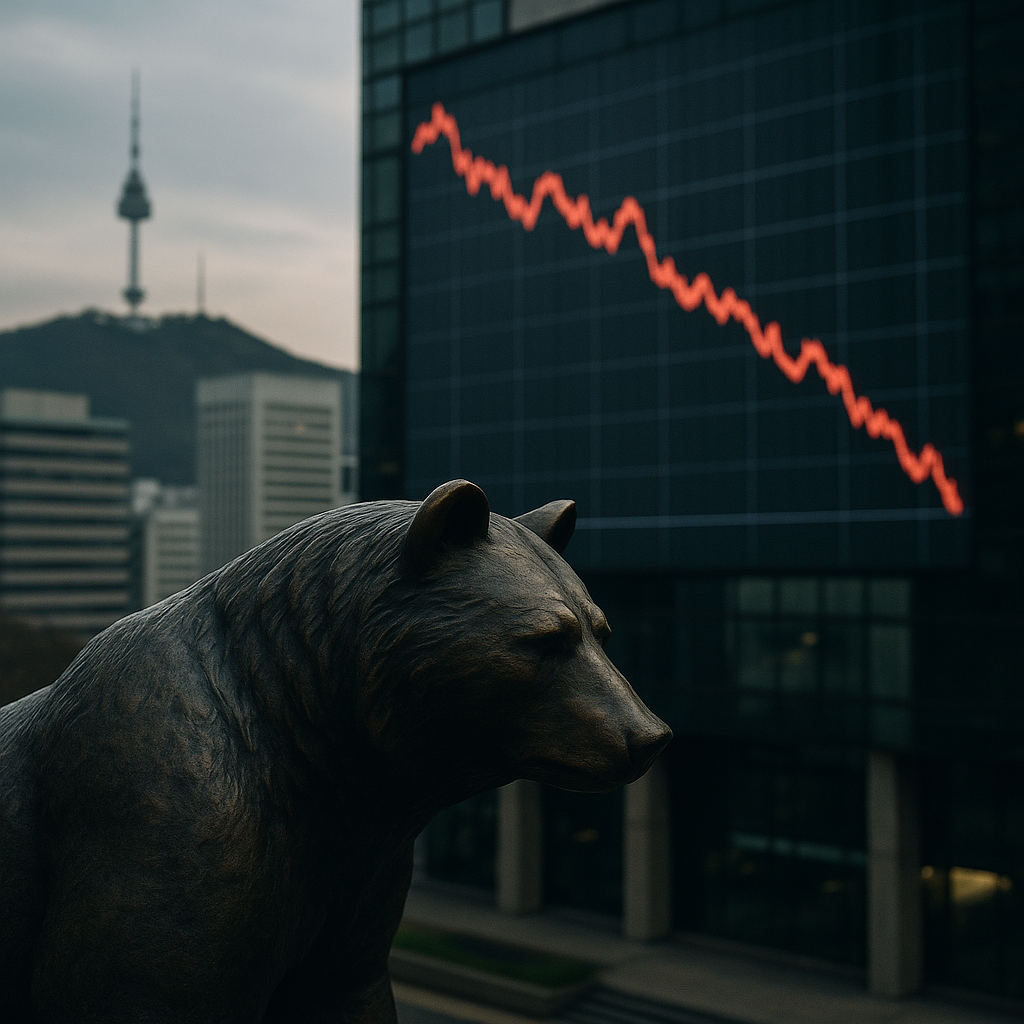
KOSPI Enters Bear-Market Territory as Chipmakers Lead Broad Tech Sell-Off
KOSPI Slides More Than 20% from June Peak
The KOSPI fell as much as 5.4% during the session to an intraday low of 7,222.60 points before closing 5.35% lower at 7,246.79. The closing level placed the index more than 20% below its June record close of 9,114.55, meeting the commonly used definition of a bear market as a decline of at least 20% from a recent peak.
The downturn came after the KOSPI had ranked among the best-performing major global equity indexes earlier in 2026, supported by strong gains in technology and semiconductor stocks linked to AI. Recent weeks, however, have seen heightened volatility and growing doubts over the sustainability of elevated valuations in AI-related names.
Chipmakers and AI-Linked Stocks Drive Decline
Samsung Electronics shares fell about 6.3% on Wednesday, even after the company forecast record second-quarter operating profit that exceeded market expectations. Market attention focused on whether robust AI-driven demand, memory-chip pricing, and rapid earnings growth could be maintained in coming quarters. The drop also reflected profit-taking after a substantial rise in Samsung’s share price over the past year.
SK Hynix declined about 5.7%, extending losses from the previous session. Concerns about stretched valuations, future memory-chip prices, and the market’s heavy exposure to semiconductor names added to selling pressure. Volatility in chip stocks was further amplified by recently introduced leveraged exchange-traded funds (ETFs) linked to individual chipmakers, which increased market sensitivity to price moves. The sharp market decline also triggered a temporary curb on algorithmic selling during the session.
Sentiment toward South Korean memory-chip producers was additionally affected by reports that Apple Inc. is seeking U.S. approval to purchase memory chips from China’s ChangXin Memory Technologies (CXMT). The development raised concerns over stronger Chinese competition for Samsung and SK Hynix, although CXMT’s production capacity remains limited compared with the leading Korean suppliers and the ultimate impact on global memory prices is unclear.
Selling extended beyond semiconductors to other companies associated with the AI rally. Hyundai Motor, which had rallied strongly over the past 12 months partly on its Nvidia partnerships and physical AI initiatives, also declined during the session, adding to downward pressure on the KOSPI.
FAQ
Did the KOSPI officially enter a bear market?
Yes. The KOSPI closed at 7,246.79 points, more than 20% below its June record close of 9,114.55, placing it in bear‑market territory.
Why did Samsung Electronics shares fall despite record profit?
Samsung forecast record second-quarter operating profit that exceeded expectations, but investors took profits and focused on uncertainties over the durability of AI-related demand, memory-chip pricing, and the pace of future earnings growth.
How did leveraged ETFs affect the sell-off?
Leveraged ETFs linked to individual semiconductor stocks heightened sensitivity to price movements, contributing to increased volatility and amplifying the decline as chip shares fell.
What is Apple’s role in the recent market concerns?
Reports that Apple is seeking U.S. approval to buy memory chips from China’s CXMT raised concerns about increased Chinese competition for Korean memory-chip producers, although CXMT’s smaller production capacity makes the eventual impact on global memory prices uncertain.
Share
Hot topics

STP, NDD, ECN and DMA: Broker Execution Models Decoded
When picking a forex broker, we don’t just look at the brokerage that has the lowest spreads, bonuses, and other kind of what is apparent for us. There is one...
Read more



Submit comment
Your email address will not be published. Required fields are marked *