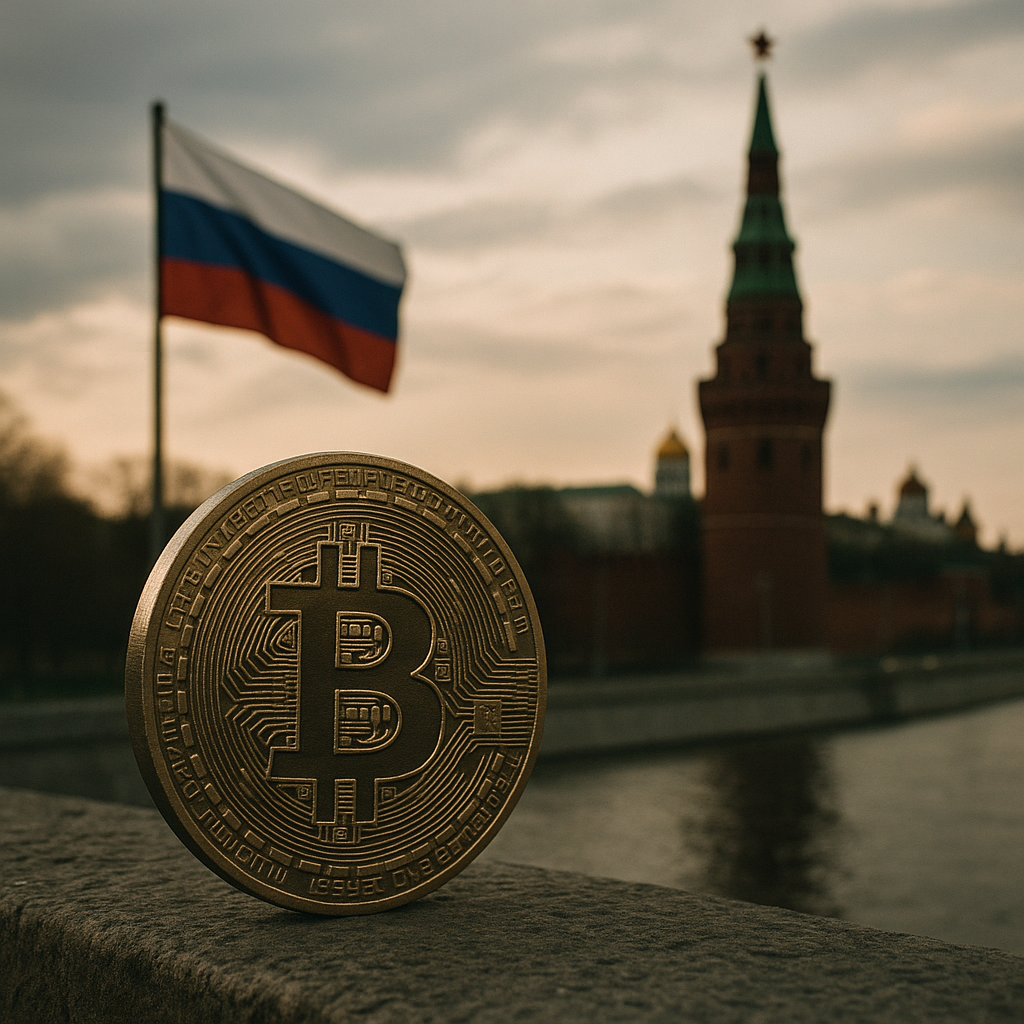
Russia Enacts Comprehensive Law Regulating Cryptocurrency Market
New Regulatory Framework for Crypto Trading
The new law introduces formal rules for crypto exchanges, custodians, brokers, clearing houses, investors, and other market participants. While providing legal structure for trading and market infrastructure, it maintains the existing prohibition on the use of cryptocurrencies as legal tender or for payments for goods and services within Russia.
Retail investors will be permitted to purchase the most liquid cryptocurrencies, subject to an annual cap of 300,000 rubles (approximately $3,700) per intermediary. The report from TASS does not specify which crypto assets will be classified as “most liquid.” By contrast, qualified investors will be allowed to buy any crypto assets without limits.
Both retail and qualified investors must undergo “special suitability testing.” Retail investors may obtain qualified status based on their crypto transaction history, according to the report. This structure introduces tiered access to digital assets depending on investor profile and experience.
Requirements for Crypto Exchanges and International Use
Under the law, crypto exchanges must join a “special registry” in order to operate and meet a minimum equity requirement of 15 million rubles (approximately $185,200). Exchanges will also be required to become members of a financial market self-regulatory organization, adding an additional layer of oversight.
Domestically, the ban on using cryptocurrencies for payments remains in place. However, cross-border settlements using crypto are permitted for foreign trade contracts between residents and non-residents. Russia had reportedly begun allowing cryptocurrencies in international trade in 2024 as part of efforts to counter Western sanctions.
The legislation will take effect on September 1, 2026, with certain provisions related to the issuance and circulation of crypto assets coming into force on September 1, 2027. Existing crypto exchanges are granted a grace period until March 1, 2027.
The law marks a significant shift in Russia’s approach to digital assets and follows the State Duma’s passage of the bill after its first reading in April. It builds on recent work by the Bank of Russia, which last week published draft regulations for “organized trading” of digital assets and digital rights, including requirements for exchanges and digital depositories.
At the same time, Russian authorities are tightening oversight of crypto mining. A government decree issued last month bans crypto mining and participation in mining pools in Moscow, the Moscow region, and parts of the Kursk region from August 15 until the end of 2032.
FAQ
What does the new Russian crypto law allow and prohibit?
The law allows regulated trading of cryptocurrencies under a defined framework but continues to ban their use as a means of payment or legal tender within Russia. It also permits cross-border settlements in crypto for foreign trade contracts.
How are retail and qualified crypto investors treated under the law?
Retail investors can buy only the most liquid cryptocurrencies, with purchases capped at 300,000 rubles per year per intermediary, while qualified investors face no limits and can buy any crypto assets. Both groups must pass special suitability tests, and retail investors may obtain qualified status based on their transaction history.
What are the main requirements for crypto exchanges?
Crypto exchanges must join a special registry, maintain minimum equity of 15 million rubles, and become members of a financial market self-regulatory organization. Existing exchanges have a grace period until March 1, 2027, to comply.
When do the new rules come into force?
Most provisions take effect on September 1, 2026, with additional rules on the issuance and circulation of crypto assets starting on September 1, 2027.
Share
Hot topics

STP, NDD, ECN and DMA: Broker Execution Models Decoded
When picking a forex broker, we don’t just look at the brokerage that has the lowest spreads, bonuses, and other kind of what is apparent for us. There is one...
Read more



Submit comment
Your email address will not be published. Required fields are marked *