Best Order Block Indicator for Trading
Introduction
As you spend time analyzing price charts, you may notice the market often reacts to specific price ranges where strong buying or selling occurred. These price zones, known as order blocks, reveal where large institutions placed orders.
Understanding how these zones function will help you read the market in a better way. Rather than guessing where the price may revert, traders might concentrate on places where professional money has already moved.
This is where having an order block indicator comes in. Instead of manually searching for these zones on the charts, indicators will automatically identify them and tell you the best price opportunities.
In this article, we’ll talk about how order blocks function, why traders use them, and what differentiates a basic indicator from the best order block indicator available today. Even if you are new to trading, this idea will help you understand your chart analysis.
What Is an Order Block?
To understand order blocks, consider how institutions really trade.
Large banks and hedge funds cannot open large trades instantly. If they attempt to buy millions of dollars’ worth of a currency pair at once, the price will move against them. Instead, institutions tend to accumulate positions slowly in certain ranges.
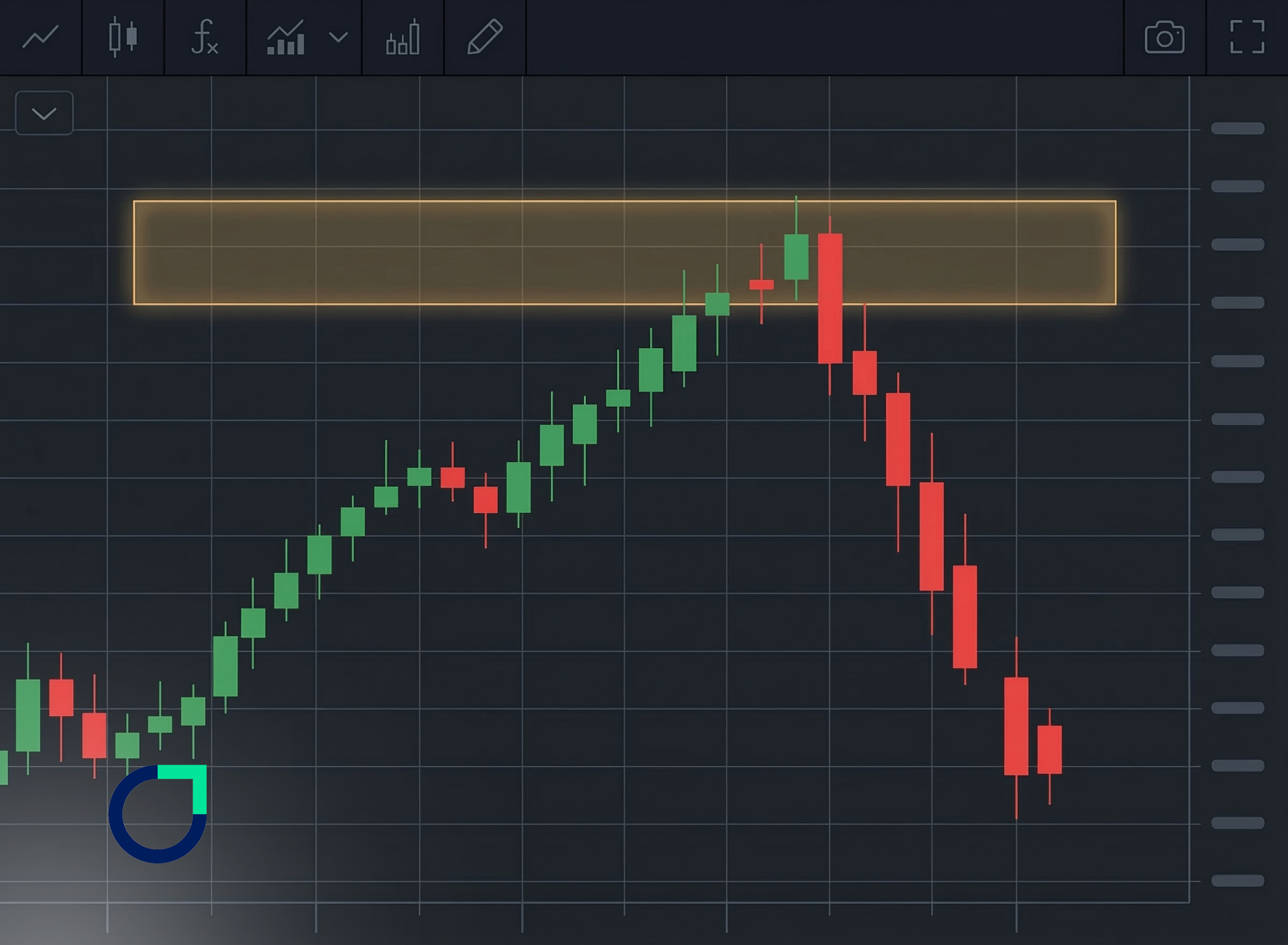
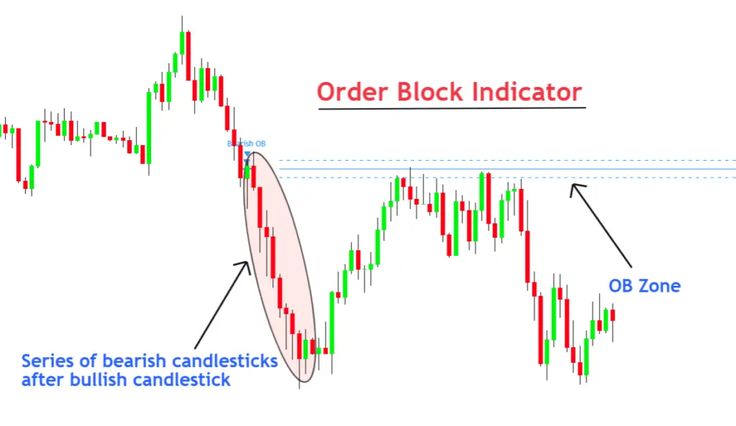
These are the areas we call order blocks, the zones where considerable institutional buying or selling occurred before a major price fluctuation. When prices revert to those levels later, the market frequently responds again.
If you’ve ever wondered what is order block, the simplest explanation is that it is a price zone where large institutional buy or sell orders were previously placed. Many smart money traders base entire strategies on simply looking for these levels.
For example, if EURUSD rallies strongly after a consolidation of several candles, that consolidation area often becomes a bullish order block, and price is likely to make many buyers active here again when price returns to that area later on.
This principle is central to contemporary price action techniques.
Why You Need an Order Block Indicator
Finding order blocks manually can be tricky, particularly for novice traders. Prices fluctuate frequently, and recognizing the right zones needs experience and patience.
An order block indicator can solve this problem by evaluating the chart for potential institutional order blocks. As a result, you can spend less time reviewing each candle separately while also reducing the chance of error in your analysis.
Consistency is another benefit of using an order block indicator. Manual analysis sometimes changes based on the trader’s attitude or perception. Indicators use the same logic repeatedly. These features allow traders to develop a more organized strategy for determining high-probability trading zones.
Some professional tools function across multiple platforms, including the MetaTrader, and are used by traders at various brokers such as Otet, making them accessible to traders who prefer different charting environments.
In summary, the appropriate indicator enables traders to spend less time exploring possibilities and more time preparing ideal positions.
Essential Features of the Best Order Block Indicator
Not all indications are created equally.
Some tools basically generate random rectangles on the chart with no apparent rationale.
The best order block indicator has various qualities that make it reliable and beneficial in real-world trading conditions.
Non-Repainting Logic
Repainting is one of the biggest problems with many trading indicators.
A repainting indicator changes previous signals when new data appears. This means that the historical performance appears flawless but can be unreliable in live trading. A high-quality indicator should use non-repainting logic. This means that when an order block shows up, it ‘sticks’ to that spot on the chart.
Traders can be sure that the zone they see isn’t going to vanish randomly later on. This characteristic distinguishes professional tools from several free trading indicators listed online.
Automatic Mitigation Detection
When price returns to the zone and reacts, traders say the order block has been “mitigated”.
A good indicator will automatically detect this and update the chart. This avoids traders from depending on zones that are no longer applicable. Mitigation detection keeps your charts clean and focused on the most relevant institutional areas.
Institutional Strength Scoring
Not all order blocks are equally essential.
Some indicate minor market behaviors, while others are the result of large institutional activity.
Advanced indicators indicate the strength of each zone.
They may assess factors such as:
- Volume spikes.
- Price displacement
- Momentum following the block.
The higher the institutional activity behind the move, the more reliable the order block becomes. This scoring system helps rank the best trade opportunities.
Multi-Timeframe (MTF) Analysis
Markets react differently across timeframes. An order block on a 1-minute chart may not be as important as one on a 4-hour chart.
Multi-timeframe analysis enables traders to observe order blocks from higher timeframes while trading on lower timeframe charts.
A trader may utilise the 4H order block as a primary support zone, yet still look to enter potential trades on the 5M timeframe. This layered strategy generally results in more precise trading decisions.
Real-Time Alerts and Notifications
Then there are traders who can’t stare at charts all day. Real-time alerts solve this issue.
With real-time alerts, the indicator will send you a notification when the price is approaching a key order block. This allows traders to be prepared for a potential set-up without having to sit and watch the screen all day.
Alerts are ideal for swing traders who trade multiple markets.
Why Most Free Order Block Indicators Fail
The internet is filled with free trading indicators. While some are useful, others suffer from significant limitations.
One example of a limitation would be poor detection logic – some indicators mark every other small consolidation as an order block, resulting in too many signals and misleading traders.
Another limitation would be repainting. Many free tools appear impressive in backtesting but fail in live trading. This leads to false confidence and usually leads to poor decisions.
Free indicators rarely contain advanced features like mitigation tracking or institutional strength analysis. As a result, traders get incomplete information. This doesn’t mean that all free tools are worthless. However, experienced traders normally prefer enhanced indicators that adhere to stricter analytical rules.
Best order block indicator tradingview->(Ranked & Reviewed)
Below are some of the most commonly discussed order block tools used by traders.
LuxAlgo Order Block Detector
LuxAlgo offers a clean visual representation of institutional zones. The indicator integrates well with TradingView and includes strong filtering logic. Many traders appreciate its structured layout and customizable settings.
Smart Money Concepts Indicator
This indicator is quite popular among traders who follow institutional trading strategies. It can be used to identify order blocks, liquidity zones, and market structure shifts. It can be helpful for traders who are learning smart money concepts.
Order Blocks by MarkMiddleton
This indicator is focused specifically on highlighting order blocks with little clutter. It is primarily used by TradingView users who like simple visual indicators. They might use it alongside other indicators to confirm their trades.
Institutional Supply & Demand Indicator
While theoretically focused on supply and demand, this tool works similarly to order block analysis. It highlights areas where strong buying or selling pressure previously occurred. This method may complement the traditional order block analysis.
How to Use an Order Block Indicator Effectively
Having a powerful indicator is useful, but it does not ensure profitable trades. Indicators perform best when integrated with a larger market context.
Here are several practical ways traders can include order block indications into their strategies.
Combining with Market Structure
Order blocks become more reliable when they are aligned with market structures. For example, in an uptrend, bullish order blocks frequently serve as strong support zones.
In a downtrend, bearish order blocks can serve as resistance. Traders can get strong confirmation by combining structure analysis with order blocks.
Using Order Blocks with Fair Value Gaps
Another concept used in smart money trading is the Fair Value Gap. A fair value gap occurs when a move has been quick and has left an imbalance in the chart.
When this fair value gap coincides with an order block, it will increase the probability of a reaction. This confluence often creates powerful zones.
Entry After Mitigation Strategy
Some traders prefer to wait until the price returns to an order block to show confirmation before entering.
Rather than placing orders randomly in the zone, traders look for price rejection signals.
Examples may include:
- strong rejection candles
- break of minor structure
- momentum shifts
Waiting for confirmation can help eliminate false signals and enhance trade accuracy.
Common Mistakes Traders Make with Order Block Indicators
Even with the Best Order Block Indicator, mistakes might happen. One typical mistake is to treat every order block as a confirmed reversal point. Markets are complicated, and no single tool can forecast every movement.
Another mistake is to ignore the overall trend. An order block against a major trend has a smaller chance of success.
Overcomplicating the chart is another problem. Some traders use too many indicators, making the analysis complicated rather than effective.
Finally, many traders forget that each trade should be part of a broader plan that answers the question: What is a trading setup? A trading setup consists of entry rules, risk management, and an exit strategy, rather than simply one indicator signal.
Conclusion
Order blocks give traders a significant tool for understanding how institutions impact the market. Rather than relying exclusively on indicators or random technical signals, traders might focus on zones where major market players have previously reacted.
When paired with market structure, liquidity concepts, and systematic risk management, order blocks have the potential to significantly expand trading decisions.
The proper indicator simplifies the procedure by automatically recognizing these zones and arranging the chart analysis. However, no indicator can replace solid trading knowledge. Tools should support your plan, not replace it.
Traders may develop more disciplined and confident trading strategies by understanding what is order block and using it wisely.
FAQ
What is the best order block indicator for TradingView?
The best indicator usually depends on your trading style. Tools that include non-repainting logic, multi-timeframe analysis, and institutional strength filtering tend to be the most reliable.
What features should I look for in a high-quality order block indicator?
Look for indicators that include non-repainting detection, mitigation tracking, multi-timeframe support, and customizable alerts. These features help traders identify meaningful order blocks more effectively.
Why do most free order block indicators fail?
Many free indicators rely on overly simple detection rules or repaint signals after price moves. This can create unrealistic backtesting results and unreliable signals in live trading.
What is the best timeframe to use an order block indicator?
Higher timeframes, such as the 4-hour or daily charts, often produce stronger institutional zones. Many traders identify order blocks on higher timeframes and then refine entries on lower charts.
Share
Hot topics

STP, NDD, ECN and DMA: Broker Execution Models Decoded
When picking a forex broker, we don’t just look at the brokerage that has the lowest spreads, bonuses, and other kind of what is apparent for us. There is one...
Read more




Submit comment
Your email address will not be published. Required fields are marked *