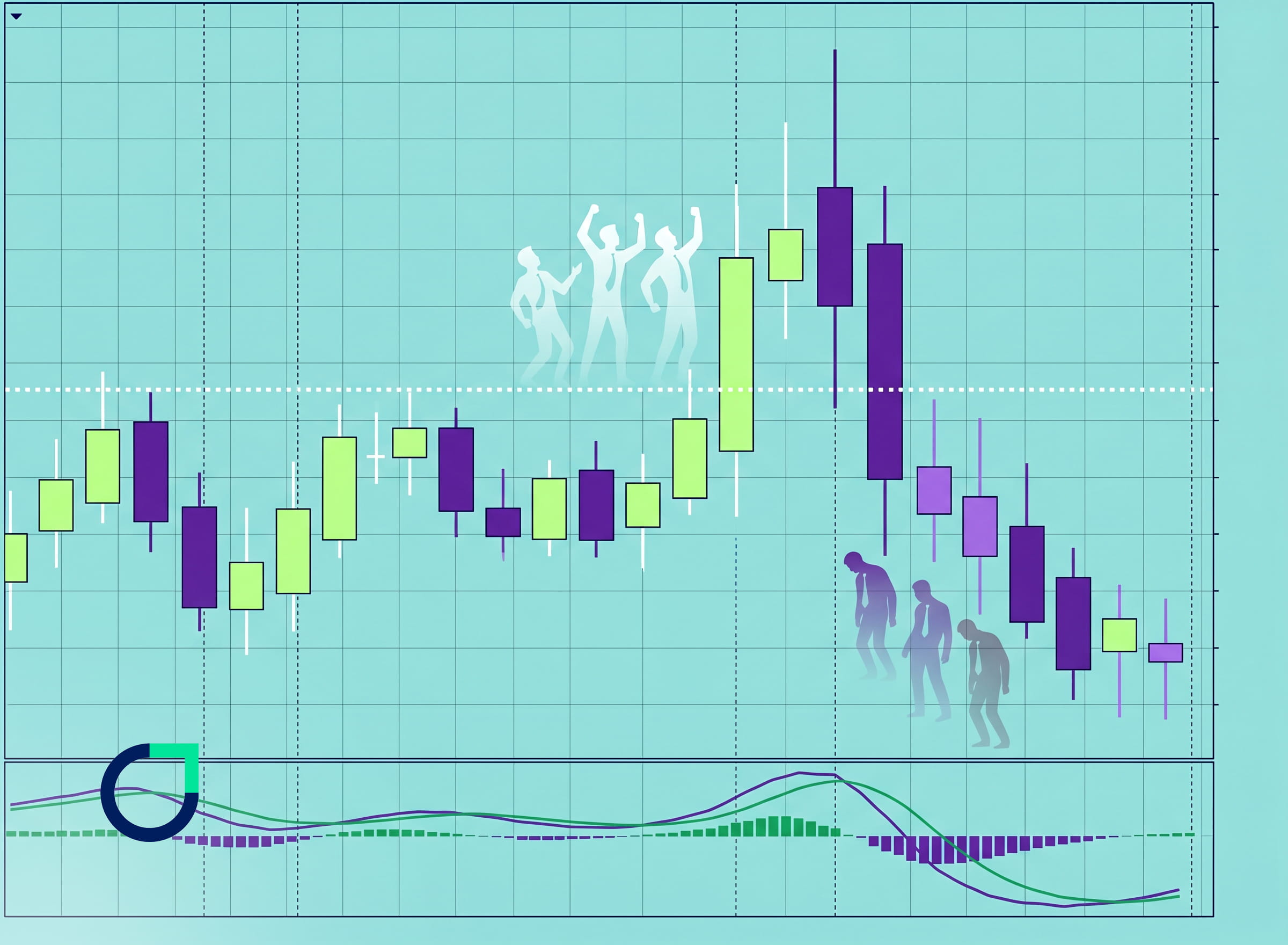
What Is Liquidity Grab in Forex and How to Identify It
Introduction
You are not alone if you have placed a trade, seen the market move according to your thoughts then reverse to the point of hitting your stop loss just to continue in your original direction, it is one of the most frustrating experiences in trading.
Many beginners think that this happened due to the bad timing or bad strategy and over time come to understand that these movements are not random and most of the time are done for a very specific reason.
This is where liquidity grab comes into play. It’s a concept that explains why price sometimes behaves in a way that feels “manipulative.” Once you understand it, you stop feeling like the market is working against you and start seeing the logic behind price movement.
What Is Liquidity Grab in Trading?
A liquidity grab is a sharp and intentional price movement toward areas where a large number of orders are placed. These orders usually include stop losses, breakout entries, and pending trades.
To really understand this, you need to first understand what is liquidity in trading strategy. Liquidity simply refers to the availability of buy and sell orders in the market. Without liquidity, trades cannot be executed efficiently.
In forex, liquidity is often concentrated around obvious price levels such as support, resistance, previous highs and lows, and psychological levels. This is because many traders place their orders in these areas.
A liquidity grab happens when price moves into these zones, triggers those orders, and then reverses. This movement allows larger players to fill their positions using the orders triggered from retail traders.
Understanding the Role of Liquidity in Market Movement
Before moving further, it’s important to look at liquidity in trading from a practical perspective. In simple terms, liquidity is what allows the market to function smoothly without it, orders would not get filled properly, and price would move erratically.
In real market conditions, liquidity is not evenly distributed. It builds up in specific areas where traders tend to place their orders. These include equal highs and lows, trendline touches, and obvious breakout zones.
This uneven distribution is exactly what creates opportunities for liquidity grabs. When too many traders focus on the same level, it becomes a target. Price is naturally drawn to these zones, not randomly, but because that’s where orders are sitting.
For example, if many traders place buy stop orders above a resistance level, price may spike upward to trigger those orders. This creates the liquidity needed for larger players to enter sell positions.
Understanding this dynamic helps you stop thinking of price as random movement and start seeing it as a reaction to order flow. Over time, this shift in perspective can significantly improve how you read the market.
Why Institutions Hunt Liquidity
Large institutions don’t trade like retail traders. They deal with huge volumes, which means they need a lot of liquidity to enter and exit positions.
If they try to enter a big trade in a low-liquidity area, the price will move against them quickly. So instead, they look for areas where many orders are already waiting.
This is where stop hunt forex behavior becomes visible. Institutions push the price toward areas where traders have placed their stop losses. Once those stops are triggered, they become market orders, creating the liquidity needed for institutions to execute trades.
For example, imagine a resistance level where many traders have placed sell orders and stop losses above it. Price may spike above that level, triggering those stops. Then, once enough liquidity is collected, price reverses downward.
This behavior is not manipulation in the illegal sense it’s simply how large-scale trading works.
Liquidity Grab vs Breakout
One of the most confusing parts of trading is telling the difference between a real breakout and a liquidity grab.
At first, both can look identical. Price breaks a key level, and many traders jump in expecting continuation.
But here’s the difference:
A real breakout shows strong follow-through. Price continues moving in the same direction with momentum and structure.
A liquidity grab, however, is usually fast and short-lived. Price breaks the level, triggers orders, and then quickly reverses.
This is why understanding liquidity grab vs liquidity sweep is important. A grab is often a quick spike, while a sweep may involve a broader range and multiple touches before reversal.
A practical tip: if price breaks a level but immediately rejects it with a long wick, it’s more likely a liquidity grab than a true breakout.
How to Spot Liquidity Grabs on Charts
Spotting liquidity grabs takes practice, but once you know what to look for, it becomes much easier.
Start by identifying key levels. These include support, resistance, trendlines, and previous highs/lows. These are the areas where liquidity is usually located.
Next, observe price behavior around these levels. A liquidity grab often appears as:
- A sudden spike beyond a level
- A long wick showing rejection
- A quick return back inside the range
Another useful clue is timing. Liquidity grabs often happen during high-impact news or at market session opens when volatility increases.
You can also use structure to confirm your idea. When prices break a certain level and do not stay above/below it, it can indicate that this breakout will not be valid. Soon enough, as you start seeing these breaks more frequently, you will become much more confident in your ability to spot them.
Trading Strategies for Liquidity Grabs
Trading liquidity grabs is less about prediction and more about reaction. You don’t need to guess what will happen you wait for the market to show its move first.
One popular approach is to wait for a false breakout. When price breaks a level and then quickly reverses, you can enter in the opposite direction.
For example, if price breaks above resistance and then drops back below it, you can look for a sell entry.
Another powerful method is combining liquidity grabs with what is order block. Order blocks are areas where institutions have previously placed large trades. When a liquidity grab happens near one of these zones, it often leads to strong moves.
You can also refine your entries using forex day trading strategies on lower timeframes. This allows you to enter with better precision and smaller risk.
If you’ve ever heard of Otet Market, some traders use similar logic to analyze market behavior and identify manipulation zones. While approaches may differ, the core idea remains the same: understanding where liquidity is and how price reacts to it.
Risk Management When Trading Liquidity Events
No matter how strong a setup looks, risk management should always come first.
Liquidity grabs can be powerful, but they can also be unpredictable. Sometimes price continues moving instead of reversing.
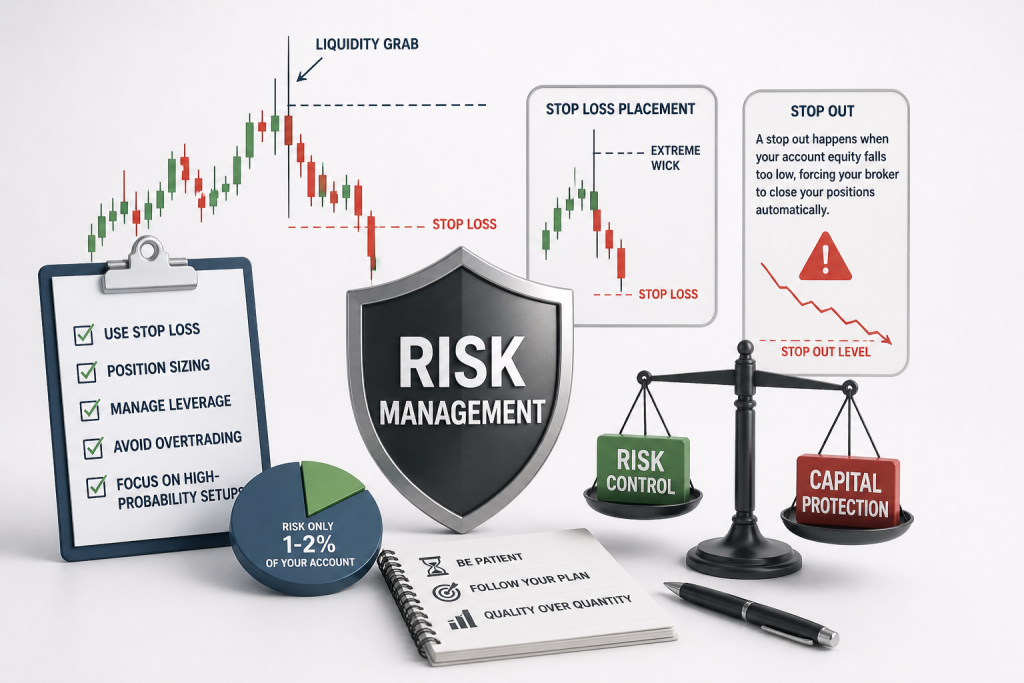
Always use a stop loss. A good placement is beyond the extreme of the liquidity grab wick. This gives your trade room to breathe while protecting your account.
Position sizing is equally important. Never risk more than a small percentage of your account on a single trade.
You should also understand what is stop out, especially if you’re trading with leverage. A stop out happens when your account equity falls too low, forcing your broker to close your positions automatically.
Avoid overtrading. Not every market move is a liquidity grab. Focus on high-probability setups and stay patient.
Conclusion
A liquidity grab is a common misunderstanding among traders as they perceive it as random/unfair; however, liquidity grabs are simply a normal function of the market. By being able to identify and define why liquidity grabs occur, you will see the market through a new lens. Your perspective on breakouts will switch from being reactive and chasing them to being proactive in your approach and being selective with how you execute your trades.
With this change in approach to understanding how liquidity grabs function, you will experience an improvement in your trading results. Instead of acting on emotions, you will act logically based on structure.
Just like every other skill you work towards developing, it takes time to develop this skill set. But, with good money management practice and patience, liquidity grabs can become part of your overall trading strategy very successfully.
FAQs
Is liquidity grab the same as stop hunt?
They are closely related. A liquidity grab often includes stop hunting, but it also involves triggering other types of orders beyond just stop losses.
How do I avoid fake breakouts?
Wait for confirmation. Look for strong candle closes and avoid entering trades immediately after a breakout.
Can liquidity grab be used in crypto trading?
Yes. The concept works in all financial markets because they all rely on liquidity and order flow.
What timeframe is best for liquidity analysis?
Higher timeframes like H1, H4, and Daily are better for identifying key levels, while lower timeframes help refine entries.
Share
Hot topics

STP, NDD, ECN and DMA: Broker Execution Models Decoded
When picking a forex broker, we don’t just look at the brokerage that has the lowest spreads, bonuses, and other kind of what is apparent for us. There is one...
Read more



Submit comment
Your email address will not be published. Required fields are marked *