US President Donald Trump’s administration has unveiled a new tariff proposal targeting 14 major trading partners, including China, the European Union, Japan and India. The move could renew concerns about international trade, inflation and the outlook for global economic growth.
The announcement follows months of investigations into the industrial policies of major US trading partners. Washington argues that government subsidies and excessive manufacturing capacity in certain economies have created unfair competition for American producers.
The proposed tariffs could reach as high as 35% on goods from certain countries, although the measures have not yet taken effect and remain subject to public consultation and further review.
The announcement has renewed investor attention on the possible consequences for equity markets, foreign exchange rates, commodity prices and international supply chains.
Which Countries Are Targeted by Trump’s New Tariffs?
The Office of the United States Trade Representative (USTR) has proposed new duties on imports from 14 trading partners following investigations launched in March 2026.
The economies covered include China, the European Union, India, Japan, South Korea, Taiwan, Vietnam, Thailand, Malaysia, Indonesia, Singapore, Switzerland, Bangladesh and Cambodia.
Mexico and Norway were also examined during the investigation, but no equivalent tariff determinations have been announced for them at this stage.
The proposed rates for several major US trading partners include:
| Country or Region | Proposed Tariff Rate |
|---|---|
| China | Up to 20% |
| European Union | Up to 15% |
| Japan | Up to 15% |
| South Korea | Up to 15% |
| Taiwan | Up to 15% |
| India | Up to 25% |
| Vietnam | Up to 35% |
These figures represent proposed rates rather than universally applicable additional duties. Actual treatment may vary according to product exemptions, existing tariffs and bilateral trade agreements.
Washington has also indicated that India’s proposed rate could be reduced to 17% if a trade agreement is reached, while Vietnam’s rate could fall to 20% under a similar arrangement.
Why Is the US Introducing Another Round of Tariffs?
The Trump administration says the new measures are intended to address what it describes as structural excess manufacturing capacity among major trading partners.
US officials argue that industrial subsidies, preferential financing and other government support have allowed manufacturers in some countries to expand production beyond domestic demand and compete aggressively in international markets.
According to Washington, these practices can place American manufacturers at a disadvantage, potentially affecting domestic investment, industrial output and employment.
China has rejected the allegations, arguing that claims of excessive industrial capacity should not be used as justification for political or trade pressure.
The latest proposals fall under Section 301 of the US Trade Act of 1974, which allows the United States to investigate certain foreign trade practices and introduce measures, including tariffs, when they are found to burden US commerce.
The administration is using this legal framework after the US Supreme Court invalidated parts of its earlier broad tariff programme, which had relied on emergency economic powers, in February 2026.
China and Europe Remain at the Centre of Trade Tensions
China continues to occupy a central position in Washington’s tariff strategy.
The United States has proposed duties of up to 20% on a broad range of Chinese imports under the latest investigation. For some products, these tariffs could operate alongside older import duties.
Higher rates could also be considered if bilateral negotiations fail to address the issues raised by US trade officials.
For the European Union, the proposed rate is 15%, with the measures intended to remain consistent with the existing US-EU trade framework.
Given the importance of the United States, China and Europe to global manufacturing, investment and consumption, any escalation in trade disagreements could have consequences well beyond their domestic economies.
However, the ultimate impact remains uncertain because the final tariff rates, exemptions and implementation details have not yet been determined.
How Could New US Tariffs Affect Global Stock Markets?
Equity markets could become more sensitive to developments in US trade policy as investors assess the potential impact on corporate earnings.
Higher import tariffs may increase the cost of raw materials, intermediate goods and manufactured components purchased from overseas suppliers.
This is particularly relevant for automotive manufacturers, industrial companies, electronics producers and businesses that depend heavily on international supply chains.
If companies cannot fully pass these additional costs on to customers, their profit margins could come under pressure.
Potential retaliatory measures from affected trading partners could also create uncertainty for multinational businesses operating across several markets.
Major indices, including the S&P 500, Nasdaq, Japan’s Nikkei 225 and South Korea’s KOSPI, could therefore remain sensitive to announcements concerning tariffs and negotiations.
Nevertheless, the actual market impact will depend on the final scope of the measures, possible exemptions and companies’ ability to adjust their supply chains.
What Could the Tariff Proposals Mean for Gold, the Dollar and Forex Markets?
The proposed tariffs could influence global currency and commodity markets through several different channels.
First, higher import costs could contribute to inflationary pressure in the United States.
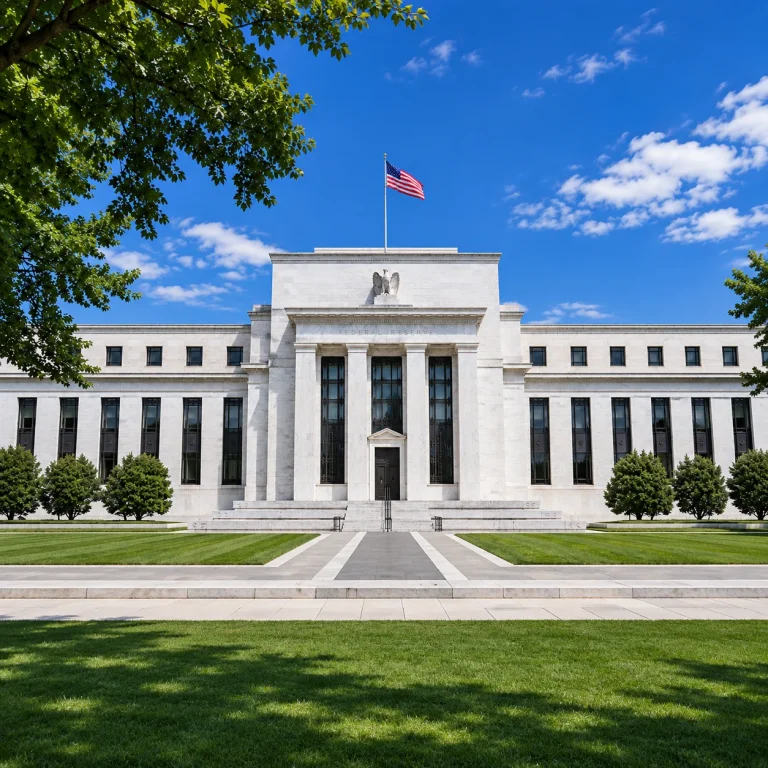
If investors believe that tariffs will keep inflation elevated and encourage the Federal Reserve to maintain restrictive monetary policy, the US dollar could receive additional support.
At the same time, escalating trade tensions may increase concerns about global economic growth, potentially influencing demand for defensive assets such as gold, the dollar and US Treasury securities.
However, these assets do not always move in the same direction.
For example, a stronger dollar and higher Treasury yields could weigh on gold prices even during periods of heightened economic uncertainty.
In the forex market, currencies such as the Chinese yuan, euro and Japanese yen may also become more sensitive to changes in trade expectations.
For currency traders, the key question is whether the proposed measures primarily increase US inflation expectations or create greater pressure on global growth.
Could the New Tariffs Push US Inflation Higher?
One of the most important economic concerns surrounding import tariffs is the possibility that higher costs will be passed on to American consumers.
When an imported product becomes subject to additional duties, the importing company faces a higher cost.
Businesses may respond by increasing retail prices, accepting lower profit margins or changing suppliers.
Consequently, the inflationary impact depends on how much of the additional cost is passed on to consumers and how quickly businesses can adjust their supply chains.
Some economic estimates suggest that the proposed measures could increase the overall effective US tariff rate, although their additional inflationary impact may be smaller than that of earlier tariff rounds.
Even a relatively limited increase in price pressures could remain important for the Federal Reserve, particularly while inflation remains above the central bank’s 2% target.
This means trade policy could become another factor influencing market expectations for US interest rates.
When Could the New US Tariffs Take Effect?
Despite the formal announcement, the proposed tariffs have not yet entered into force.
The USTR has established 5 January 2027 as the deadline for written comments and requests to participate in public hearings.
A public hearing is scheduled to begin on 25 January 2027.
As a result, implementation is not expected before the completion of this process, and the final timing remains subject to further government decisions.
Investors will be watching three developments closely: the response of affected trading partners, progress in bilateral negotiations and the final structure of the proposed duties and exemptions.
Until more details become available, US trade policy is likely to remain an important source of uncertainty for global financial markets and international commerce.
Was this news useful? Send it to others.
Comments
No comments yet. Be the first.