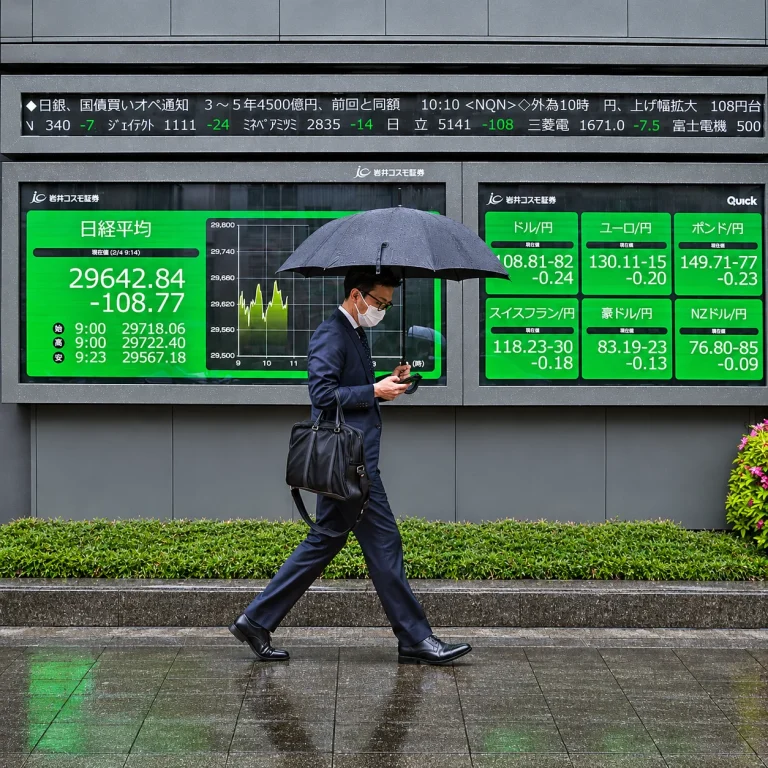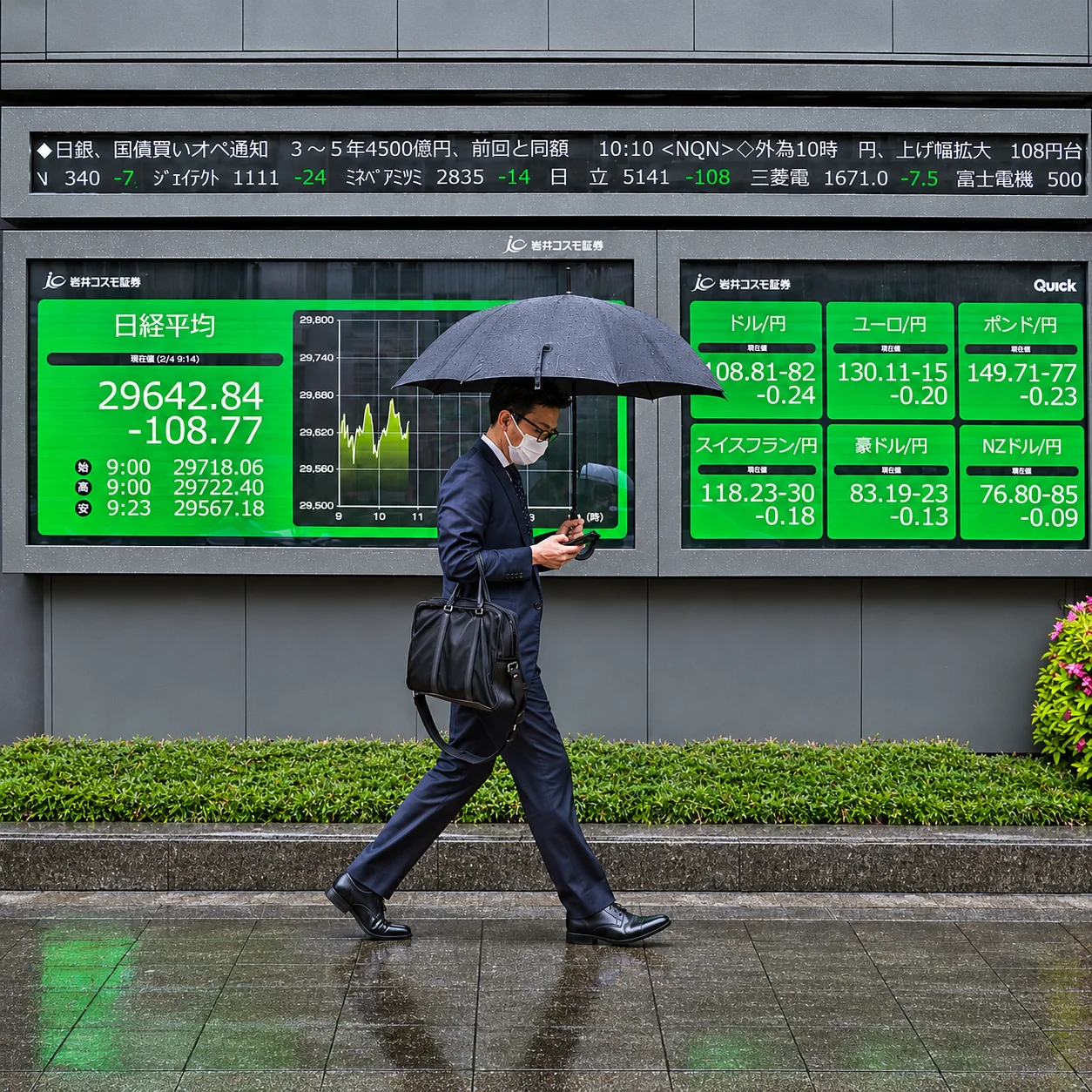
Asian stovk markets rallyAsian stock markets surged on Tuesday, recording some of their strongest gains in recent months as investor confidence returned to the technology sector. Taiwanese equities jumped 9.1%, South Korea’s KOSPI advanced 7.5%, and Japan’s Nikkei 225 climbed 4.5%, reflecting a powerful rebound in demand for semiconductor and artificial intelligence stocks.
The rally followed a remarkable surge in Nvidia shares on Wall Street, triggered by the reinstatement of Jensen Huang as the company’s chief executive. His return helped ease uncertainty surrounding one of the world’s most influential technology companies and encouraged investors to reconsider their exposure to the AI sector.
The sharp recovery comes after a period of significant selling pressure, driven by concerns over elevated technology valuations and the sustainability of massive investments in artificial intelligence infrastructure.
Asian Stock Markets Rebound as Technology Shares Lead Gains
According to market reports, the MSCI Asia-Pacific Index excluding Japan climbed approximately 4.6%, recovering from an eight-month low.
Taiwan was among the strongest-performing markets, with its benchmark index rising more than 9% as investors increased their exposure to semiconductor manufacturers and AI-related companies.
South Korea’s KOSPI also recorded significant gains, advancing approximately 7.5%. Major technology companies, including Samsung Electronics and SK Hynix, helped drive the recovery as demand returned to semiconductor and memory-chip stocks.
In Japan, the Nikkei 225 rose around 4.5% as trading resumed following a public holiday. Companies involved in semiconductor manufacturing and testing equipment were among the session’s strongest performers.
The broad-based rally demonstrates how renewed confidence in US technology companies can quickly influence financial markets across Asia, particularly economies closely connected to the global semiconductor supply chain.
Nvidia Shares Jump 31.5% Following Jensen Huang’s Return
The primary catalyst behind the market recovery was Nvidia’s extraordinary performance during Monday’s trading session on Wall Street.
Nvidia shares surged 31.5%, marking their largest one-day percentage increase in 23 years and restoring nearly $1 trillion in the company’s market value.
The rally followed the announcement that Jensen Huang, one of Nvidia’s co-founders, would return as president and chief executive.
Nvidia’s board approved Huang’s reinstatement after reviewing the circumstances surrounding his departure and receiving assurances that his return did not present a national security risk.
The decision was particularly significant for investors because Nvidia plays a central role in supplying advanced processors used in artificial intelligence applications and data centres worldwide.
Removing some of the uncertainty surrounding the company’s leadership helped restore confidence in the broader AI investment theme.
As a result, the rebound extended beyond Nvidia itself, supporting semiconductor manufacturers, technology suppliers and companies connected to artificial intelligence infrastructure.
Wall Street Records Powerful Gains as AI Stocks Recover
The rally in Asian equities followed an exceptional trading session in the United States.
The S&P 500 climbed 4.7%, recording its strongest daily increase since April 2025. Meanwhile, the technology-heavy Nasdaq Composite surged 6.5%, while the Dow Jones Industrial Average gained nearly 3%.
The recovery ended a seven-session losing streak for the S&P 500.
Before Monday’s rebound, concerns about technology stock valuations and the sustainability of AI-related capital expenditure had pushed the benchmark index more than 10% below its previous record high.
However, renewed buying interest in Nvidia and other leading technology companies helped reverse part of the recent market decline.
Despite the strong recovery, analysts remain cautious about whether the rally represents the beginning of a sustained upward trend.
Investors are still assessing whether the rapid expansion of AI infrastructure will generate sufficient earnings growth to justify the sector’s elevated valuations.
Why Did Taiwan and South Korea Lead the Asian Market Rally?
Taiwan and South Korea were among the biggest beneficiaries of the renewed enthusiasm for artificial intelligence because of their importance in the global semiconductor industry.
Taiwan is home to Taiwan Semiconductor Manufacturing Company (TSMC), a leading producer of advanced chips used by major technology companies, including Nvidia.
South Korea, meanwhile, plays a crucial role in supplying advanced memory chips through manufacturers such as Samsung Electronics and SK Hynix.
These components are essential for AI processors, data centres and high-performance computing systems.
Consequently, improving expectations for Nvidia’s business outlook can also support investor sentiment towards its Asian suppliers and technology partners.
The strong performance of these markets highlights how closely connected Asian technology companies have become to global AI spending.
However, this dependence also creates risks.
Any meaningful slowdown in investment in artificial intelligence infrastructure could negatively affect demand for semiconductor equipment, advanced memory chips and related components.
As a result, markets with significant exposure to the semiconductor industry may experience heightened volatility when expectations for AI investment change.
Federal Reserve Policy Remains a Risk for Global Equities
Despite the improvement in stock market sentiment, US monetary policy continues to influence the outlook for global financial markets.
Growing expectations of restrictive Federal Reserve policy have supported US Treasury yields and strengthened the dollar.
Elevated interest rates can increase borrowing costs for businesses and reduce the present value of expected future earnings.
This is particularly relevant for technology companies, whose share prices often reflect expectations of substantial profit growth over the coming years.
A stronger US dollar can also affect international capital flows and place pressure on emerging-market currencies, including those in Asia.
Therefore, while Nvidia’s rebound has improved market confidence, the sustainability of the broader recovery will depend partly on US economic data, interest rate expectations and corporate earnings performance.
Can the Asian Stock Market Rally Continue?
The sharp rebound across Asian stock markets indicates that investor appetite for technology shares has improved following last week’s widespread selling.
However, a sustained recovery will require more than a single strong trading session.
Investors will be looking for evidence that leading technology companies can maintain earnings growth while continuing to invest heavily in AI infrastructure.
Bullish scenario: If demand for semiconductor and AI-related stocks remains strong, supported by positive earnings reports and continued infrastructure investment, the recovery could extend to other global equity markets.
Bearish scenario: Conversely, renewed concerns about an AI investment bubble, slowing data-centre spending or a further increase in US Treasury yields could trigger another round of selling pressure.
For now, the performance of Nvidia, major Asian semiconductor manufacturers and the Nasdaq Composite will remain important indicators for investors assessing whether the latest surge marks the beginning of a broaAsian stock markets rally as Taiwan gains 9.1%, South Korea’s KOSPI rises 7.5% and Japan’s Nikkei climbs 4.5% following Nvidia’s historic surge.
recent market losses.
Was this news useful? Send it to others.
Comments
No comments yet. Be the first.