Asian Equities Mixed as US-Iran Ceasefire Extension Fails to Lift Risk Sentiment
Equity Markets React Cautiously to Geopolitical Developments
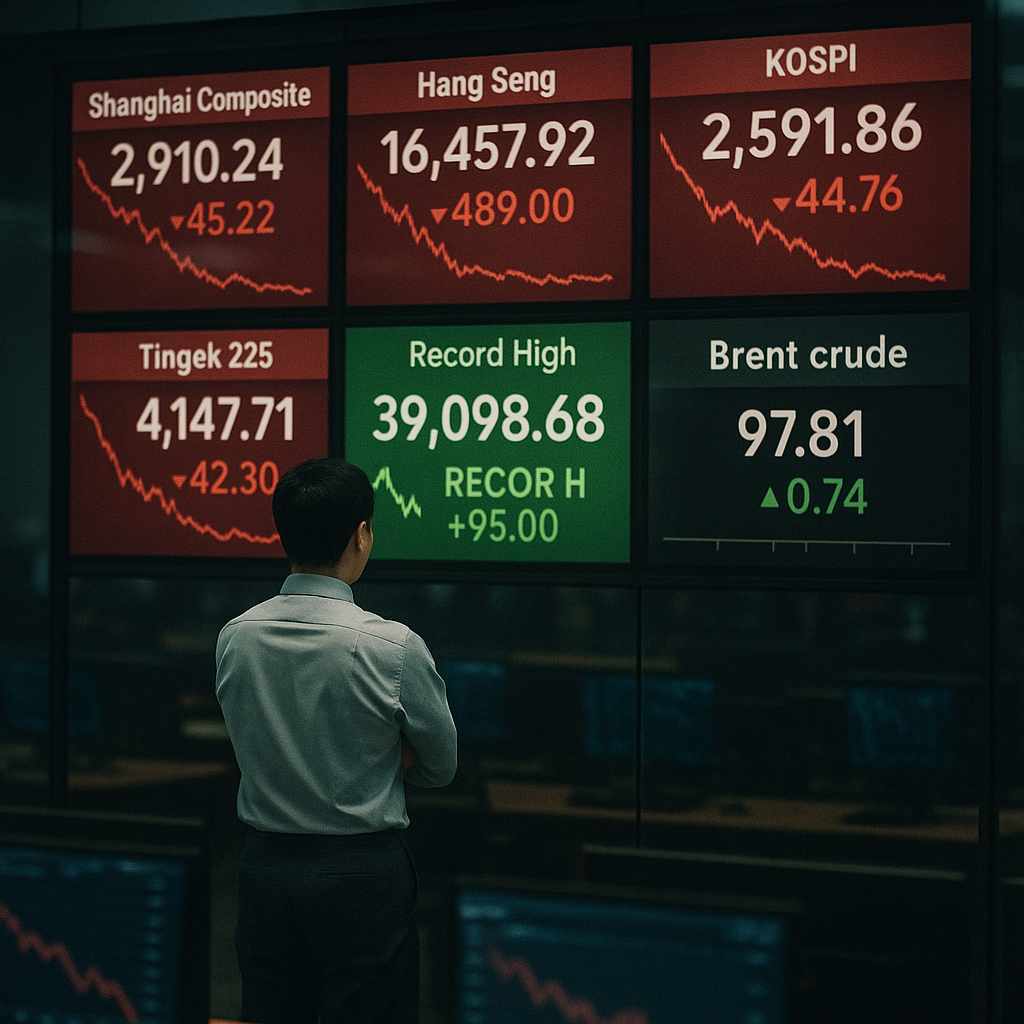
Asian stock markets declined on Wednesday even after President Trump extended the ceasefire between the United States and Iran. Market participants appeared focused on the underlying fragility of the diplomatic situation, particularly after the failure of a second round of US-Iran peace talks and the continuation of a US blockade on Iran, which together limited risk appetite across the region.
Japan’s Nikkei 225 stood out as an exception, gaining 0.40% and setting a record high of 59,585.65. In contrast, other major Asian indices retreated. India’s BSE Sensex fell about 0.8% to 78,659, ending a three-day winning streak, while Malaysia’s KLCI slipped 0.4% to 1,709. Overall, the regional equity performance reflected a cautious stance despite the formal extension of the ceasefire.
Oil, Crypto, and FX Market Moves
Brent crude remained elevated near $98 per barrel, roughly 35% higher than levels seen in late February when the US-Iran conflict began. The sustained rise in oil prices has heightened concerns about inflation and the potential squeeze on corporate profit margins across energy-importing economies in Asia. These pressures contributed to the generally subdued tone in regional equity markets.
In contrast, crypto markets showed notable resilience. Ether gained 2.57%, Bitcoin rose 2.49%, and Binance Coin advanced 2.12%, indicating continued interest in digital assets despite broader risk caution in traditional markets.
Asian foreign exchange markets were largely muted. The US dollar steadied following the ceasefire extension and comments from Federal Reserve Chair nominee Kevin Warsh at his Senate confirmation hearing. The combination of stable FX conditions and higher energy prices set the backdrop for cautious positioning across Asian financial markets.
FAQ
What was the performance of major Asian equity indices?
Japan’s Nikkei 225 rose 0.40% to a record 59,585.65, while India’s BSE Sensex fell about 0.8% to 78,659 and Malaysia’s KLCI declined 0.4% to 1,709.
How did the US-Iran situation affect markets?
Despite President Trump extending the US-Iran ceasefire, the failure of a second round of peace talks and the ongoing US blockade on Iran limited gains and kept investor sentiment cautious across Asian markets.
What happened to Brent crude prices?
Brent crude traded near $98 per barrel, about 35% higher than in late February when the US-Iran conflict began, increasing concerns about inflation and corporate margin pressure.
How did crypto and FX markets respond?
Crypto assets rose, with Ether up 2.57%, Bitcoin up 2.49%, and Binance Coin up 2.12%, while Asian FX markets were muted and the US dollar steadied after the ceasefire extension and remarks by Fed Chair nominee Kevin Warsh.
Share
Hot topics

What is a Floating Spread in Forex?
Introduction If you’ve ever placed an order and noticed the price changes slightly as it’s executed, you’ve experienced spreads in forex trading. Many beginners find this confusing. They enter a...
Read more



Submit comment
Your email address will not be published. Required fields are marked *