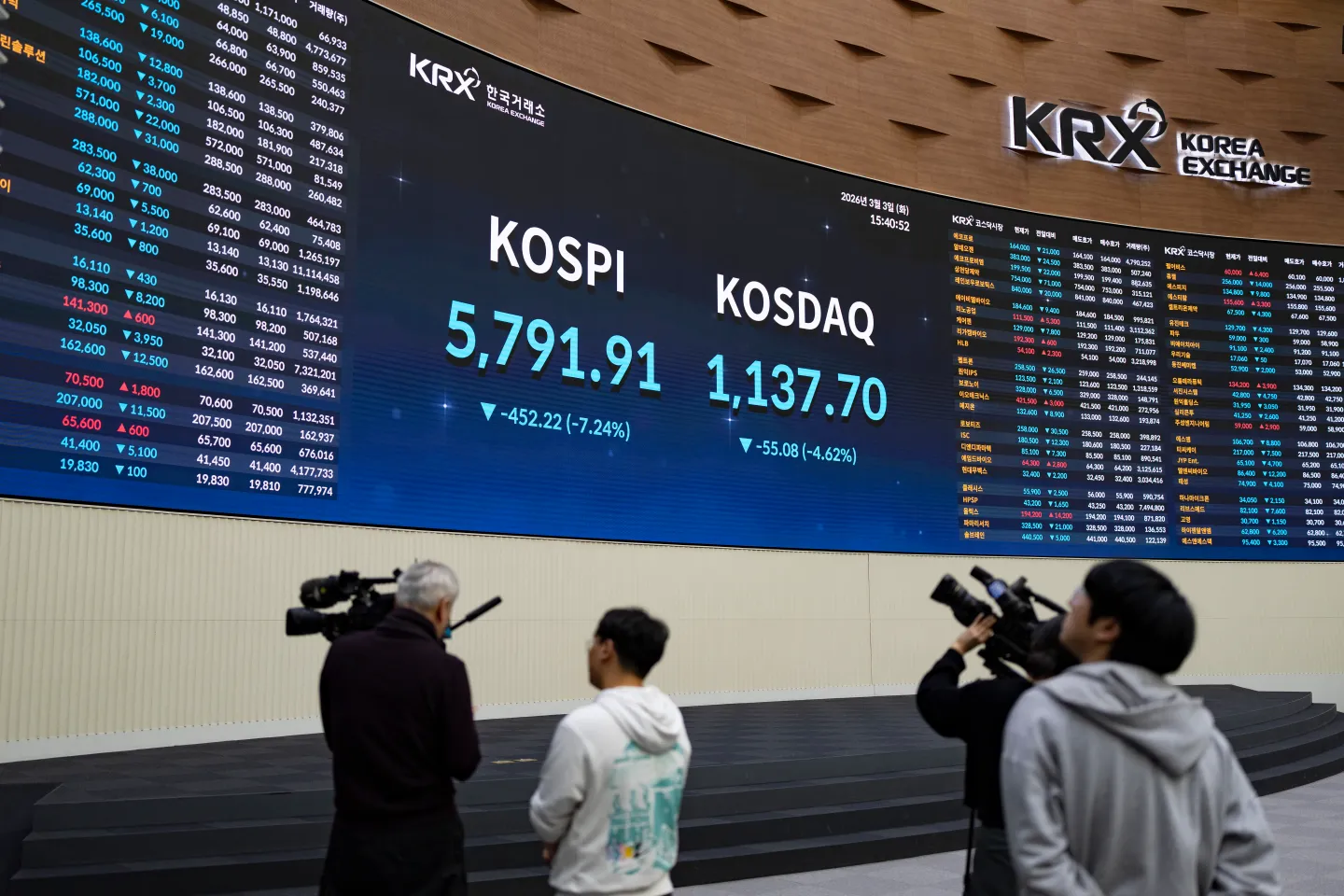
Asian markets mixed as Fed decision, Iran tensions and inflation data weigh on sentiment
Caution ahead of Federal Reserve decision and geopolitical tensions
Asian trading sessions were marked by subdued risk appetite as investors awaited the outcome of the U.S. Federal Reserve meeting later on Wednesday. The central bank is widely expected to leave interest rates unchanged, but market attention is focused on any guidance regarding the timing and pace of potential policy easing. Elevated inflation risks, particularly from rising energy prices, remain a central concern.
Geopolitics added to the cautious tone. According to a Wall Street Journal report, U.S. President Donald Trump instructed aides to prepare for a prolonged blockade of Iran, intensifying tensions around the Strait of Hormuz. The prospect of a sustained disruption risk in a key shipping route helped keep oil prices elevated, reinforcing broader inflation worries and weighing on equity market sentiment.
U.S. stock index futures edged higher in Asian trading, even as Wall Street closed lower overnight. The decline in U.S. equities followed a Wall Street Journal report that OpenAI had missed internal targets for users and revenue, raising doubts about the durability of substantial artificial intelligence-related investment. Investors are also awaiting financial results from the so‑called “Magnificent 7” technology-related companies.
Regional market moves and Australia inflation surprise
Performance across Asia was uneven. South Korea’s KOSPI edged up 0.2% after reaching record highs in the previous session. Japanese markets were closed for a public holiday. Singapore’s Straits Times Index fell 0.6%, while futures linked to India’s Nifty 50 were flat.
In China and Hong Kong, trading was mixed. China’s Shanghai Composite index gained 0.4%, and the blue-chip Shanghai Shenzhen CSI 300 rose 0.7%. Hong Kong’s Hang Seng Index climbed 1%, with the Hang Seng TECH sub-index advancing 1.5%. Shares of Hua Hong Semiconductor, China’s second-largest chipmaker, dropped more than 7% after a Reuters report highlighted possible new U.S. restrictions on shipments of chipmaking equipment.
Australia’s S&P/ASX 200 slipped 0.3% following a stronger-than-expected inflation reading. Data showed consumer prices rose about 1.4% quarter-on-quarter, pushing annual inflation into the mid‑4% range, the highest level in more than two years. The Reserve Bank of Australia has already raised interest rates twice this year and has warned of the potential need for further increases in response to rapidly rising inflation.
FAQ
What were the main factors driving Asian markets on Wednesday?
Asian markets were influenced by caution ahead of the U.S. Federal Reserve’s policy decision, escalating U.S.-Iran tensions, elevated energy prices, and strong Australian inflation data, alongside weaker sentiment following a Wall Street decline linked to concerns over artificial intelligence spending.
How did key Asian indices perform?
South Korea’s KOSPI rose 0.2%, Singapore’s Straits Times Index fell 0.6%, and Australia’s S&P/ASX 200 declined 0.3%. China’s Shanghai Composite gained 0.4%, the CSI 300 advanced 0.7%, and Hong Kong’s Hang Seng Index rose 1% with a 1.5% increase in the Hang Seng TECH sub-index.
What did the Australian inflation data show?
Australian consumer prices increased about 1.4% on a quarterly basis, lifting annual inflation to the mid‑4% range, its highest level in more than two years and reinforcing expectations of a tight monetary policy stance from the Reserve Bank of Australia.
Share
Hot topics

What is a Doji Candlestick? Complete Guide to Trading Indecision Patterns
Introduction If you’ve looked closely at a price chart, you might have spotted candles that stand out from the others. Some have long bodies that indicate powerful buying or selling...
Read more



Submit comment
Your email address will not be published. Required fields are marked *