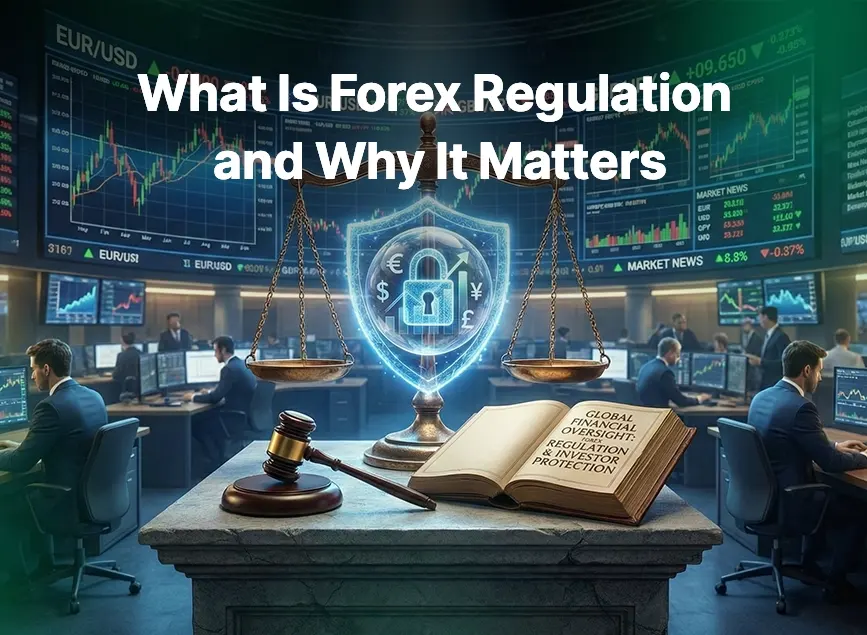
What Is Forex Regulation and Why It Matters
If you’ve been thinking about trading currencies or investing in the forex market, you might have seen words like “regulated,” “license,” or “authority.” They may sound like very boring legal terms. But, they make up the foundations of safety in trading.
The forex market is one of the most exciting places in global finance. It’s a 24 hour-a-day market, connecting traders across continents and moving trillions of dollars a day. But with a such scale and freedom comes risk — this is where forex regulation comes into play.
Let’s break this down in plain at Otet Markets, simple terms. We’ll discuss what forex regulation really means, why it exists, and what it does for your trading experience — and we’ll do it through relatable examples, real-world situations, and useful insights.
Understanding Forex Regulation in Basic Terms
When it comes down to it, Forex regulations simply mean the rules, standards, and systems put in place to maintain fairness and transparency in trading. Regulators are like “watchdogs” — they regulate brokers, monitor fraud and make sure companies trade fairly.
This is why it is critical to select regulated forex brokers. Regulated brokers are monitored by the financial watchdogs and must put in place enough safeguards to ensure that they protect your money, they provide fair execution pricing, and they are honest.Why is Regulation Necessary in the First Place
In the early days of forex trading, especially online, the market was like the Wild West. There weren’t any global standards, and a person could set up a “brokerage” in a matter of hours. Some brokers operated responsibly, but many abused traders’ trust, vanishing with deposits or manipulating trades behind the scenes.
In order to prevent this, governments and financial institutions around the world began putting regulations in place. These regulations required brokers to show they met certain, often defined by law, standards before they could legally serve clients.
Essentially, they had to demonstrate their financial sustainability, transparency and competence – and that is how the forex license came about.
What is a Forex License
Its a stamp of approval that signifies that a forex brokerage has passed all of the checks to be allowed to operate within certain legal confines. It is not easy to get a license and that is a good thing. It is an indication that a broker can be trusted and/or held accountable.
Forex Authorities Around the World
Countries have their regulators – the organizations who are responsible for granting licenses and enforcing statutory laws overseeing trading. Together these bodies are called forex authorities and they comprise the foundation of global forex oversight.
Some of the popular respected authorities are:
FCA (Financial Conduct Authority in the UK)
ASIC (Australian Securities and Investments Commission in Australia)
CySEC (Cyprus Securities and Exchange Commission in Cyprus)
FINMA in Switzerland
CFTC and the NFA in the United States
These authorities are responsible for oversight of broker activities, account audits, and investigation of suspicious practices.They are like lifeguards at a crowded beach – always on alert; they’re there to jump into action if someone starts to sink due to questionable practices.
read more: How to Invest in Forex and Buy Stocks?
What Sets Regulated Brokers Apart
When you trade with regulated forex brokers, you are receiving more than a gateway to the forex market. You are getting peace of mind.
First, regulated brokers must keep your funds in a segregated account – which means your money is kept in a separate account from the company’s operational funds. If a regulated broker has some sort of financial mishap that impacts the company, your deposits remain intact.
Secondly, regulated brokers are obligated to provide pricing transparency and risk disclosures. You will know how much you’re paying, how much you’re risking, and what your defenses would be. Many regulated brokers are even a part of the compensation schemes – these are utilized as a safety net in the event the broker went bankrupt, albeit a rare occurrence.
On the other hand, unregulated brokers often go unchecked. They can change prices, procrastinate in carrying out requested withdrawals, or even shut down overnight – and because they are not under obligation to do so by law, retrieving your money is near impossible.
How Forex Regulation Protects You
Forex regulation isn’t just rules for brokers to follow—it’s the entire process that ensures traders are protected at every step. Here’s an example of how that takes shape:
Transparency. A regulated broker must post their license number, details of the company, and ownership. No hiding behind fictitious names or offshore P.O. boxes.
Fair Prices. The regulators ensure brokers provide accurate price feeds and do not manipulate spreads.
Financial Stability. Companies pledge to maintain a minimum amount of capital to ultimately show they can operate during volatile market movements and honor trades clients place.
Dispute Resolution. Should you ever dispute a decision, you can file a complaint with the regulator, which will investigate the situation and issue a potential penalty or suspension of the broker, if appropriate.
Audits. Brokers will be externally audited at least once a year to confirm they are doing business legally and ethically.
All of these create an environment where traders focus on working on their strategies and conducting analysis—not wondering if their broker was operated fairly.
The Process of obtaining a forex license
Obtaining a license is not as simple as filling out a form. Brokers go through a process that takes a long time and costs considerable amounts of money to obtain one.
They must submit detailed financial records, compliance documents, business plans, and various other requirements. Regulators provide insight into directors backgrounds, capital sources, and the internal systems they use to run their business.
Once approved, the broker must continue to meet the high standards of being regulated. If they violate the regulations, the regulators have the authority to penalize them, suspend their license, or ban them from operating indefinitely .
That is why seeing that a valid forex license is associated with a broker is significant. It indicates that the company practices professionalism and is accountable.
The Global Web of Oversight
Along the same lines, since forex trading is international, regulators cooperate across borders. If a broker in Cyprus, for example, misleads a client in Germany, both local and EU regulators can step in. This international regulatory system helps ensures that bad actors cannot escape accountability when they move off shore.
Still, some countries have poor regulatory systems and countries with poor regulations represent a precarious situation. Because offshore jurisdictions have looser rules brokers can offer high leverage, and perform minimal paperwork. This may be attractive, but it does come with a much higher risk.
To summarize: strong regulation means stronger protection.
Advantages in Trading with Regulated Brokers
Trading with regulated forex brokers has some practical benefits. Here are three positives that apply to clients of regulated brokers:
Protection of Funds: The law protects your funds and more often than not, your funds are insured
Fair Trading Conditions: You understand transparency in pricing and genuine execution
Credibility: Licensed brokers care about their reputation and you should expect good customer service
Legal Options: If something were to go wrong, you had a place to register your filing and resolution.Understanding that you operate under a regulatory compliance framework can impact the very moment to moment volatility that you will experience when trading across financial markets.
The Importance of Forex Regulators to Any Trader
While it may be possible to consider that regulators are only relevant to brokers, trust that the regulators are here for you—the trader. Regulators conduct their enforcement work, notify the public when brokers are likely to be scams, and sometimes even freeze the activity of rogue agents. They will work to provide you lists of accredited n-market verification and an official authority, so that you can check to see that your broker is legitimate.
You can still check the registration on a directive’s regulated website in case of large regulators such as FCA or ASIC like for starters. Just search the name of the broker and check for registration. If you cannot find the name of the broker, be assured that that is a strong reason to not use that broker.
If it only takes a couple minutes to check the registration of your broker but could prevent you from losing thousands, you probably should check if they are registered.
read more: What Is a Forex Calculator and How to Use It
The Industry as an Evolving Animal
As in any industry, the reality is that technology evolves, and there are no exceptions when it comes to this area of finance. With the rise of online trading, then applications, and automated systems, the regulators have recognized that some of their regulatory expectations need to change as well along with the latest iterations.
Many newer regulations have included regulations that involve data protection, trading algorithms that are automated, and even regulations that even involve reporting of cryptos transactions with newly interpreted migrating records applicable to non-specialist bodies. Some regulations have even developed cooperative agreements with countries for transactions that are suspicious for real-time scrutiny.
The increased operational activity of the regulatory bodies, demonstrates, shows that the regulation of the forex market is evolving alongside the forex market and that regulation and policy will continue to protect the trader as the automated systems’ and internet change.
Myths around regulation
One myth often repeated is that they will regulate you out of being profitable and that you will be caught up in a web of substantive barriers to trading out profits.In fact, it simply limits your exposure to needless risk. Yes, a regulated broker may not offer extreme leverage or flashy bonuses, but those limits are in place to help you from losing control of your losses.
Another myth is that all unregulated brokers are scams. While it is true that not all unlicensed brokers are scammers, the problem is that you do not have any oversight or regulations, so you simply cannot guarantee safety the same way you would if there were regulation. In fact, you could potentially never know what is going on behind-the-scenes.
Choosing a regulated broker is not about limiting your opportunities to trade; instead, it is about empowering yourself to confidently trade.
The Balance of Freedom and Protection
Forex is attractive because it is open; anyone can participate with an internet connection. Regulation does not take away opportunities to trade, it simply keeps the market fair.
This is like the rules of the road. If there were no rules, there would still be roads, but would you feel safe driving? Forex regulation works the same way — providing order in an environment with speed and opportunity.
That balance of freedom and protection is what keeps the market alive, and worthy of our trust.
Final Thoughts – Regulation Should be Priority Number 1
Before you consider trading strategies, leverage limits or whether you are going to make profit, just simply consider whether it is safe to trade. Your broker is that point of access for you into the market, and whether they are regulated determines how secure that access point is.
When you work with regulated forex brokers, you know they are accountable to law and you have comfort in the security of knowing your money is protected, your trades are fair, and the broker is regulated. The vetting process should always included asking if the firm has a valid forex license and if they are overseen by reputable forex authorities.
Regulation might not be the most exciting part of trading, but it is literally what allows you to trade in the first place with confidence. It is the unseen shield that allows you to take measured risks, without gambling your future.
In a market where fortunes can be made and lost minute by minute, regulation is your anchor — steadfast, reliable and required.
Share
Hot topics
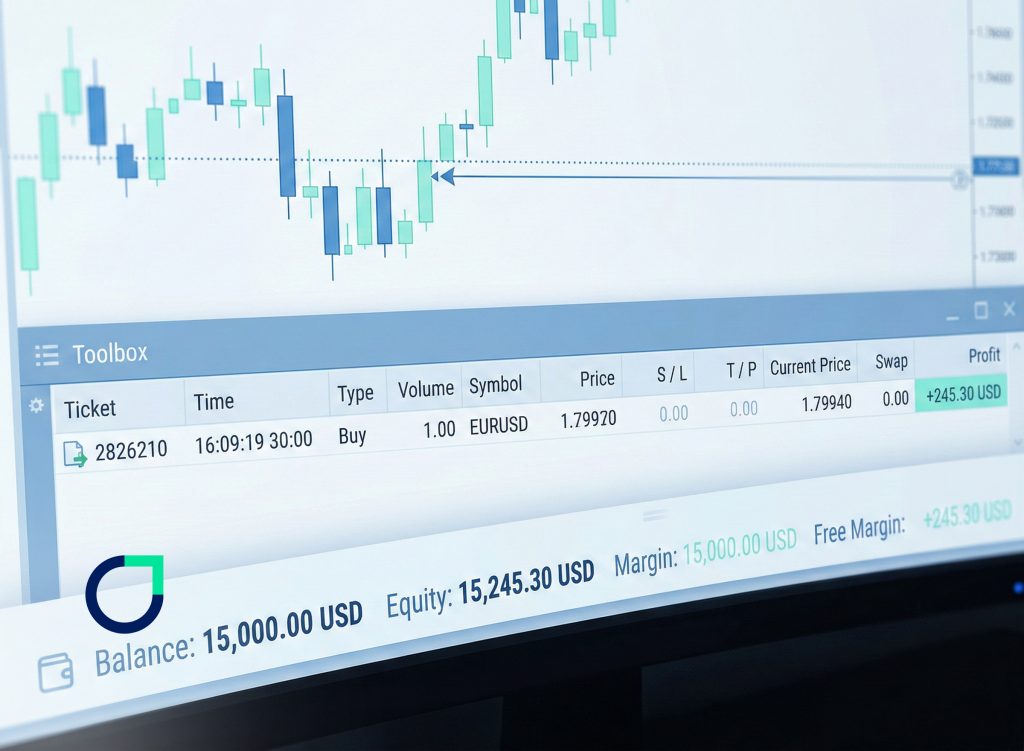
What is Balance in Forex? A Complete Guide for Traders
Introduction When you open a trading account for the first time, one of the first numbers you see on your screen is your balance. It looks simple. It looks clear....
Read more

Submit comment
Your email address will not be published. Required fields are marked *