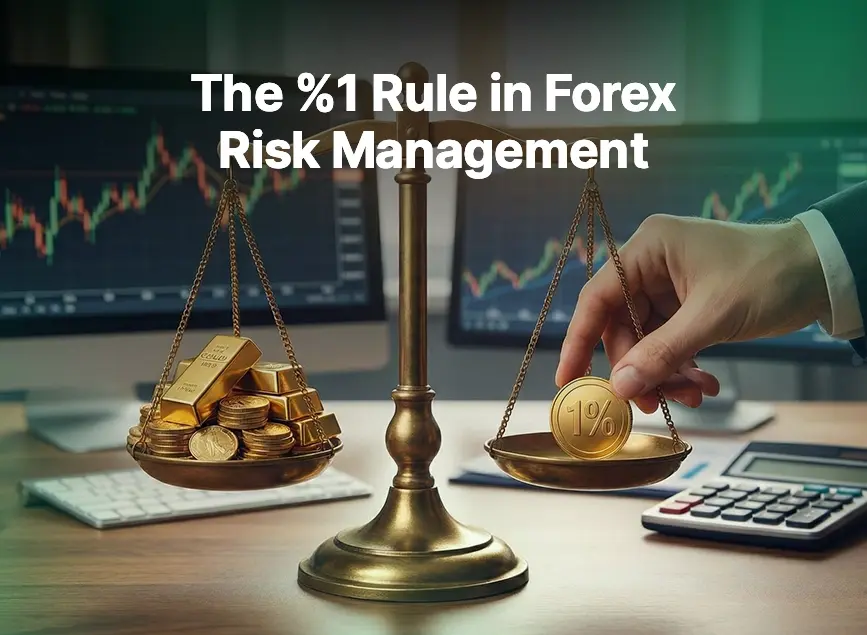
The 1% Rule in Forex Risk Management
If you have ever heard the expression “protect your capital before you’re chasing profits,” then you have brushed against one of the most powerful concepts in trading – the 1% rule. It is simple, but it is what distinguishes the disciplined trader from those who blow out accounts within weeks.
In forex trading, you could analyze charts, study indicators, and follow strategies all day long, but without a specific plan to manage risk that knowledge will disappear in a single bad trade. Thus, Otet suggests that understanding forex money management, the 1% rule, and what is meant by position sizing and risk per trade forex is not optional, it is vital.
Why Most Traders Lose (and It’s Not Because They Are “Bad”)
Let’s be real – nearly every beginner thinks they are going to double their account fast. You begin trading, win a few positions, now you feel invincible and then all of a sudden, one trade wipes away half your gains. Sound like you?
It is not that the trader is lazy or bad at trading, it is that they let their emotions take control over them. When you allow either excitement or frustration take control, risk management is no longer existent and this is the reason why most people do not fail because they cannot predict the market, they fail because they do not manage themselves.
What Is the 1% Rule?
The 1% rule is one of the most fundamental efficient risk management principlesIt means that you should never put more than 1% of your entire trading capital in one trade. For instance, let’s say that you have $10,000 account (which is an example we’ll stick to for the following points). The 1% rule says that your total potential loss on one trade would be no more than $100. That’s it. And even if you went to a complete loss, you still get to keep an impressive 99% of your trading capital to regroup and trade again. It can feel overly cautious, but the 1% rule is there to protect you from emotional trading and unfortunate losses. Think of it in terms of “the long game” mentality.
Read More: Risk Management
The Psychology Behind the Rule
The power of the 1% rule is not only in the mathematical figures that we previously discussed, but the type of mindset they create. When you accept that your worst case scenario is a tiny fraction of your total trading account capital, you can trade with greater confidence and less fear. Instead of thinking “What if I lose?” you can think about making good decisions on the trade. You trigger a process of profound psychological changes. A good trader is not trading without fear – they are prepared to make decisions about different outcomes.
Even professionals managing millions of dollars use the same concepts. They understand that no setup is without errors and – minimally – no strategy holds in their favor at $ % for the take profit. The risk management protects them long enough to stay in the trade with a significant enough edge.
What is the 1% rule, step by step?
So how do you actually implement the 1% rule into your trades? Here’s what that looks like (we’ll explain this step-by-step). 1) Know your account size. So, for example, if you have a $5,000 account, 1% would be $50.This is to say, your maximum exposure per trade.
-
Your stop-loss should be set.
Determine where your trading idea becomes a losing idea. This might be 30 pips away in your scenario.
-
Your position size should be adjusted.
Position sizing is determining how large or small your position should be, so that if your stop-loss is hit, your entire loss is only 1% of your capital.
For example, you could risk $50 and use a 30 pip stop-loss, so you would take a position size that gives you a pip value of about $1.66 each.
This can be done with an online calculator, or even a simple spreadsheet, but it works the same way — risk determines your position size, not the opposite.
The Importance of Consistency
Another underrated element of the 1% rule is consistency. Most traders only use the rule for a few trades, before they gain too much confidence and go to risking 5%, 10%, or even more to put their “sure thing” into action on their trading account.
That’s the trap, your sure thing is absolutely never sure in trading. You don’t really know what is going to happen in the markets and even the best setups can fail. The secret sauce to all of this is to be on the good side of the bad days, so you can be present for the good days.
If you were risking 10% a trade, you could lose three trades consecutively and take almost a third of your account in total losses, which would require getting back on track multiple wins to get the account back to its original balance, not to mention if your confidence didn’t waver by then.While it may seem daunting, the 1% rule is the only principle that can control your capital to stay in the game long enough to be able to grow sustainably.
Now that we have looked at the 1% Rule, we can tie this to Forex Money Management.
The 1% Rule is the foundation of all forex money management – which is a consistent process for how to decide about capital risk, trading information, and protecting capital.
Money management is more than just simply a stop-loss order; it is about understanding how your trades connect to one another. If you risk 1% of trading capital in a trade and have five positions open, you are risking 5% of your trading capital. A good trader sees that and works to minimize that risk. And will also result in setting profit targets, goal setting, between performance tracking, and result tracking of performance objectives. That can be your personal business plan and the 1% rule is the foundation for that business plan.
What Does Risk per Trade Forex Mean?
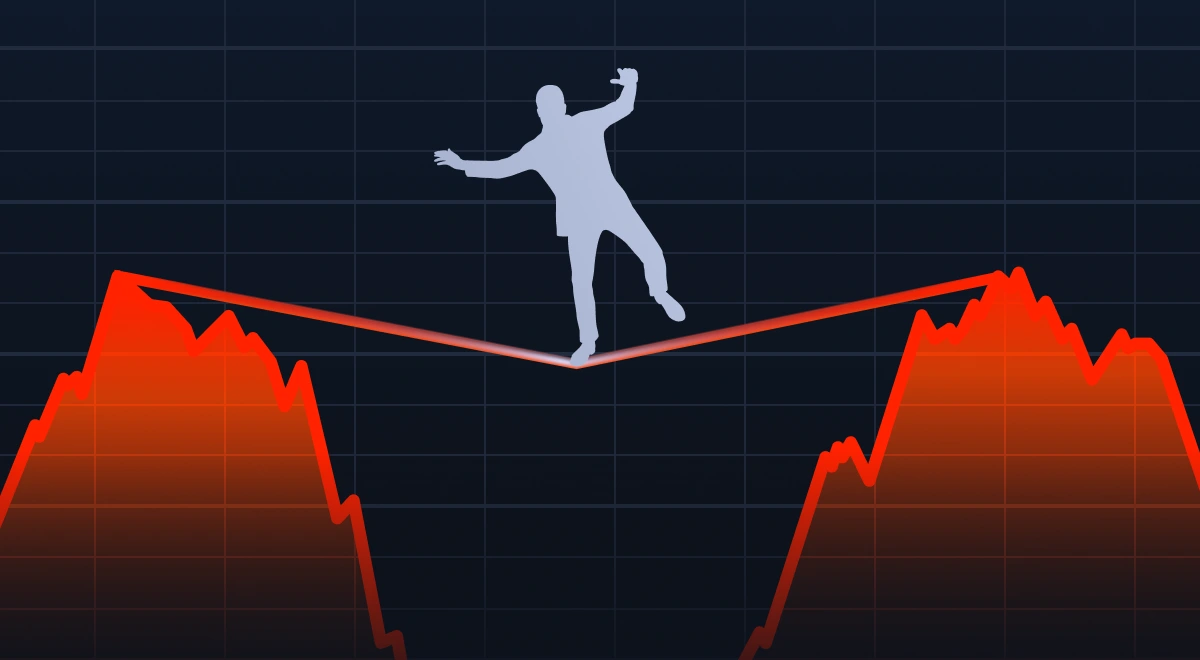
Risk per trade forex is just another description for how much you will be willing to lose in that position. Its usually expressed in percentage form of trading capital, and that is where the 1% rule is discussed.
Once you get into advanced trading scenarios, some may risk 2% or even 3%. But, as a beginner, it is smart to stick with even less than 1%. You want to learn to trade, not learn to survive.
When you demonstrate risk per trade forex, you are automatically also sharpening emotional balance as well.It’s easier to accept losses, take the time to learn from your mistakes, and plan your next step in a calm manner instead of going into a panic.
Let’s dive into position sizing again, as it is one of the most utilized and overlooked methods of managing risk.
Many traders take random lot sizes — including somewhat randomly using how they feel or how “confident” they feel about a trade. This is a path to inconsistency.
Read More: Trailing Stops in Forex
Position sizing ensures that, regardless of how confident you might be, your potential loss is still within your rules and translates your risk appetite (1%) into a trade size.
For example, two traders both can play the 1% rule, but their trade sizes will be different because of the distance of their stop losses. A wider stop, reduces the position, where a tighter stop increases the position. They are flexible yet within controls.
It does several things for you, but mostly it allows you to take complete control of your account’s survival rate. It’s like setting the thermostat in your home, it’s your choice how “hot” or “cold” it gets.
Why Most People Ignore the 1% Rule (And Regret It)
Let’s face it—it feels boring to risk 1% when you want excitement or a quick profit. The 1% rule certainly isn’t going to produce any of the adrenaline that some traders rely on for confirmation.
Here’s the unfortunate reality: a great number of traders are disregarding this rule, often resulting in emotional fatigue and empty accounts.Without a doubt, big wins can be exciting and pleasurable, but big losses can be devastating.
You will never see a $100 investment turn into $10,000 overnight. Trading is about staying in the market long enough to see small, consistent profits compound.
When You Can Alter the Rule
Once you have built a level of experience and consistently demonstrated you can follow a trading plan without emotional intervention, then you can slightly divert your risk tolerance. Advanced traders may risk 1.5% or 2% per trade when circumstances are favorable.However, keep in mind that this should be a slow, deliberate decision based on performance data, not a random whim. Should you get stuck in a losing streak, scaling down to half of one percent may also preserve capital and confidence.
The point is not about finding the right percentage. The point is consistency, adversity, and staying in for the long-haul.
Creating a Routine that Factors in Risk Awareness
In order to implement the one percent rule you must make it a part of your trading habits. Here are some ways to do just that:
- Plan every trade before you place it. Look at your entry, stop-loss, and take profit levels.
- Never switch your stop-loss to allow “more room” for a trade. That’s emotional trading.
- Keep a trading journal to evaluate how ferociously you follow your risk rules.
- Evaluate performance in a weekly cycle and adjust your forex money management strategy as needed.
- Treat trading like a business. Every dollar in your account is working capital – protect it like you would a budget in your company.
The Long-Term Implications of the One Percent Rule
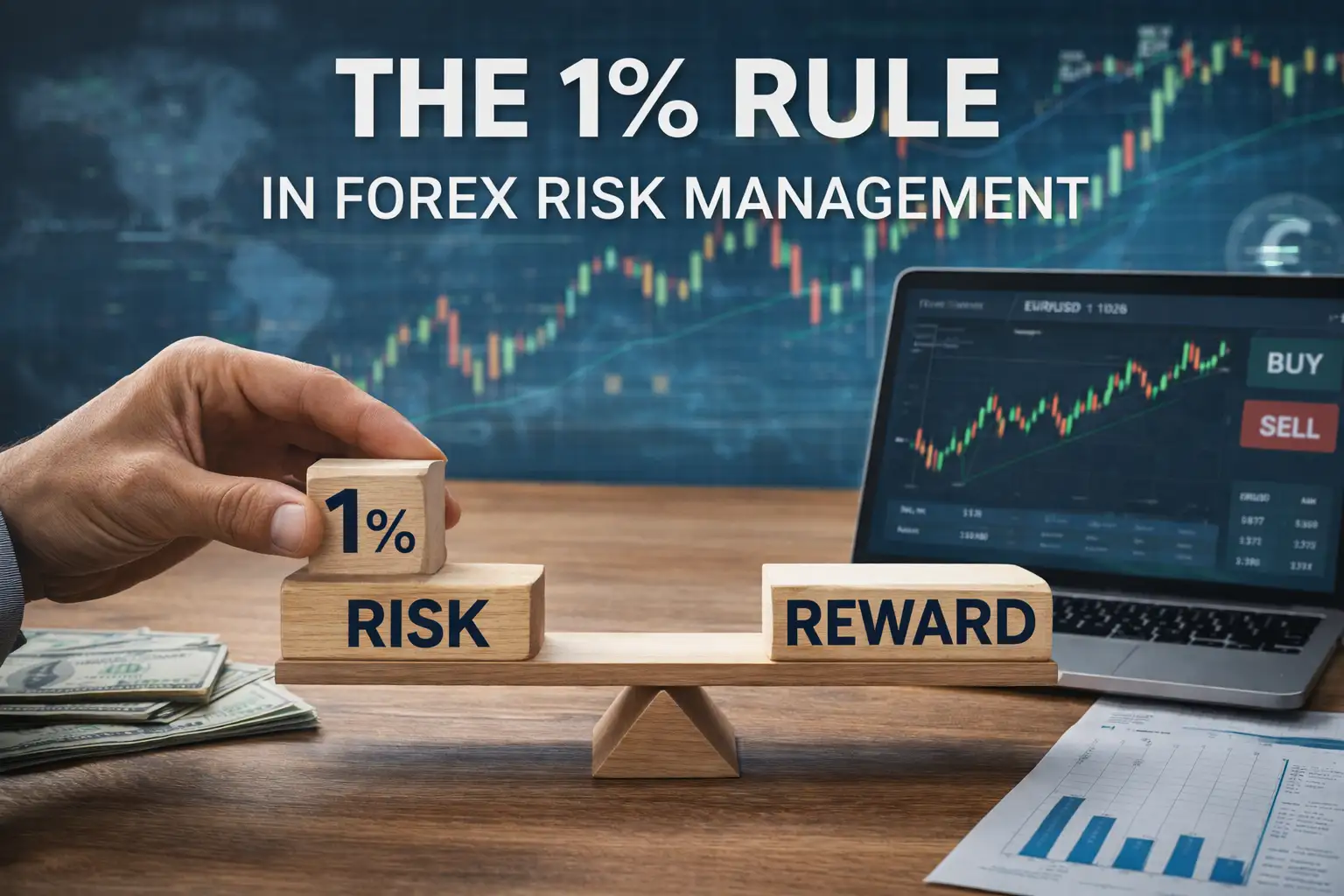
Here is the wonderful thing about this: it adds stability. Let’s say you lose 10 trades in a row (which can happen to anyone). If you risk 1% of your account each time, you are down 10%. That is manageable.
Recovering from a 10% loss only requires 11%. That is easily achievable if you are a steady trader. However, if you were risking 10% of your account with each of those trades, a similar losing streak wiped out your entire account.
The math alone further illuminates why the one percent rule is not about fear. It is about survival. This is how traders turn losses in the moment lessons in the long haul.
Final Thoughts: Small Risk, Great Wisdom
At first glance the one percent rule may seem excessive but with discipline and edge, you will see over time that it is the very way in which successful traders stay profitable. It is not whether you can avoid losses; it is whether or not you can control them.
Trading is not a competition of smarts or luck; it is a competition of who can maintain a consistent mindset when market conditions become unpredictable. The one percent rule helps you to ensure that you can get to a reasonable profit one disciplined trade at a time.
So, the next time you want to “go all-in,” just pause, breathe, and remember – surviving today means trading tomorrow. And in trading, survival means everything.
Share
Hot topics
What Is Liquidity in Forex Strategy?
If you’ve ever placed an order and seen how quickly it filled up or how incredibly slow it moved you witnessed liquidity in action. While traders obsess over indicators, entries,...
Read more


Submit comment
Your email address will not be published. Required fields are marked *