
Risk free in forex strategy
If you’ve spent any time trading forex, you’ve probably heard someone say, “Just make it risk-free.” It sounds simple. Move your stop to entry, relax, and let the market do the rest.
But is trading ever truly risk-free? Or is it just a way of managing exposure more intelligently?
The idea behind Risk-Free Trading is not about eliminating uncertainty. It’s about protecting capital once the market proves your idea correct.
What is Risk in Trading?
Risk in trading is the possibility of losing money. Every trade carries it—no exceptions.
When you open a position, you are exposed to price movement. The market may go in your favor, or it may not.
Risk is not something to avoid completely. It’s something to manage carefully.
Professional traders don’t try to eliminate risk. They define it before entering the trade. If you know how much you’re willing to lose, you are already trading more responsibly than most beginners.

Common Types: Market, Liquidity, and Operational Risk
Market risk is the most obvious one. It refers to price moving against your position.
Liquidity risk happens when there are not enough buyers or sellers. This can widen spreads or create slippage.
Operational risk involves technical issues. Platform errors, connection problems, or execution delays fall into this category.
Even strong setups can fail due to these factors. That’s why understanding risk goes beyond charts.
Reliable infrastructure matters too. Many traders prefer stable environments like those offered through Otet Markets, especially when managing sensitive stop adjustments.
How Risk-Free Trading Works
It means moving your stop-loss to your entry price once the trade moves into profit. This ensures that, at worst, you exit without a loss.
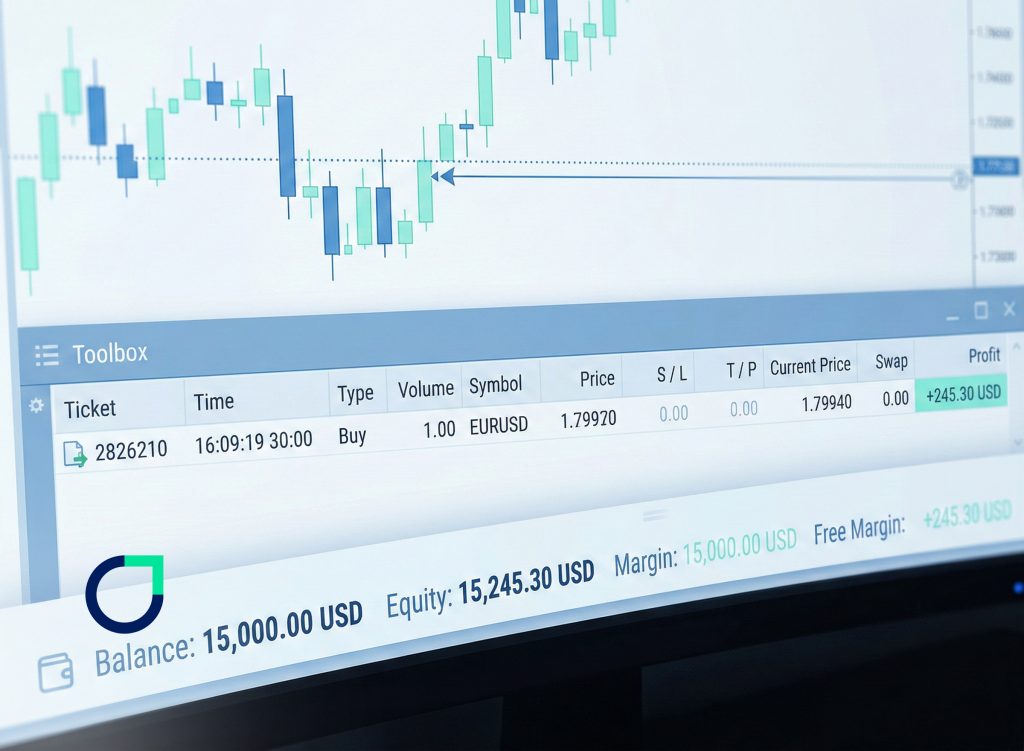
For example, if you buy EUR/USD and it moves 30 pips in your favor, you may move your stop to break-even. From that point, your capital is protected.
This approach reduces emotional pressure. You are no longer afraid of turning a winning trade into a losing one.
However, “risk-free” doesn’t mean profit is guaranteed. The trade can still close at zero. It’s more accurate to call it “capital-protected” trading.
Best Situations for Risk-Free Trading
Not every trade should become risk-free immediately. Timing matters.
It works best after price has clearly broken structure or confirmed momentum. Moving your stop too early can cause premature exits.
Trending markets offer better opportunities for this method. When momentum is strong, protecting profits makes sense.
In choppy or sideways markets, break-even stops are often triggered quickly. In those cases, patience is required. It works best when there is clear direction and enough room for price to breathe.
Best Risk-Free Strategy for Beginners vs. Professionals
For inexperienced traders, moving stops can be done at fast pace due to their concern about missing even small profits. A guideline that is easy for the novice trader to use is to only move the stop to break even once they’ve accomplished a 1:1 risk/reward ratio for their trade. The experienced trader, however, will likely take longer and have greater discretion with regard to their stop adjustment. They may partially close positions before moving the stop.
Some use scaling techniques. Others combine stop movement with trailing methods. Advanced traders may even use Hedging in Forex instead of break-even stops, depending on market conditions and account type.
Platforms like cTrader accounts available through brokers such as Otet Markets often support flexible order management, which can help implement these strategies efficiently.

Advantages and Psychological Benefits
The biggest advantage of a risk-free approach is emotional relief. Once your capital is protected, fear decreases significantly.
This allows traders to think more clearly. They stop watching every candle anxiously.
It also builds confidence. Seeing trades protected at break-even reinforces disciplined habits.
Another benefit is long-term capital preservation. Even if some trades close at zero, you avoid unnecessary drawdowns.
Psychologically, Risk-Free Trading encourages patience. You wait for confirmation before protecting the trade.
Limitations and Potential Pitfalls
Despite the benefits, this method has drawbacks. The most common issue is premature stop movement. Traders move to break-even too early and get stopped out repeatedly.
Another problem is misunderstanding volatility. Forex pairs naturally fluctuate before continuing.
Frequent break-even stops can reduce overall profitability. Sometimes allowing a trade room to breathe leads to larger gains.
There is also the illusion of safety. Spread, commission, and execution costs still exist.
Risk-Free Trading protects capital, but it does not eliminate trading costs.
Calculating Your Risk-Free Threshold
Before making a trade risk-free, define your threshold clearly.
If you risk 20 pips, consider moving to break-even after 20–30 pips in profit. This maintains logical balance.
Some traders prefer waiting for structure breaks. Others use volatility-based measurements like ATR.
Consistency matters more than the exact number. Random adjustments create inconsistent results.
Remember to factor in spread and commission. Your entry price is rarely your true break-even point.
Is hedging a better strategy than moving the stop-loss to entry?
This depends on experience and account flexibility.
Hedging in Forex allows traders to open opposite positions instead of closing trades.
It can reduce exposure without exiting entirely.
However, hedging requires advanced understanding.
Improper use can increase complexity and fees.
Moving the stop-loss to entry is simpler.
It suits most retail traders.
Hedging may be useful for professionals managing multiple positions or larger portfolios.
For most traders, break-even stops are cleaner and easier to manage.
Conclusion
Risk-free strategies in forex are not about avoiding risk completely. They are about controlling it intelligently. The market will always carry uncertainty. You can control the amount of risk that you will be exposed to.
By moving stops to break-even, you can preserve your capital and relieve much of the stress associated with trading. However, both timing and the scenario/market action will have an affect on trade execution.
Risk-free trading is best done when utilizing good analysis; in other words, executing trades based on solid analysis with discipline using risk-free trading. It should be viewed as a tool; it does not guarantee 100% profits. Using this tool effectively will help improve your chances of staying in the market longer. In the world of trading long-term success can be much more important than short-term success.
FAQ
No, Forex trading can never be completely risk-free. Even when a position is moved to break-even, spreads, commissions, and slippage still create exposure.
A common guideline is to wait until price moves at least the same distance as your initial risk (1:1 ratio). However, structure and volatility should also be considered.
Traders often move stops too early. Normal market fluctuations trigger break-even stops before the trade has room to develop.
Spread and commission mean that break-even may not be exactly at entry price. Traders must account for these costs when adjusting stops.
Share
Hot topics
What is Balance in Forex? A Complete Guide for Traders
Introduction When you open a trading account for the first time, one of the first numbers you see on your screen is your balance. It looks simple. It looks clear....
Read more




Submit comment
Your email address will not be published. Required fields are marked *