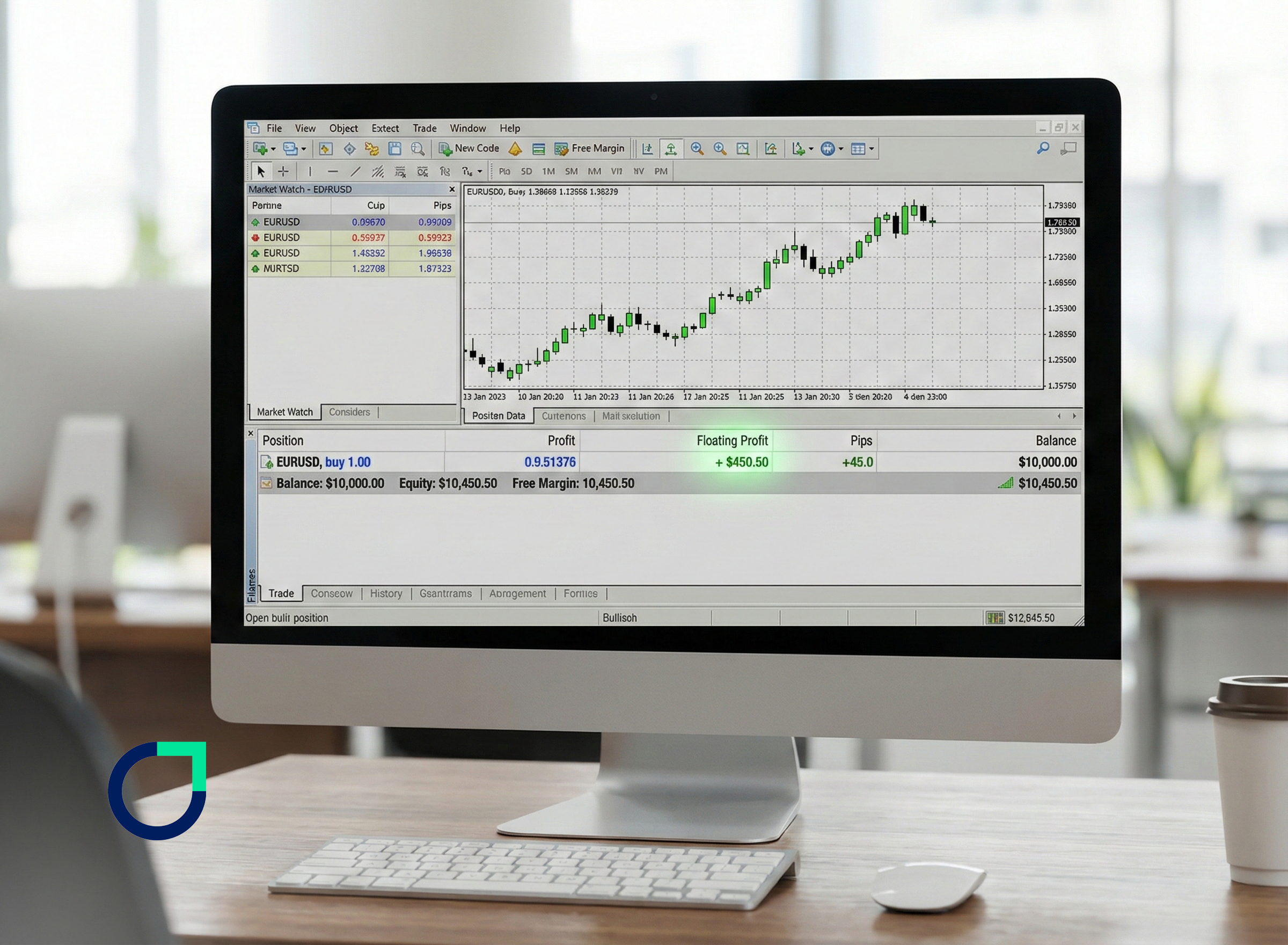
What is profit in forex strategy
Introduction
The forex market is the most popular way to trade currencies. When most people think of forex trading, the first question in their minds is, “How do traders make money?” This question often seems overly complicated because of the complicated charts used for trading, the speed of price movement, and the fact that there appears to be no time during the world ever sleeps. At first glance, the process can be overwhelming! However, at its essence, forex trading is a process of making profits from decisions that have structure and discipline behind them.
Profit in Forex is not random. It does not come from guessing. It comes from applying a clear, tested, and disciplined approach. That is where the idea of a profit in forex strategy becomes essential. A strategy defines when you enter, when you exit, how much you risk, and how you protect your capital. Without structure, profit becomes inconsistent and unpredictable.
Definition of Profit in Forex Trading
To put it plainly, profit in forex trading is the difference between the price at which you purchased or sold the currency pair and the price at which you closed that trade. If the market moves in your direction, then you will have made money. If the market goes against you, then you will have lost money. However, it is important to understand that profit does not depend only on price moving in your favor, as trading costs such as spread, slippage, commission, and swap fees can significantly affect the final result of a trade. Profit is based upon price movement, but it also requires consistently executing your trades.
A trader can “win” a single trade simply by luck, but for a trader to have a significant amount of profit consistently, the trader needs to have structure in his/her trading and have strategies to follow rather than simply trading based upon an individual trade outcome.
Why Having a Trading Strategy Is Essential for Profitability
Many beginners believe profit comes from finding the perfect entry point. In reality, profitability is built on consistency, not perfection. A trading strategy defines rules that help eliminate impulsive decisions and emotional reactions.
When traders operate without structure, they often change direction after losses or overtrade after wins. A defined strategy keeps actions aligned with logic instead of emotion. It answers questions before trades happen: How much will I risk? Where will I exit? What confirms my setup?
This discipline separates short-term luck from long-term profitability.
How Profit Is Calculated in Forex Trading
Forex profit is typically measured in pips, which represent small price movements. Each pip has a monetary value depending on the lot size you trade.
If you trade one standard lot in EUR/USD, one pip often equals around $10 in many common broker setups, although the exact pip value can vary depending on the broker’s contract specifications and the currency pair being traded. If you trade a mini lot, one pip equals $1. The calculation depends on position size and the currency pair involved.
Understanding this relationship helps traders manage expectations. Large profits usually require larger positions or significant price movement, but larger positions also increase risk.
Example of a Forex Profit Calculation
Let’s imagine you buy GBP/USD at 1.2500 with one standard lot. The price moves to 1.2550, giving you 50 pips of profit. Since one pip equals $10 in a standard lot, your total gain would be $500.
If the trade moved against you by 50 pips, you would lose $500. This simple calculation highlights why risk management is critical. Profit and loss are symmetrical in movement but not always in emotional impact.
Proven Forex Strategies to Generate Profit
Traders utilize different strategies depending on their risk tolerance, time-frame, and personality type. There are numerous types of approaches to day trading as shown below.
Scalping Strategy
Scalp trading is about taking small fluctuations in price, and repeatedly taking advantage of those small fluctuations throughout a day (works out usually to seconds to minutes of time).
Because scalpers can make very few dollars per trade on average, they must rely on quick fills with the lowest possible spreads and must also display and have outstanding discipline. Scalpers expect to carry out very high trade volumes and stay disciplined.
Due to the requirement for speed and precision, platforms such as cTrader are commonly utilized by scalpers.
Trend Trading Strategy
Trend trading is a strategy that includes identifying the general direction of the market (the trend) and then trading with that direction (buy or sell, follow the trend). The reasoning is basic, if you are following the trend it is more likely to continue than to immediately turn and go against what you are doing.
Moving averages and/or tools that measure momentum can be used to determine in what direction a market is headed. As with most strategies, the trader has to be patient and may need to wait to enter the market until a pullback occurs.
Price Action Trading Strategy
Price action focuses on reading raw market movement without heavy reliance on indicators. Traders observe support, resistance, and candlestick behavior to identify entries.
This method emphasizes market structure and discipline. Many experienced traders consider price action a foundation for a strong profit in forex strategy because it builds understanding rather than dependency.
Range Trading Strategy
Range trading is used when markets move sideways between defined support and resistance levels. Traders buy near support and sell near resistance.
This approach works best during stable market conditions and requires clear boundaries.
Swing Trading Strategy
Swing traders keep their positions for a number of days or even weeks with the intention of making larger price movements than by day trading. Also, they usually consider both technical and fundamental data in their decision-making, allowing for a more comprehensive view of the financial markets.
By holding longer term than day traders, swing traders spend less time at their screens, yet require the necessary patience and confidence to allow their trades to unfold over a longer period of time.
Specialized Forex Strategies for Consistent Returns
Beyond general strategies, certain methods target specific market conditions.
The 50 Pips a Day Strategy
This approach aims for a fixed daily target, often 50 pips. The idea is consistency rather than chasing large gains.
However, traders must remain realistic. Not every day provides ideal opportunities. Discipline in execution is more important than reaching a fixed number.
Gold Trading Strategies (XAU/USD)
Gold behaves differently from major currency pairs. It is more volatile and reacts strongly to global news and economic shifts.
Traders focusing on gold must adjust position sizes and manage risk carefully. The volatility can generate strong profits but also rapid losses.
News Trading Strategy
Trading based on economic news announcements is known as news trading, and those periods have potential for dramatic price movement; however, price spread, as well as price volatility, can increase unexpectedly.
Traders who wish to take advantage of large economic news releases must adequately prepare for the risks associated with them.

Risk Management Rules to Protect Forex Profits
Profit generation is only half the equation. Protecting profit is equally important.
Position Sizing Discipline
Never risk a large percentage of your capital on a single trade. Many professionals limit risk to 1–2% per trade.
Stop-Loss Usage
Every trade should include a predefined exit point. This protects capital during unexpected moves.
Risk-to-Reward Ratio
Aim for trades where potential reward exceeds risk. A 1:2 ratio means you risk $100 to potentially earn $200.
Emotional Control
Understanding What is win rate in trading helps clarify that no strategy wins every time. Losses are part of the system. Managing emotions ensures long-term survival.
What Percentage of Forex Traders Actually Make a Profit?
Some retail traders can potentially reach consistently profitable trading. Less than one-fifth of traders typically can maintain long-term winning trades, depending on data sources.
Having said that, having profitable trading isn’t impossible, it just requires knowledge, discipline and patience. Most traders fail because they don’t understand risks or thinking they will make quick profit.
How Much Capital Is Needed to Become Profitable?
There is no fixed number. Some traders start with small accounts and grow gradually. Others begin with larger capital to reduce percentage risk.
The key is not just capital size but strategy consistency. A small account with discipline can outperform a large account managed emotionally.
Broker infrastructure also matters. Institutions such as Otet Markets provide trading environments where execution, spreads, and tools can influence performance.
Conclusion
Profitability in Forex is not an elusive concept, it is a byproduct of planned execution, disciplined execution and controlled risk management. A good Forex trading strategy does not necessarily provide you with winning trades however it increases your chance for long-term success.
Successful Forex traders know how to determine their profits; they also know the ways to match their trading styles to their personalities as well as the functions of risk management for protecting their capital. They concentrate more on establishing and following a consistent process than they do on obtaining a quick return.
Forex trading is considered to be a skill. Like any other type of skill that requires time, dedication, and the right attitude to improve; once you apply the proper structure to your Forex trading habits, your ability to generate profits becomes a realistic possibility rather than just a dream!
FAQ
What is profit in Forex trading?
Profit in Forex trading is the gain earned from favorable price movement when a trade is closed at a better price than the entry.
How do traders make profit in Forex?
Traders make profit by buying currency pairs at lower prices and selling higher, or selling at higher prices and buying back lower, using structured strategies and risk management.
How is Forex profit calculated?
Forex profit is calculated based on pip movement and position size. The number of pips gained or lost is multiplied by the pip value of the trade.
Share
Hot topics
Top 10 forex indicators
Top 10 forex indicators Every Trader Should Know Introduction Many forex traders become overwhelmed by looking at price charts. The candles are always moving, and it can seem crazy because...
Read more



Submit comment
Your email address will not be published. Required fields are marked *