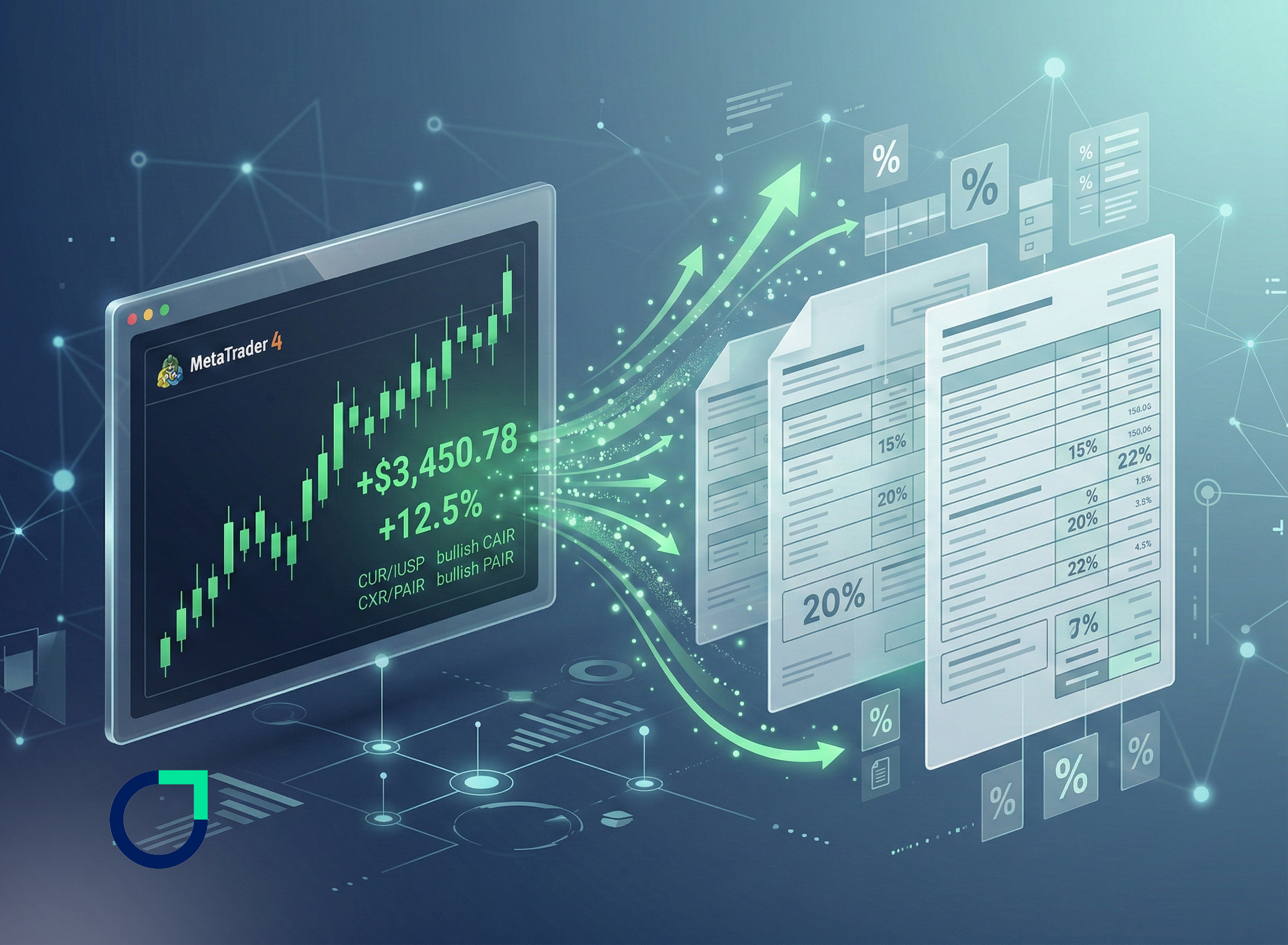
Taxes for Forex Traders
Introduction to Forex Taxation
The primary focus of new Forex traders is typically the development of their strategy, appropriate risk management technique, and the potential for revenue from successful trades. The tax implications of trading decisions aren’t always considered in the early stages of the trading journey, which is understandable; maybe charts, price action, and executing the trade feel like more urgent tasks than completing some kind of paperwork! However, as profits start to roll in, you will also have to deal with your tax liability.
Understanding Taxes for Forex Traders is not just about staying compliant.You want to safeguard your net income and avoid surprises at the end of the year. A lot of traders are stunned when they get an enormous tax bill after a good year trading: a great trading year equals a big tax bill if proper planning wasn’t done.
According to the majority of countries, forex trading is a financial activity, and taxes are charged on profits. Since the rules vary by where you live and the instruments you trade; taxes could be charged differently than others.
Why Forex Traders Must Understand Tax Obligations
Forex traders operate in a global market, but tax authorities operate locally. Your location could determine the taxes you owe (if any). As such, if you don’t comply with tax laws and your Country’s laws, you could be subject to penalties, fines, or even legal action; therefore, it is essential that you report all your taxable income internationally (including profitable trades) to your Country of residency, whether or not your broker will automatically withhold taxes from your profits.
Understanding your responsibilities helps you trade with confidence. When you know how your profits are treated for tax purposes, you can plan better and avoid stress later.
The Impact of Taxes on Net Trading Profit
It is easy to calculate gross trading profit. If you made $20,000 from trading this year, that sounds like a strong result. However, if your tax rate is 25%, your net profit after tax becomes $15,000.
This difference matters. Taxes directly affect your capital growth rate. If you do not account for taxation in your planning, your long-term compounding may be slower than expected.
Smart traders think in terms of net returns, not just gross performance.
Forex Tax Rules in the United States
In the United States, forex trading tax treatment depends on the type of trading activity and the classification under IRS rules.
Forex spots can come within Section 988 or Section 1256 of the Internal Revenue Code. According to Section 988, any gain or loss related to trading is taxed as ordinary income therefore subject to your regular taxation rates. Conversely, with respect to Section 1256, you will be taxed at the combined rate of long-term capital gains and short-term gains based on the 60% and 40% respective rate which provides an overall reduced tax burden. While traders have the option to determine whether the trades are going to be taxed under either section, the decision must be made prior to beginning the tax year, thus making it critical to plan ahead.
Forex Taxation in the United Kingdom
In the UK, forex trading can also be classified either as an individual trader (casual trader) or in relation to conducting business activity (trading business). The spread betting would be treated like a wager under UK law, thus potentially exempt from taxation. Conversely, the CFD trading activities and other types of structured trading accounts will generally qualify for CGT (Capital Gains Tax). If trading evolves into being your primary income stream, and has characteristics of being conducted in the nature of a business, income taxes would apply instead of CGT as expressed herein. The distinction of whether you fall into this Category 1 or Category 2 can greatly affect the amount of tax liability.
Forex Tax Rules in the European Union
The laws regulating taxes differ throughout Europe; however, most countries in the EU consider forex trading profits as capital gains. Some countries have set flat rates for capital gains taxes while others classify them as ordinary income and utilize progressive income tax bands to determine how much tax must be paid. There are also certain jurisdictions where you may be able to earn a small amount of capital gains without paying any taxes on that amount, up to a certain value. It is very important for traders to be aware of local laws and regulations in their country because many European traders mistakenly believe that there are the same rules for all traders throughout the entire European Union, when taxation is still handled at the national level.
Tax Implications for Different Forex Instruments
Spot Forex
Spot Forex trading involves direct currency exchange transactions. In many countries, profits are treated as capital gains or ordinary income depending on classification rules.
Tax treatment often depends on frequency and professional status.
Futures and Options
Forex futures and options tend to be exchanged on government-regulated exchanges. Because of their uniform nature, tax agencies frequently have separate rules that apply to them when compared to spot exchange transactions. Futures contracts might be eligible under Section 1256 of the Internal Revenue Code in the United States, which may result in certain tax benefits.
Contracts for Difference (CFDs)
CFDs are popular in Europe and other regions. They are typically taxed as capital gains. Unlike spread betting in the UK, CFD profits are generally taxable.
Because CFDs allow leveraged exposure, tax reporting must reflect full profit and loss amounts.
Prop Firm and Funded Account Income
Income from funded trading accounts or proprietary trading firms is generally taxable as ordinary income. Since traders receive profit splits rather than trading personal capital, tax classification may resemble contractor income.
Understanding the structure of your agreement is important for accurate reporting.
Tax-Deductible Expenses for Forex Traders
Taxation is not only about paying tax. It is also about reducing taxable income legally through deductions.
VPS, Internet, and Trading Software
If you use a VPS to run automated strategies or pay for internet services specifically for trading, these expenses may be deductible.
Subscriptions to trading platforms such as the MetaTrader platform or maintaining a metatrader5 account for professional activity may also qualify.
Educational Courses and Trading Tools
If you are doing your trading as a business, then you can often deduct the cost of books, courses, webinars, and analytical tools that you buy to help you increase your ability to trade.
Home Office and Business Expenses
Traders who operate as full-timers out of their, use of home for business purposes may be able to deduct some of their home-office-associated expenses such as their apartment’s rent, utilities, and for any office supplies/equipment purchased for work within their home from their taxable income.
It is also important that you retain reasonable evidence regarding all your business expenses, including the losses that you have sustained.
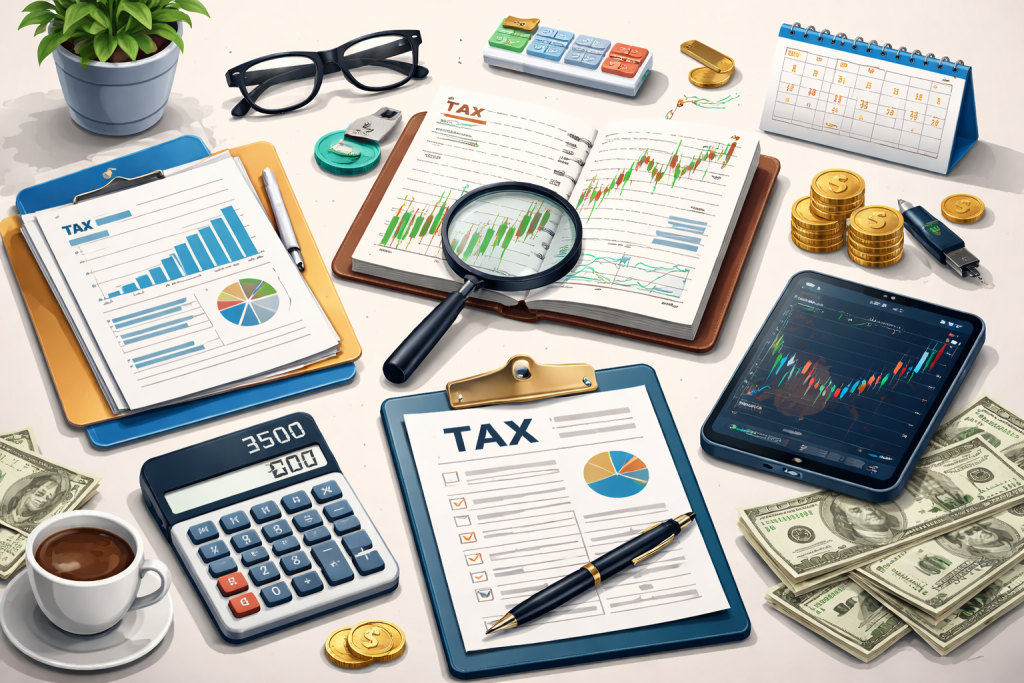
Best Practices for Forex Tax Record-Keeping
Maintaining Trade Logs and Broker Statements
Keeping accurate records is essential. Download monthly broker statements and maintain detailed trade logs.
These records provide evidence if authorities request clarification.
Tracking Currency Conversion Rates
If you trade in a currency different from your tax-reporting currency, you must convert gains and losses accurately using official exchange rates.
Using Tax Software for Forex Reporting
Modern tax software can simplify reporting. Many tools integrate with broker data and automatically calculate gains and losses.
However, always review calculations carefully.
Strategic Tax Planning for Forex Traders
Structuring as a Business Entity
Some traders choose to form limited companies or LLCs to optimize taxation. This may provide flexibility in expense deductions and income distribution.
Timing of Realizing Gains
Selling profitable positions before year-end can affect tax timing. Strategic timing may reduce short-term liability.
Carrying Forward Losses
In many jurisdictions, trading losses can offset future gains. Understanding this rule can significantly improve long-term net profitability.
Common Forex Tax Mistakes Traders Should Avoid
Not Reporting Trading Losses
“Some traders mistakenly think only profits must be reported. Reporting losses can reduce future tax obligations and is part of learning “How to Avoid Overtrading in Forex.”
Mixing Personal and Business Accounts
Keeping personal expenses separate from trading activity simplifies reporting and strengthens credibility.
Missing Tax Deadlines
Late filings often result in penalties. Setting reminders and preparing early prevents unnecessary stress.
Conclusion
Although trading can be exciting, taxes are an important component of conducting good business as a trader. Understanding the laws regarding forex trading taxes will assist you in saving money and planning for future growth.
It is important that all traders – whether casual or professional – be aware of the tax implications of their trades as they develop their financial discipline. While there are tools available on trading platforms like Otet that will help you execute trades and provide reports, the ultimate responsibility for compliance lies with you, the trader.
In addition to your entries and exits, your strategy will also incorporate your legal obligations, your recordkeeping process, and your outlook for continued success.
FAQ
Do forex traders have to pay taxes?
Yes, in most countries you will be required to pay taxes on foreign exchange (Fx) trading profits since they are typically considered to be taxable by your country as Capital Gains or Ordinary Income depending upon the jurisdiction in which you do your trading.
Is forex trading considered taxable income?
Forex gains can typically be classified as either Capital Gains or Ordinary Income depending on the jurisdiction’s laws that apply to your specific case.
Are demo trading accounts taxable?
Demo accounts are simply providing you with simulated funds that are not actually associated with “real” income; therefore, demo accounts have no tax implications at all.
What documents do I need to file forex taxes?
Broker statements, trade logs, income summaries, and documentation of deductible expenses are typically required.
Are prop firm profits taxable?
Yes. Income received from funded trading accounts or prop firms is generally taxable as ordinary income
Share
Hot topics
What is Forex Rebate
Introduction If you have been trading Forex for a while, you have probably noticed that every trade comes with a cost. Whether it is spread, commission, or both, trading is...
Read more


Submit comment
Your email address will not be published. Required fields are marked *