what is spread trading?
If you’ve spent any time in financial markets, you’ve probably heard traders talk about spreads. Sometimes they mean the difference between bid and ask prices. Other times, they’re referring to a trading method that doesn’t depend on predicting whether a market will go up or down. That method is called spread trading.
Many beginners ask what is spread trading because the concept sounds complicated at first. In reality, it’s simply a strategy that focuses on the price difference between two related instruments rather than the direction of one single asset. Instead of betting purely on a rise or fall, you trade the relationship between two markets.
Spread trading can be found in futures, forex, options, and commodities. It is often used by professional traders because it may reduce exposure to overall market volatility. However, like any method, it requires understanding and discipline.
What Is Spread Trading?
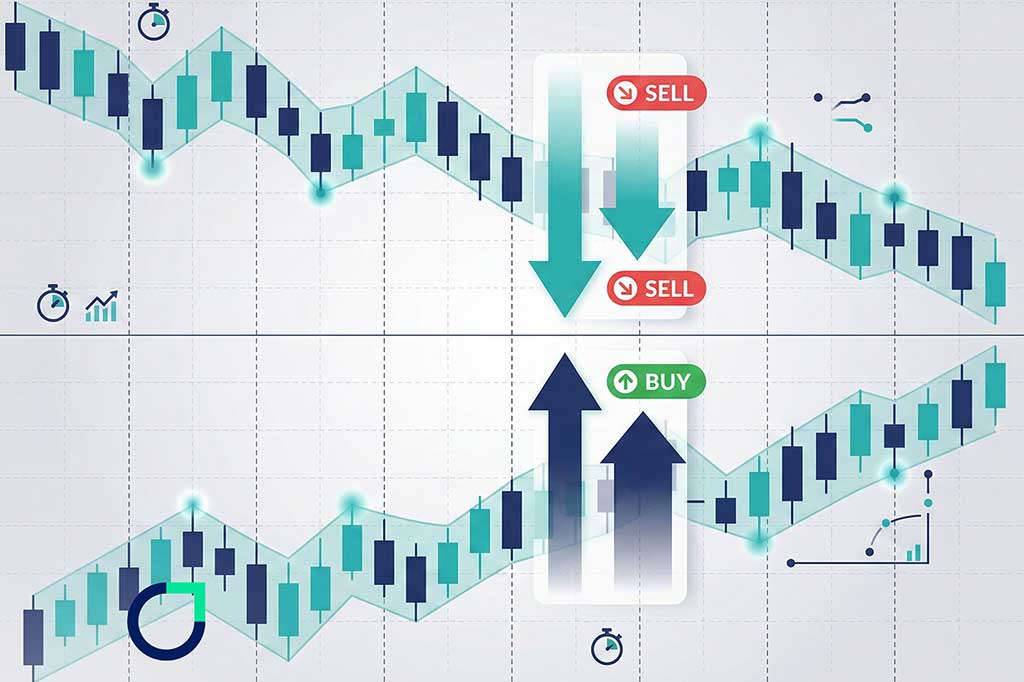
Essentially, spread trading is trading both sides of a market: long (buy) & short (sell); the objective is to make money from the difference in prices between two markets over time.
What this means is rather than putting a wager on whether oil will increase in value, your wager is made by going long (buy) one oil contract and going short (sell) another oil contract based on factors that have an impact on the spread between those two contracts.
When people search “what is spread trading?”, they often think spread trading is a difficult concept when in reality it is quite simple. You are betting (trading) on the change of the relationship between different instruments (contracts, assets) vs the actual direction of each instrument (contract) individually.
How Spread Trading Works?
Let’s simplify it with an example. Imagine two similar assets move closely together. Over time, their prices tend to maintain a certain gap. If that gap widens beyond normal levels, a trader may expect it to narrow again. So they buy the undervalued asset and sell the overvalued one.
If the price gap shrinks, the trader profits. Even if both markets move down, profit is still possible as long as the relationship changes in the expected direction.
This approach reduces exposure to broad market swings. You are less concerned about whether markets crash or rally. Instead, you focus on price convergence or divergence.
Read More: Why Does Forex Spread Widen?
How to Calculate a Spread Trade?
Calculating a spread trade usually involves subtracting the price of one instrument from another.
Spread = Price of Asset A − Price of Asset B
You will have a winning trade if the predicted movement in the spread occurs. For instance, if gold trades at $2000 in futures, and silver trades at 25 in futures, you have a variety of ways to calculate the spread (based on ratios or as a direct difference). Assuming that there are historical patterns that typically show an established relationship between these products, price deviations may create potential trade opportunities.
Margin requirements often depend on broker policies. Some platforms, including cTrader platforms, allow structured execution of multi-leg trades efficiently.
Common Types of Spread Trading Strategies
There are several types of spreads used across markets. Each has its own logic and structure.
Intermarket Spreads
Intermarket spreads involve two different but related markets. For example, trading the relationship between crude oil and natural gas.
The idea is that macroeconomic factors often influence related markets similarly. When they diverge unusually, traders look for mean reversion.
Intracommodity Spreads
This strategy involves trading in any two different contracts for the same commodity. An example is buying December wheat futures and selling March wheat futures.
The difference in price between delivery months will vary based upon storage costs, seasonality and expected supply.
Inter-commodity Spreads
Inter-commodity spreads focus on related but different commodities. A common example is trading the relationship between soybean oil and soybean meal.
These relationships are often based on production processes and demand patterns.
Calendar (Time) Spreads
Calendar spreads involve buying and selling contracts of the same asset with different expiration dates.
Traders analyze seasonal demand patterns or expected volatility shifts between contract months.
Options Spreads (Vertical, Horizontal, Diagonal)
In options markets, spread trading is common. Vertical spreads involve buying and selling options at different strike prices but same expiration. Horizontal spreads use different expiration dates. Diagonal spreads combine both differences.
These strategies are often referred to collectively under a broader Spread trading strategy framework.
Spread Trading in Futures Markets
Futures markets are one of the most common places for spread trading. Exchanges often recognize spread positions and offer reduced margin requirements.
For example, trading crude oil futures contracts with different expiration dates is common among institutional traders.
Because futures markets are centralized and standardized, execution tends to be transparent.
Spread Trading in Forex
Pairs of correlated currencies can be used to create spreads (therefore, by using one of the currency pairs (AUD/NZD) in order to create a spread between the AUD and the NZD (for example, by trading the AUD/NZD against the AUD/NZD).
Other traders look at the AUD/USD and the NZD/USD rates because they believe that both of these currencies have similar economies.
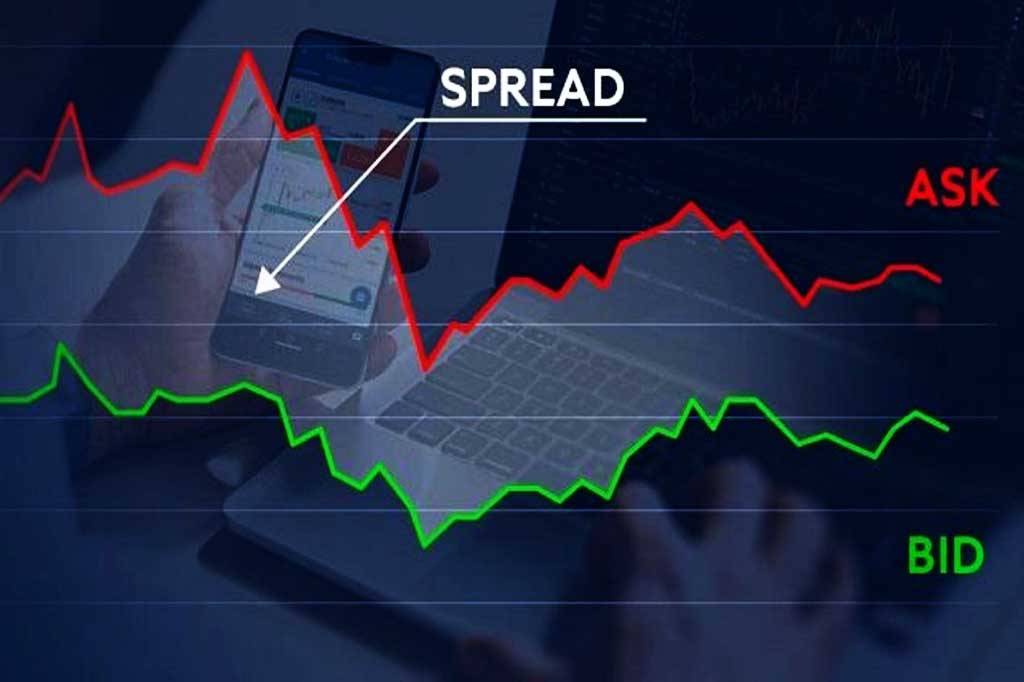
Understanding Spread vs. Commission is important as it helps to understand how trading costs can impact these types of strategies. In addition, changes in volatility may occur in the market due to events that affect the market which can be tied to the question of “Why do forex spreads increase?” Execution can happen through platforms such as the MetaTrader5 account where you can manage your trades from multiple different accounts at the same time.
Read More: Spread vs Commission
Spread Trading in Options
Options traders frequently use spreads to manage risk.
For instance, a vertical call spread limits both maximum gain and maximum loss. It reduces cost compared to buying a single call option outright.
This approach offers structured risk management, which is attractive during volatile periods.
Spread Trading in Commodities
Agricultural commodities such as corn and soybeans will have significant seasonal spread opportunities because of seasonal price cycle tendencies. Likewise, the energy market’s price fluctuations will generally be based on inventory levels.
Historically experienced traders will analyze seasonal patterns of trade using data as a reference point.
Real Examples of Spread Trades
Imagine the price difference between Brent crude and WTI crude oil widens significantly beyond its historical average.
A trader might sell Brent and buy WTI expecting the spread to narrow. Even if oil prices fall overall, profit is possible if Brent declines faster than WTI.
Another example could involve buying gold and selling silver during unusual ratio deviations.
These real-world examples demonstrate how spread trading focuses on relationships rather than simple direction.
Advantages of Spread Trading
Spread trading offers several potential benefits.
-
Reduced Market Risk
Because you hold both long and short positions, broad market moves may offset partially.
-
Lower Margin Requirements
Exchanges sometimes reduce margin requirements for recognized spread positions.
-
Flexibility Across Markets
Spreads exist in futures, forex, options, and commodities.
-
Structured Risk Exposure
Traders define risk more precisely compared to pure directional bets.
Risks of Spread Trading
Despite its advantages, spread trading is not risk-free.
-
Correlation Breakdown
Assets that usually move together may diverge unexpectedly.
-
Execution Complexity
Managing two positions requires attention and precise timing.
-
Liquidity Issues
Some spreads involve less liquid contracts, increasing slippage risk.
-
Unexpected Volatility
Sudden events can distort price relationships quickly.
Is Spread Trading Suitable for Beginners?
Spread trading may be suitable for beginners who are willing to learn carefully.
While it reduces certain risks, it requires understanding correlations and market relationships. Beginners should practice on demo accounts before committing real capital.
Platforms connected with brokers like Otet Markets can provide access to diversified markets, but strategy understanding remains the trader’s responsibility.
Conclusion
Spread Trading, as a strategy, deals with the relationship between two or more assets rather than with any directional view on an individual asset. So instead of asking yourself the question “will this market go up or down?”, you will analyze how the movement of one asset will affect the movement of another asset that is correlated to it.
For traders who value a structured approach and enjoy performing comparative analysis, a spread-trading strategy can provide many more opportunities than just your typical directional strategy. However, like with any successful strategy, to be successful at a spread trade, you must possess discipline, perform your due diligence, and have a solid understanding of risk.
Spread Trading is not a guaranteed solution to easy profits; however, a sound trading approach to spread trading, when executed properly, could potentially lead to becoming a key component of an investor’s overall trading strategy.
FAQ
The difference between the prices of two related financial instruments or contracts.
While spread trading can help reduce exposure generally to the entire market, it still has risks due to changing correlations and execution risk.
Yes, but they should start slowly and practice first to understand market relationships.
In many futures markets, exchanges offer lower margin for recognized spread positions, but this depends on the instrument and broker.
Share
Hot topics
What is Balance in Forex? A Complete Guide for Traders
Introduction When you open a trading account for the first time, one of the first numbers you see on your screen is your balance. It looks simple. It looks clear....
Read more


Submit comment
Your email address will not be published. Required fields are marked *