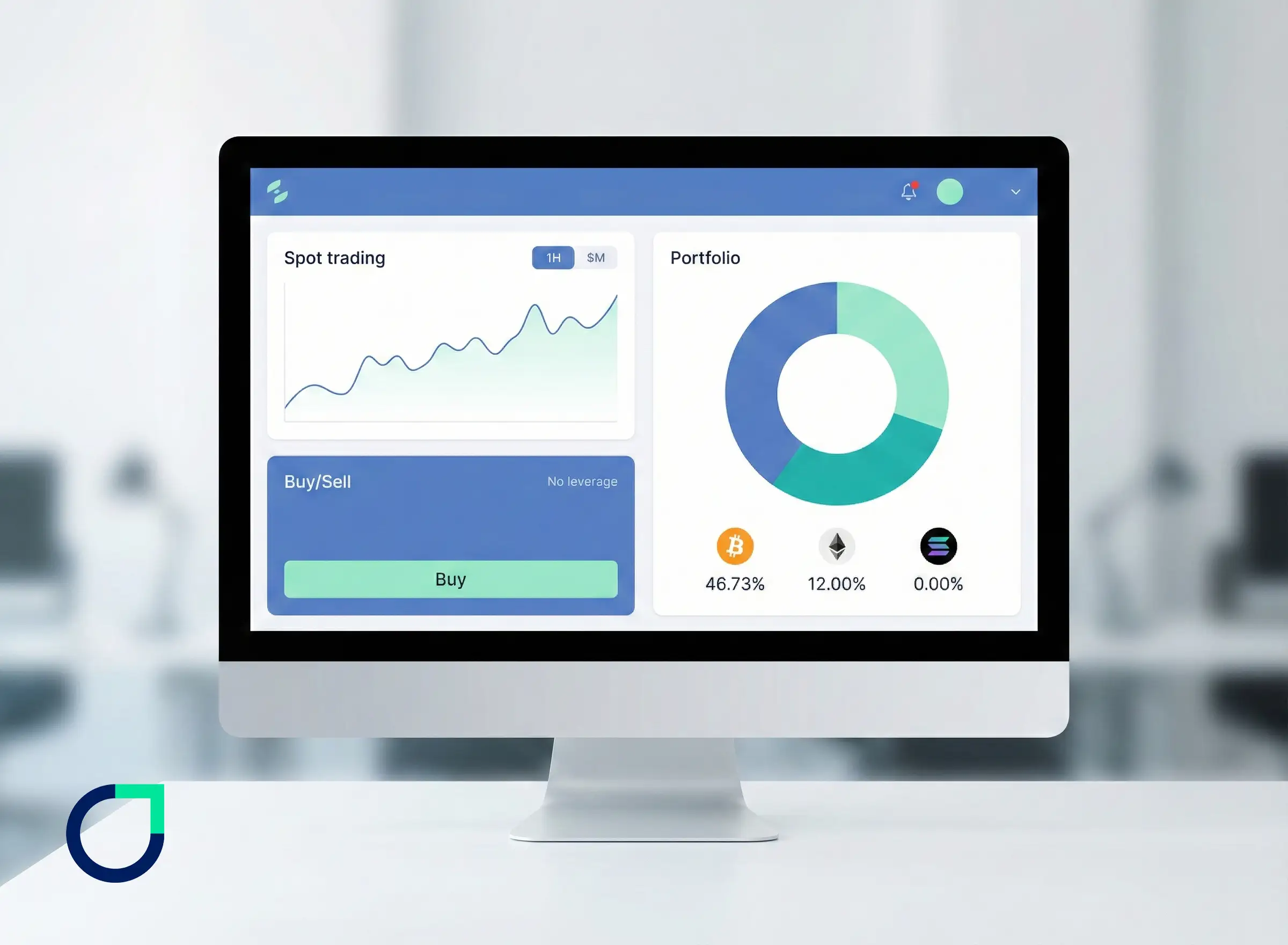
What Is Spot Trading?
Spot trading refers to the buying or selling of an asset for immediate delivery in the current market (or “spot”) and does not contain any future obligations, expiration dates, or complicated contract structures.
Most traders who ask “What is spot trading?” are looking for clarification, and spot (as opposed to forward) trading means that the exchange takes place now (on-the-spot) at whatever price it currently is at the time you make the exchange.
Therefore, there is no need for you to agree on a price for the future, as it will be determined by real-time supply and demand (you can see this price while you are trading).
If you have searched for What is spot trading in forex or What is spot trading for beginners , you are probably looking for a simple explanation that connects theory to real-world practice. This guide will provide a step-by-step breakdown of spot trading in terms that everyone can understand.
How It Works Spot Trading
A spot trade is essentially an agreement to buy or sell an asset at the moment. When you place a spot trade, the price is quickly determined by the market’s current price; this is referred to as the “spot price.” Settlement usually occurs immediately after the trade is made (within seconds or minutes).
For example, if you buy a single share of a stock for $100 in the stock market, you own that single share of stock once your order is executed, as that is the price you paid for that stock. In Forex, if you buy EUR/USD at 1.1000, you are essentially buying euros and selling U.S. dollars at the current price in that particular currency (known as “the spot rate”).
There is no future obligation for a transaction. There is no expiration date associated with a spot trade – there is no contract that stipulates or guarantees that something will happen with regard to that transaction next month. You simply own what you buy, or you close what you sell.
Key Features of the Spot Market
Immediate Settlement
Spot trades settle quickly. In many markets, especially crypto, settlement is almost instantaneous. In traditional markets, like stocks and forex, it may take one or two business days, but the price is locked in immediately.
Current Market Price
All trades are done at the current live market price. No pricing based on future expectations, like there are in the futures contracts. Prices reflect the supply and demand at that time.
Direct Ownership
If you do a spot trade, you own the underlying asset. If you buy Bitcoin in the spot market, you own that Bitcoin. If you buy stock shares, those shares are yours.
No Expiry Date
Spot trades don’t have expiration dates; you can hold your assets as long as you want. This is quite different from derivatives, which often have expiration dates.
Types of Spot Markets
Centralized Exchanges
A central exchange is a regulated marketplace where buyers and sellers interact. The stock exchanges and the majority of cryptocurrency exchanges are included in this category with publicly available pricing information. All prices are publicly available.
Over-the-Counter (OTC) Markets
OTC markets are also direct markets between two parties, usually through a broker. Most of the Forex market is OTC because it does not have one single centralised exchange; however, pricing is still competitive.
Digital Asset Platforms
Cryptocurrency exchanges are a form of the spot market. When people ask what spot trading crypto is, typically this is what they are looking for — the ability to buy and sell digital coins at real-time prices.
Common Spot Markets and Asset Classes
Foreign Exchange (Forex) Spot Market
The forex spot market is the biggest market in the world. In this market, currencies are traded in pairs. If you’ve ever wondered What is a currency pair in Forex?, it basically means two currencies quoted together, such as EUR/USD or GBP/JPY.
Read More: What is a currency pair in Forex?
When you buy EUR/USD, then you’re effectively buying euros and selling US dollars at the current exchange rate, known as the spot rate.
Many traders open a metatrader5 account in order to access forex spot markets since MetaTrader is a popular platform for pricing quotes and personal charting.
Forex spot trading is popular because of its liquidity and 24-hour availability on weekdays.
Cryptocurrency Spot Trading
Crypto spot trading has exploded in the last few years. People buy and sell coins like Bitcoin or Ethereum at live prices on exchanges.
If someone asks What is spot trading crypto, they usually want to know whether they truly own the digital asset or just a contract that tracks its price. In spot crypto trading, yes — you own the asset outright.
There’s no expiry and no complicated contract. You buy at today’s price, and you can sell whenever you want to.
Stock Market Spot Trading
Buying shares in the stock market is typically a spot transaction. You’re buying a company’s stock at the current price and becoming a shareholder. You might decide to hold that stock for several years if you believe in the growth of the company. There’s no time limit unless you choose to sell.
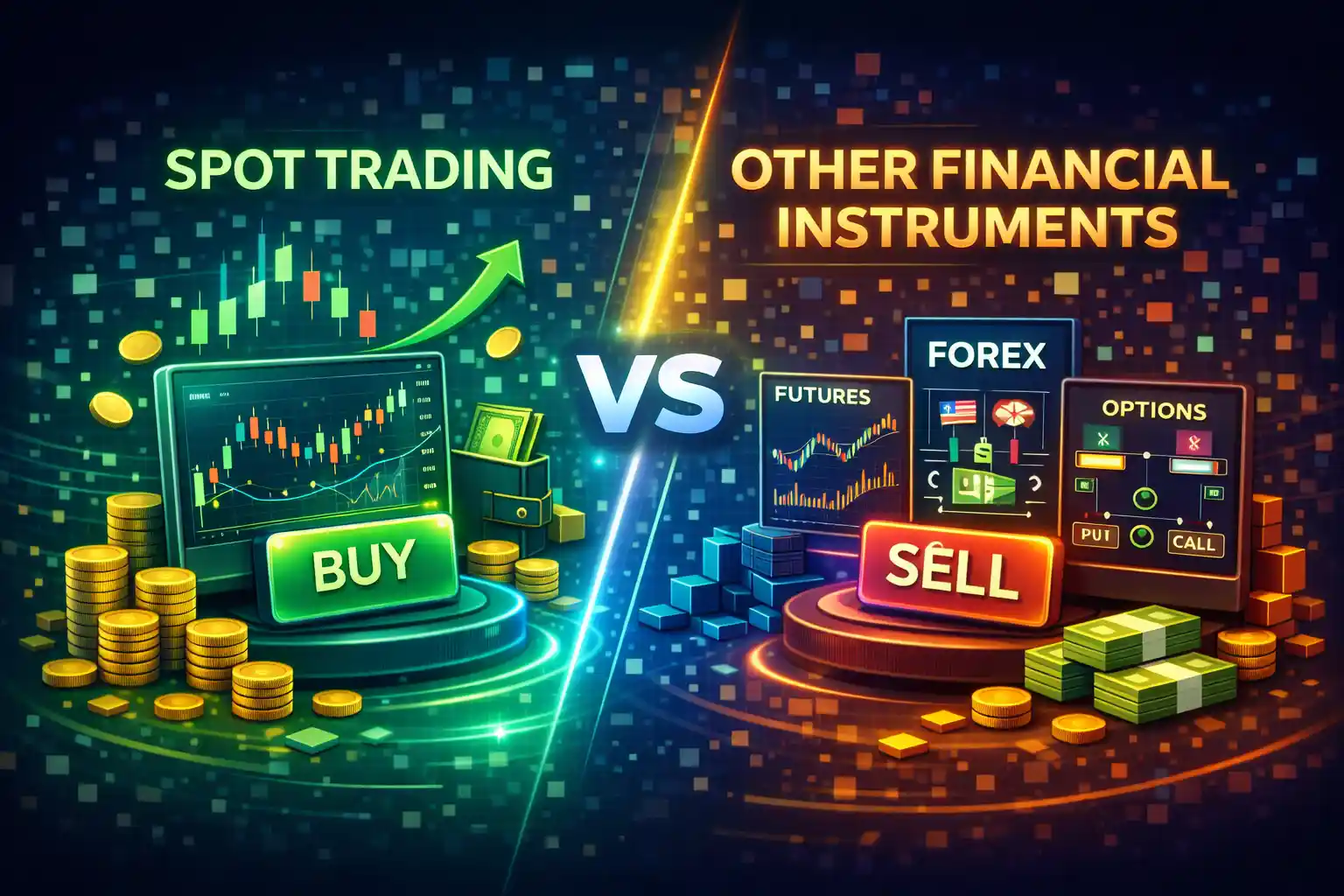
Spot Trading vs Other Financial Instruments
-
Spot Trading vs Futures Trading
In Spot vs Futures Trading, the main distinction lies in timing. In spot trading, you are buying or selling an asset at today’s market value. In future trading, you agree today on a price for receiving the asset or service in the future. Futures contracts often have expiration dates and can involve more complexity. Consequently, Spot Trading is generally much easier for beginners to understand than Futures Trading.
Read More: Spot vs Futures Trading
-
Spot Trading vs Contracts for Difference
Contracts for difference (CFDs) allow traders to speculate on the relative price movement of an asset, without owning that asset. In spot trading, you actually own the asset, while with CFDs, you are trading on a contractual basis that simulates the moves in prices of the underlying asset.
CFDs often charge overnight fees and other associated costs for holding contracts for extended periods. Spot trading typically does not have any of these costs associated with it due to the fact that you are buying and owning the asset and not a contract for the right to purchase or sell it in the future.
-
Spot Rate vs Forward Rate
Spot rates refer to the current market value of a currency, which you would pay for if you were to purchase it today. Forward rates are the agreed-upon values of a currency at some time in the future.
Spot rates represent what is available at this time based on current supply and demand, and do not reflect any potential changes in the market down the line.
Forward rates represent what the market expects it will value that currency when that time arrives, based on market conditions at that moment.
-
Spot Trading vs Margin Trading
Margin trading gives you the option to borrow additional funds to expand the size of your position. With spot trading, you’re typically using your own capital without borrowing.
While margin increases the amount of potential returns, it also increases your risk if the market goes against you. Spot trading allows traders to keep things simple and under control.
Advantages of Spot Trading
- Simple and easy to understand
- Direct ownership of assets
- No expiration dates
- Transparent pricing
- Lower complexity compared to derivatives
- Suitable for long-term holding
- Reduced counterparty risk in regulated markets
Risks and Limitations of Spot Trading
Spot trades aren’t complicated, but they still come with risks. You can lose money if the market moves against your position after you’ve bought the asset in a spot trade, since there are no hedges available to protect your spot trade position from experiencing losses.
Liquidity can also differ. In smaller markets, it may be harder to enter or exit large positions without affecting price. Crypto markets are also typically much more volatile than other markets when it comes to price swings and sudden changes.

Why Beginners Should Start with Spot Trading
The complexity of trading can be overwhelming for someone who just wants to start trading.
Spot trading eliminates the majority of the confusion of trading. There are no expiration dates, complicated settlement rules, and hidden leverage (unless you choose to have leveraged trading).
Here, beginners can concentrate on learning about price movement, reading charts, and market psychology.
The answer to the question, What is spot trading for beginners, is usually that there’s no complexity, and that’s why many educational resources suggest using spot trading as a starting point.
Understanding spot trading markets will help you build a good foundation before starting with other instruments such as futures or options.
How to Start Spot Trading (Step-by-Step Guide)
Choosing a Trading Platform
To begin, choose a trustworthy broker or exchange as your trading platform. You may want to consider a broker such as Otet Markets, which allows you to access different types of assets.
It is important to choose a platform that is regulated, secure, and has transparent fees.
If you trade forex, it is common for traders to open a metatrader5 account, which provides you with tools for professional charting and executing trades.
Creating and Verifying Your Account
Now that you have selected your platform, it is time to register.
A regulated broker will most likely require you to verify your identity via an ID and proof of residence.
The verification process will take either hours or days, depending on the platform you select.
Depositing Funds
After your account is verified, you may proceed with a deposit.
Funding methods vary depending on the platform you choose: bank transfer, debit/credit card, or digital payment options.
Start with a small amount that you are ready to risk, because trading always involves some uncertainty.
Placing Your First Spot Trade
To execute the trade, first select the asset you want to trade. Based on your analysis, determine whether you want to buy or sell (if your platform allows short positions).
You can enter the trade at the current market price, and once it’s executed, the asset is yours.
From there, you can monitor price movement and decide when to close your position.
When Should You Use Spot Trading?
Use spot trading when simplicity and direct ownership are important to you. You can also do spot trades if you believe that the value of an asset will increase over time and you want to hold an asset without expiration limits.
Spot trading is also appropriate for those who want less complexity and fewer connections between multiple assets. Spot trading is typically the best option when building a portfolio over time.
Conclusion
So, what is spot trading? In essence, it is the most straightforward approach to engaging with financial markets.
You buy or sell an asset at its current available price, and the deal is concluded quickly at that time. No future contracts, no expiry dates, no need for complex conditions.
From forex to stocks to cryptocurrencies, the spot markets underlie the bulk of trading in the world. For beginners, it offers clarity. For experienced traders, it provides flexibility and control.
Understanding spot trading isn’t just about learning a definition. It’s about understanding how markets function at their most basic level.
And with this knowledge, everything else falls into place much more easily.
FAQ
Spot refers to a transaction that happens immediately at the current market price. It means the trade is executed “on the spot,” with quick settlement.
Some platforms allow limited leverage in spot markets, but traditional spot trading typically uses your own funds. Leverage is more common in derivatives and margin accounts.
Spot trading is generally simpler and carries fewer structural risks than derivatives. However, all trading involves market risk. Prices can still move against you, and losses are always possible.
Share
Hot topics

Gold symbol in forex
Introduction If you have ever opened a trading platform and searched for gold, you probably noticed a specific code instead of the word “gold.” In the forex world, assets are...
Read more



Submit comment
Your email address will not be published. Required fields are marked *