
Wall Street Economists Lift U.S. Recession Odds Amid Iran War and Oil Price Surge
Forecasts Point to Elevated Recession Probabilities
Federal Reserve Chair Jerome Powell recently dismissed stagflation concerns, but his successor may confront more difficult conditions as private-sector forecasts grow more cautious. Economists at multiple institutions have raised their projections for a U.S. economic contraction amid heightened geopolitical uncertainty and pressure from energy costs.
Moody’s Analytics has lifted its modeled probability of a U.S. recession in the next 12 months to 48.6%. Goldman Sachs now puts the odds at 30%, Wilmington Trust at 45%, and EY Parthenon at 40%. EY Parthenon added that these odds could rise rapidly if the Middle East conflict proves more prolonged or severe. By comparison, economists cited a typical 12‑month recession risk of about 20% in normal times.
“I’m concerned recession risks are uncomfortably high and on the rise,” said Mark Zandi, chief economist at Moody’s Analytics, adding that “recession is a real threat here.”
Oil Shock, Labor Strains, and Growth Slowdown
The ongoing war with Iran has intensified discussion of a potential downturn, with economists highlighting the historical role of energy shocks in past U.S. recessions. An oil shock has preceded virtually every recession since the Great Depression, excluding the Covid pandemic period.
Gasoline prices have climbed sharply, with average prices at the pump up $1.02 per gallon over the past month, a 35% increase, according to AAA. “The negative consequences of higher oil prices happen first and fast,” Zandi said. He warned that if oil prices remain around current levels through Memorial Day, and certainly through the end of the second quarter, “that’ll push us into recession.”
Labor market conditions are also drawing concern. The U.S. economy created just 116,000 jobs for all of 2025 and lost 92,000 jobs in February. The unemployment rate has held at 4.4%, but economists attribute this stability largely to limited firing rather than stronger hiring.
Output data present a mixed picture. The Atlanta Fed’s GDPNow tracker indicates that gross domestic product is on pace to grow at a 2% annual rate in the first quarter, following a weaker 0.7% increase in the fourth quarter.
Consumer sentiment appears to align with the more cautious outlook from economists. A March survey by consumer site NerdWallet found that 65% of respondents expect a recession within the next 12 months, up 6 percentage points from the previous month.
FAQ
What recession probabilities are economists currently assigning to the U.S. economy?
Moody’s Analytics estimates a 48.6% chance of recession in the next 12 months, Wilmington Trust 45%, EY Parthenon 40%, and Goldman Sachs 30%.
How do current recession risks compare with typical conditions?
Economists cited in the report say that in normal times, the probability of a recession in any given 12‑month period is around 20%, well below current estimates.
How are oil prices influencing recession concerns?
Gasoline prices have risen 35% over the past month, or $1.02 per gallon, and economists note that oil shocks have preceded nearly every U.S. recession since the Great Depression, increasing concern that sustained high prices could trigger a downturn.
What recent data highlight pressures in the labor market?
The U.S. economy added only 116,000 jobs in all of 2025 and recorded a loss of 92,000 jobs in February, while the unemployment rate has remained at 4.4% mainly due to limited layoffs rather than robust hiring.
Share
Hot topics
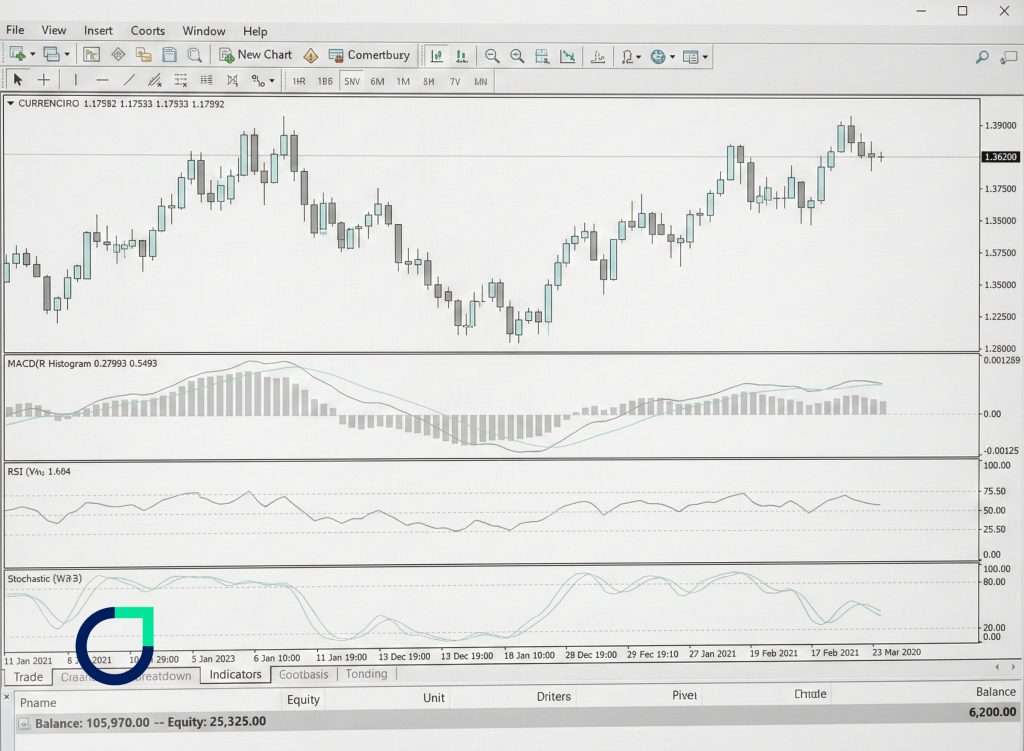
Top 10 forex indicators
Top 10 forex indicators Every Trader Should Know Introduction Many forex traders become overwhelmed by looking at price charts. The candles are always moving, and it can seem crazy because...
Read more



Submit comment
Your email address will not be published. Required fields are marked *