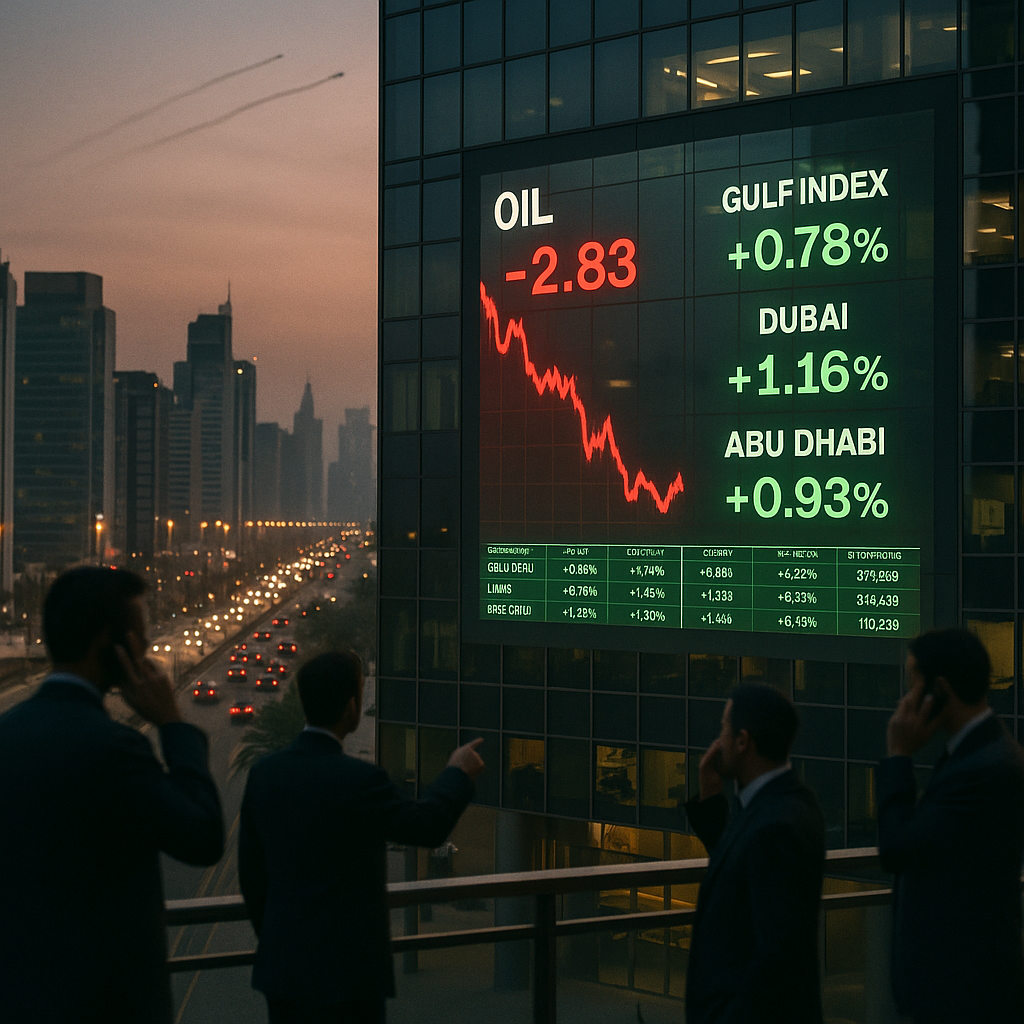
Markets Rally as U.S.–Iran Ceasefire Drives Sharp Moves in Oil, Futures, and Volatility
Ceasefire Announcement and Geopolitical Context
President Trump announced a two-week ceasefire with Iran, under which Iran promised safe passage through the Strait of Hormuz. Defense Secretary Hegseth described the outcome as a “decisive” victory over Iran as the ceasefire took hold, while General Caine emphasized that the ceasefire is a pause and that the joint force remains ready to resume combat. JD Vance characterized the Iran ceasefire as a “fragile truce,” stating that Trump is “impatient to make progress.”
Despite the agreement, Gulf countries scrambled to intercept missiles just hours into the ceasefire, underscoring continued tensions. The ceasefire deal nonetheless raised hopes that the Strait of Hormuz would soon reopen, easing earlier concerns about disruptions to global oil supplies.
Asset Price Moves: Equities, Oil, Volatility, and Gold
U.S. stock futures surged more than 2–3%, with Dow futures up over 1,300 points as investors responded to the de-escalation. The VIX volatility index fell sharply by about 20%, indicating a significant easing in near-term market stress perceptions. Government bond yields sank, reflecting increased demand for safe-haven fixed income assets.
Oil markets moved in the opposite direction, with prices plunging more than 15–17% after the ceasefire announcement. WTI crude fell to around $93–94 per barrel as fears of supply disruption receded. In contrast, gold prices rose to around $4,815 per ounce.
In Europe, stocks soared 4% following the ceasefire deal, with travel stocks leading gains, up 7%. Asian markets also rallied strongly, with Japan’s Nikkei rising 5.39% and South Korea’s KOSPI gaining 6.87%.
Policy Outlook and Central Bank Responses
The Iran truce affected monetary policy expectations. Bets increased on U.S. Federal Reserve rate cuts by year-end after the ceasefire, suggesting shifting investor views on the economic and financial implications of the conflict’s de-escalation. Separately, the Indian central bank held interest rates steady as the Mideast war kept the broader economic outlook in flux.
FAQ
What triggered the latest market rally?
The rally followed President Trump’s announcement of a two-week ceasefire with Iran and Iran’s pledge to allow safe passage through the Strait of Hormuz, which reduced immediate geopolitical risk perceptions.
How did oil prices react to the ceasefire?
Oil prices fell sharply, with WTI crude dropping more than 15–17% to around $93–94 per barrel as concerns about supply disruptions eased.
Which equity markets posted the largest gains?
European stocks rose about 4% with travel stocks up 7%, while in Asia the Nikkei gained 5.39% and the KOSPI advanced 6.87%. U.S. stock futures also jumped more than 2–3%, with Dow futures up over 1,300 points.
How did expectations for central bank policy change?
Following the Iran truce deal, market bets increased on U.S. Federal Reserve rate cuts by year-end, while the Indian central bank chose to hold rates as the Mideast war continued to cloud the outlook.
Share
Hot topics

What is News Trading in Forex? A Complete Guide to Event-Driven Strategy
Introduction If you have ever watched the forex market during a major economic announcement, you know how dramatic it can be. Prices jump within seconds. Spreads widen. Volatility explodes. For...
Read more




Submit comment
Your email address will not be published. Required fields are marked *