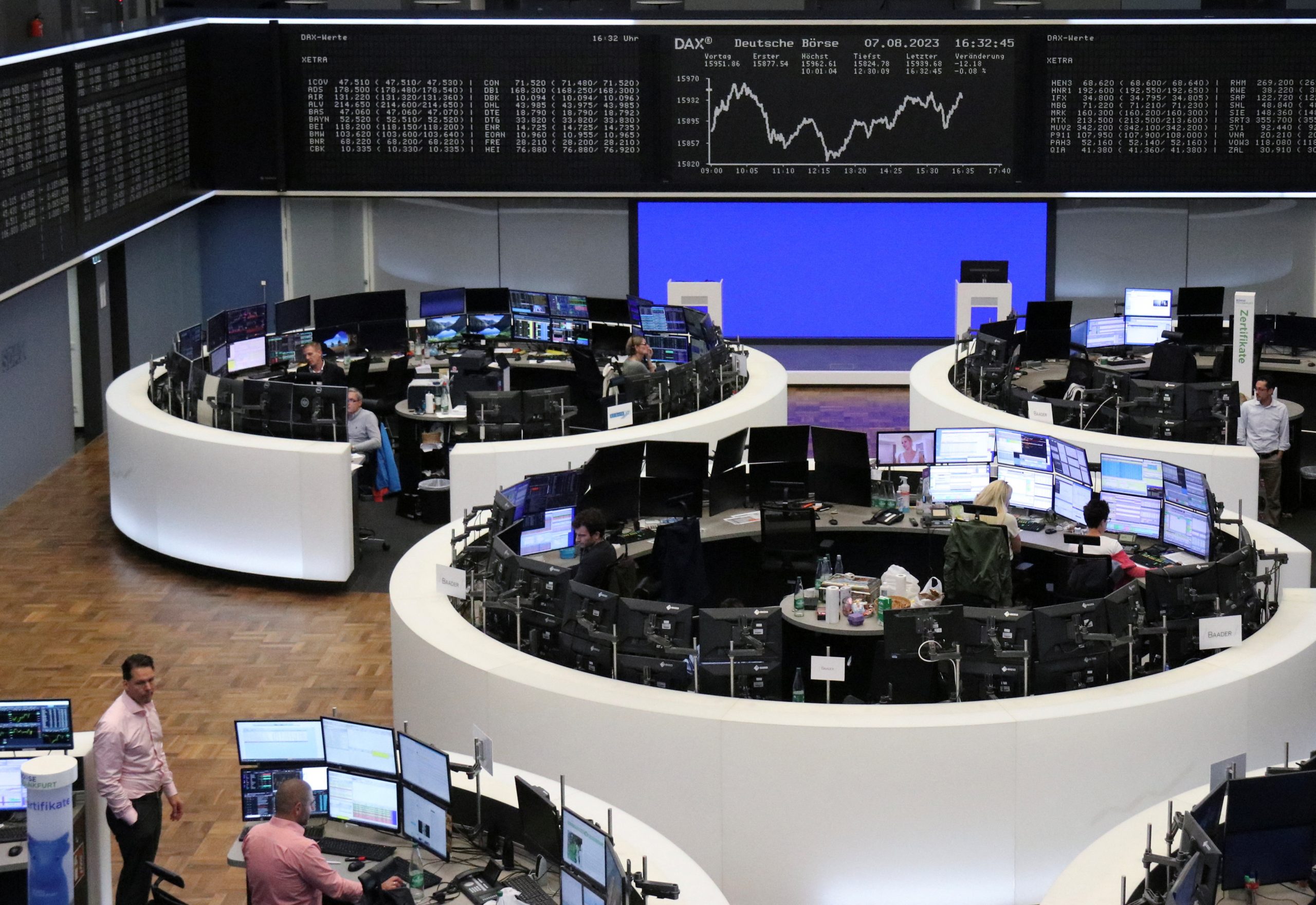
European stocks edge higher as Middle East tensions keep oil near $100
European markets follow U.S. rally
By 03:13 ET on Friday, the pan-European Stoxx 600 was up 0.2%, supported by a 0.4% rise in Germany’s Dax. The U.K.’s FTSE 100 gained 0.1%, while France’s CAC 40 was mostly unchanged.
The moves followed a rally in U.S. stocks after Israeli Prime Minister Benjamin Netanyahu signaled he was looking to engage in talks with Lebanon. The comment helped bolster expectations of a prolonged U.S.-Iran ceasefire ahead of potential discussions between Washington and Tehran this weekend, although the situation remained fragile.
Iran’s foreign minister stated that Iranian delegates would not attend negotiations in Pakistan if Israel continued strikes against Hezbollah militants in Lebanon. Israel’s military said it had hit more Hezbollah targets on Friday, and Netanyahu clarified that there is “no ceasefire” in Lebanon.
Oil markets strained by disrupted supply routes
Geopolitical tensions continued to weigh heavily on global energy flows. Tanker traffic through the Strait of Hormuz, a key chokepoint off Iran’s southern coast, remained near a virtual standstill. According to Reuters, shipping volumes through the waterway were well below 10% of normal levels on Thursday despite the ceasefire.
Separately, bombardments of Saudi energy facilities have curtailed the kingdom’s oil output capacity by about 600,000 barrels per day and reduced throughput on its East-West Pipeline by roughly 700,000 barrels per day. These disruptions helped push Brent crude futures 1.4% higher to $97.24 a barrel, while U.S. West Texas Intermediate crude futures rose 1.4% to $99.25 per barrel.
War-related increases in oil prices have intensified concerns about renewed inflation pressures, raising the risk of additional monetary policy tightening by central banks, including the European Central Bank.
Corporate updates in focus
In company news, French food caterer Sodexo cut its annual sales and profit targets, adding a sector-specific note of caution to the otherwise modestly positive equity session. In contrast, U.K. electronics retailer AO World said it expects annual income to come in at the top end of its forecast range.
These corporate revisions highlighted differing trajectories within the European corporate landscape, even as broader markets were driven primarily by geopolitical and macroeconomic developments.
FAQ
Which European indices moved higher on Friday?
The Stoxx 600 rose 0.2%, Germany’s Dax climbed 0.4%, and the U.K.’s FTSE 100 gained 0.1%, while France’s CAC 40 was mostly unchanged by 03:13 ET.
How did Middle East tensions affect oil prices?
Disrupted tanker traffic through the Strait of Hormuz and reduced Saudi output and pipeline throughput contributed to a 1.4% rise in Brent crude to $97.24 a barrel and a 1.4% increase in WTI to $99.25 per barrel.
What is the main inflation concern mentioned?
War-related increases in oil costs have raised fears of an inflation surge that could lead to further monetary policy tightening by central banks, including the European Central Bank.
Which companies issued new guidance?
Sodexo lowered its annual sales and profit targets, while AO World said it expects its annual income to be at the top end of its forecast range.
Share
Hot topics

Gold symbol in forex
Introduction If you have ever opened a trading platform and searched for gold, you probably noticed a specific code instead of the word “gold.” In the forex world, assets are...
Read more


Submit comment
Your email address will not be published. Required fields are marked *