Why Does Forex Spread Widen?
If you have been trading Forex for even just a short amount of time, chances are you have experienced something that is both perplexing and frustrating, the spread widening suddenly. One minute you could be trading in a nice 1 pip spread and then you are suddenly faced with a widen spread anywhere from 5, 10, or more pips. This is what makes beginners feel like the broker is “stirring” the price around, but ultimately change is a result of how the Forex market works.
Regardless if you understand the reason for spreads to widen or not, it will help you trade better, not get blown out of the trade, and feel better about your entries. In this article, I will break everything down very clear, friendly, with some humanity, so you can finally understand what is actually going on with the sudden price actions.
What is a Spread?
Before we break down spread widening, let’s make sure we are all on the same page as to what a spread is.
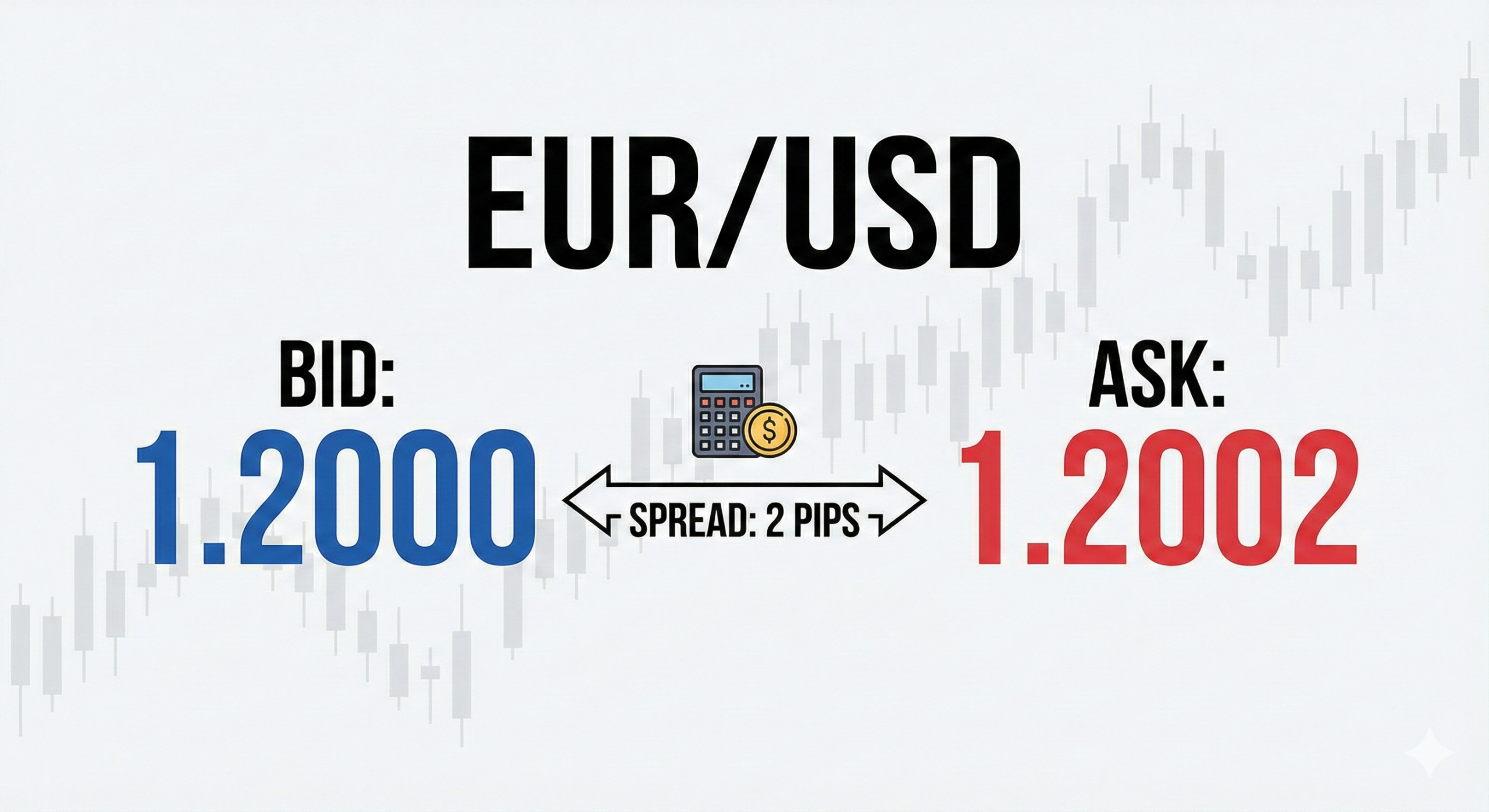
A spread, is the difference between a Bid (the price which you sell at) and an Ask (the price which you buy at) If, for an example, EUR/USD is showing:
Bid: 1.2000
Ask: 1.2002
This would be a 2 pip spread.
Simply said, the spread is the cost of doing business, or what brokers charge, in exchange for their access to the market. Cases occur where a spread is fixed, but most of the time spreads are variable. This is where it gets interesting.
What is “Spread Widening”?
Spread widening is when the difference between the Bid and Ask price vary and grow larger than it had been before.Rather than seeing a 1-pip spread, you may suddenly see a 5 or even 10 pip spread, in the same currency pair.
This change can be surprising for traders, particularly those with tight stop-losses, but an increase in the spread does not happen at random, there is always a reason why, and the better you know the why, the more protected you are.
There is one really big key to understanding is that spreads represent market conditions just as waves in the ocean represent wind.
Why Spreads Don’t Stay the Same
Many new traders will think that spreads should remain stable 24 hours a day, seven days a week, but the Forex market is alive; it breaths and responds faster than you can imagine to whatever is happening at any given moment in the world.
The spread will widen when the market changes because of:
.Liquidty
.Volatility
.Market activity
.News events
.Times when sessions open and close
When the market behaves very unpredictable or stable; either lot of movement in price or minimal price movement, the spread reacts to this state; the heightened risk.
You can think of it like this, the spread is like a door frame, in a calm market you have a wide doorframe with a clear doorway, when the crowd starts pushing in or completely passes out, the shape of the door frame changes.
Why do Spreads Widen
When liquidity sells out, the spread generally increases or when volatility spikes, an increase in the spread will occur. Since brokers will source all prices from liquidity providers, anything that impacts liquidity providers will directly impact spreads.
When liquidity providers are dealing with risk, they will widen spreads to protect themselves, you are the one who takes the increased risk.
You should not think of the spread widening as manipulation…think of it as insurance because that’s exactly what it is.
So don’t always look at an increased spread as the enemy.Instead, think of it like a sign of caution:
“There is something not quite right happening in the market right now.”
Let’s dive in, and look at the most common causes of wide spreads. These high spread reasons are universal – every broker, currency pair, and market condition can lead to this.
Reason #1: Low Liquidity
Low liquidity is referring to how many buyers and sellers are active in the market at that time. The more active participants in the market, the more stable the prices become at every level.
Low liquidity tends to occur when:
Late at night
Holidays
Transitions in the market
Weekend market opening gaps
A general rule of thumb is that when liquidity drops the spreads typically widen. It’s a simple assertion from the market saying that, “we need more room bios because things are pretty quiet.”
Reason #2: High Volatility
Volatility is one of the largest cause of spread widening. Besides the spreads being influenced, price behavior become almost chaotic, fluctuating widely and rapidly. When volatility kicks in, liquidity providers tend to withdraw tight quotes because of the potential to lose money if the price moves quickly.
This leads to Volatility triggers:
Unexpected news releases
Political announcements
Economic releases
Central banks
During these pointed moments, almost certain, spreads widen.
Reason #3: Economic News Releases
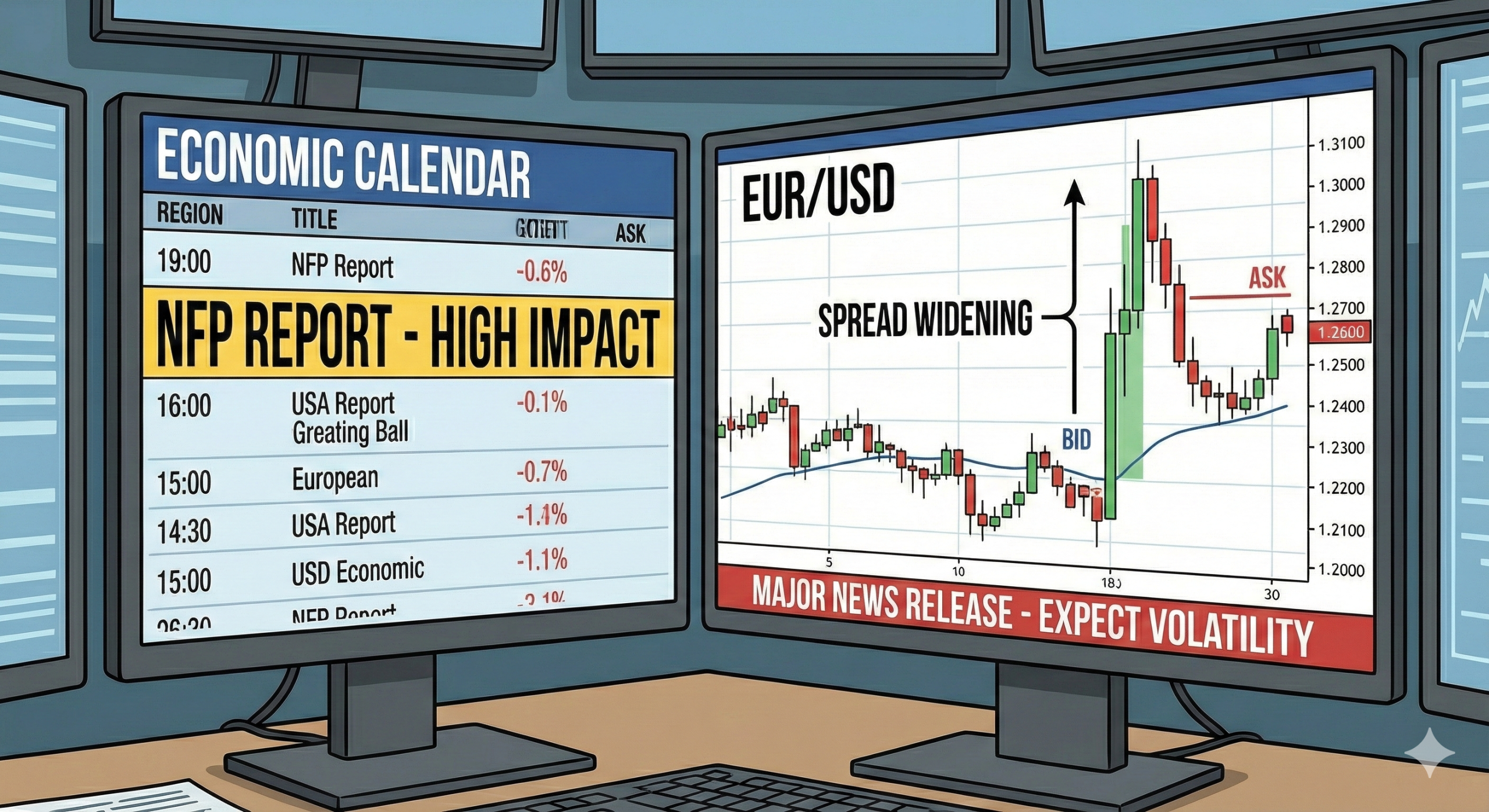
If you’ve ever watched the market during Non-Farm Payroll (NFP), interest rates decisions, or inflation (CPI) worries then you’ve most likely noticed the spread go through the roof. Usually for the following reasons:
Because everyone is trading at once
The price jumps quickly
Liquidity becomes expensive
To protect themselves the brokers widen the spread
If there is major news there will be major chances of the spreads widening.
If you dislike trading during unpredictable conditions, then you should always avoid trading during high-impact news releases.
Reason #4: The Change Of Sessions
Forex sessions open and close throughout the day, and as they do this it affects the levels of liquidity.
The most common times a spread might widen are:
Before the Sydney opening
Between the New York closing and the Sydney opening
At the very opening of London
When sessions overlap.
For example, early Asia hours generally are known for having very low movement and low numbers of participants, and thus widening spreads are expected during this time.
Reason #5: Exotic Pairs Have Inherently Wider Spreads
Not all currency pairs are created equal.
Major currency pairs like EUR/USD and USD/JPY generally have the very narrowest of spreads due to connecting passages of high liquidity.
Exotic pairs such as USD/TRY, USD/ZAR, and USD/MXN will frequently experience:
Low liquidity
Higher volatility
Large price jumps
A widening spread is not unusual for these pairs, even during slow times.
If you trade exotic pairs, longer spreads are not a flaw in the platform. It comes with the package.
Reason #6: Market
When the market is uncertain due to war, economic upheaval, and/or unforeseen disasters, spreads increase dramatically
Uncertainty= danger = wider spreads.
This may happen exceptionally fast, so it’s imperative for traders to always constantly assess fundamentals.
How Widening Affects You, As A Trader
How this will affect you will depend on your strategy.
For example, if you’re a scalper, you must understand that a widening spread may:
Cancel out profits
Hit stop-losses faster
Create higher transaction costs
If you are more of a swing trader, while this may affect your entry, it will usually not affect the long-term structure. in spread behavior can help you prevent unnecessary losses because you know what to expect.
Spread Volatility: Your Hidden Foe
is defined as uncharacteristic, unpredictable spread changes based on sudden market changes.
The goal is to identify when it is a “big wave,” so you are not caught off guard.
Spread volatility tends to peak during the following four instances:
News events,
Rapid shifts in the market,
Opening of the market session,
Period where liquidity is low.
Awareness is half the battle!
How professionals deal with spread widening
Professional traders do not worry about spread widening. Professional traders plan around it.
The following is what professionals do:
Do not trade news unless you are intentionally trading it,
Add a wider stop-loss, but only slightly,
Trade cross pairs during a time period of high liquidity,
Avoid opening trades during cross session times,
Do not let emotions get in the way when spreads widen,
Understand why a spread increased and devise a plan,
When in doubt, expect the unexpected.
Ways you can protect yourself
The following is a useful list to minimize spread damage:
1. Trade when liquidity is high
The best spreads are during the London session and London-New York overlap.
2. Avoid early Sydney, late New York hours
These hours are often extremely slow.
3. Avoid trading a few minutes before news events,
Unless intentionally trading the news, do not open trades before the obvious news arrive.
4.Select a reasonable broker.
Not all brokers will provide you with consistent pricing. It is advisable to select one that is regulated and has a positive reputation.
5. Be careful when using limit orders.
Market orders in a volatile spread may fill at unexpected prices.
Spreads widening do not always equal bad news.
Sometimes widening means a good opportunity is actually being revealed.
If a spread widens because of news, there will likely be volatility—something that breakout traders will love.
If a spread widens when the session opens, it may mean liquidity is coming.
It is all a matter of perspective.
Once you know what analytics tell you about the behavior of spreads you will begin to see patterns instead of randomness.
Here is a relatable example
Suppose you want to buy EUR/USD at 3 PM Iran and the normal spread is 1.2 pips—and now the spread is suddenly 7 pips.
What will you do if you don’t know the reason? You might:
– Blame the broker
– Feel like something is wrong
– Enter the trade at a bad price
But if you know it is 30 minutes to a major economic announcement, that is why you see the spread widen.
It is not that the broker is out to get you even more—this is the market (or algo) preparing for a storm.
Simply having this knowledge can save your account, yes account.
Final Thoughts.
So, why does the Forex spread widen?
Short answer. The market is changing.
Spreading widening does not happen randomly, unfairly, or unnaturally. It happens due to liquidity, volatility, uncertainty, and timing.
If you take the time to understand why spread increases, it is easier to recognize when you have a reason for a high spread and finally figure what is spread volatility forex, you can become a very well prepared and confident trader who trades based on awareness instead of confusion.
Remember, spread prices are simply the mood of the market reflecting on the chart.
If you learn to read the mood of the market, you will be able to trade smarter and calmer, because you understand the environment, and thus trade more effective.
In the end, its not about avoiding spread widening.
It is about understanding spread widening, and leveraging that information to your advantage.
Share
Hot topics

Gold symbol in forex
Introduction If you have ever opened a trading platform and searched for gold, you probably noticed a specific code instead of the word “gold.” In the forex world, assets are...
Read more


Submit comment
Your email address will not be published. Required fields are marked *