What Is Forex and How Does It Work?
If you’ve ever gone on a trip and exchanged currency for it, whether that be dollars for euros at an airport , then you have participated in the forex market without even knowing it. You may not realise it, but this experience at an airport is actually a very small example of how complex the currency trading environment really is. Forex refers to the foreign exchange market; it is where daily transactions taking place globally between banks and other financial institutions occur, and millions of people exchange different currencies every day.
Many people see “forex” as being complicated with too many charts and numbers that move faster than they can follow. However, once you break down the concept of how forex works, you will see that it is truly something that you deal with regularly on an everyday basis, and understanding forex is much easier to learn, with the proper guidance.
An International Market
Forex is the largest financial market in the world. It is in business 24 hours a day, five days a week because when one area closes for the day, there is another market opening in another area. Tokyo opens its market for business, and then closes when London opens, London then closes when New York opens, New York then closes when Tokyo opens. This way of trading allows people from all worldwide locations to buy and sell whenever they want, regardless of their location. In other words, Therefore, according to otetmarkets, if you want to trade in forex, you can trade at any time of the day or night when it is convenient for you.
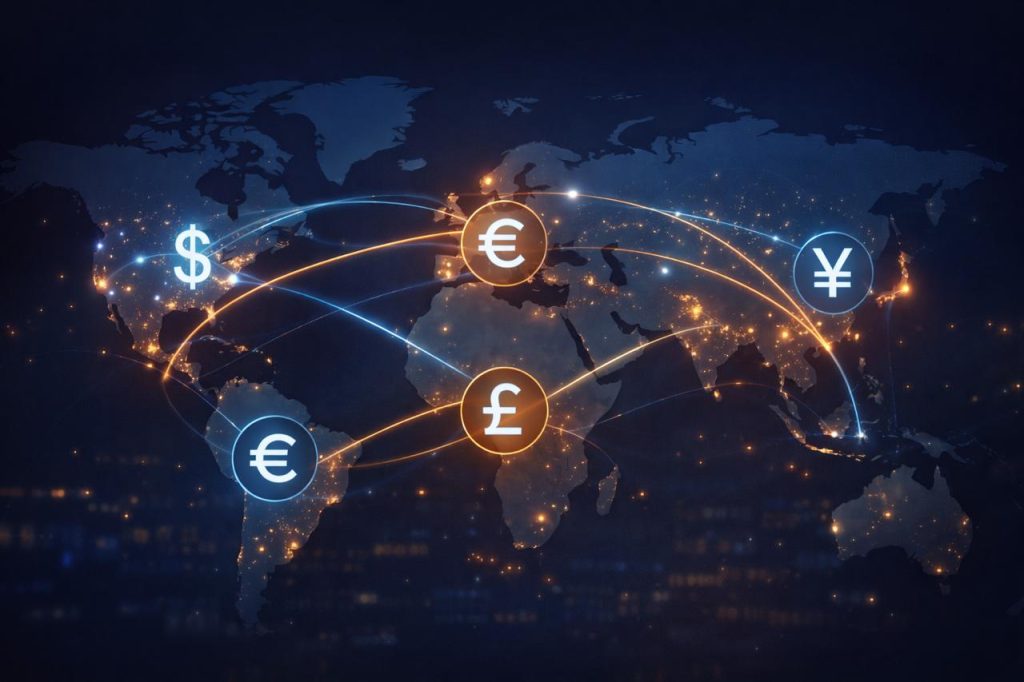
When thinking about the way that forex trades electronically, think of the ocean, with millions of people buying and selling currency every second. Think of each wave as being people who have been buying and selling currency every second all around the world.Just by looking at that one image, you can see how large this market really is. You might see something like “forex market explained,” but really, that’s just the way the world assigns value to money between different countries. The forex market is sustained by constant demand. Companies need to exchange their currency to pay for goods and services provided by global suppliers. Countries and governments use forex to keep their economies and the values of their currencies stable. Travellers exchange currency every minute of every day. Forex traders use the price movement of currencies to create a business opportunity. All of these activities come together to create the very active and constantly changing global network known as the forex market. “Currency Trading: The Basics of Forex Trading” provides all of this information.
Unlike other financial markets, Forex is different because it only trades currency pairs (i.e. one currency versus another). You cannot buy a “dollar” or “euro” by themselves, only in relation to one another. For example, you may have seen:
EUR/USD (Dollar vs Euro)
GBP/JPY (Pound vs Yen)
AUD/CAD (Dollar vs CAD)
When one side moves up, the other side usually moves down; thus, forex traders are always trying to figure out which side will go up first.
If you think that the Euro will become much stronger than the USD, you would then purchase an EUR/USD currency pair. If your prediction comes true, and the Euro appreciates, then the value of that pair will go up. However, if you were wrong, and the Euro depreciated, then the value of that currency pair would decline. Therefore, this logic is the basis for all forex trades.
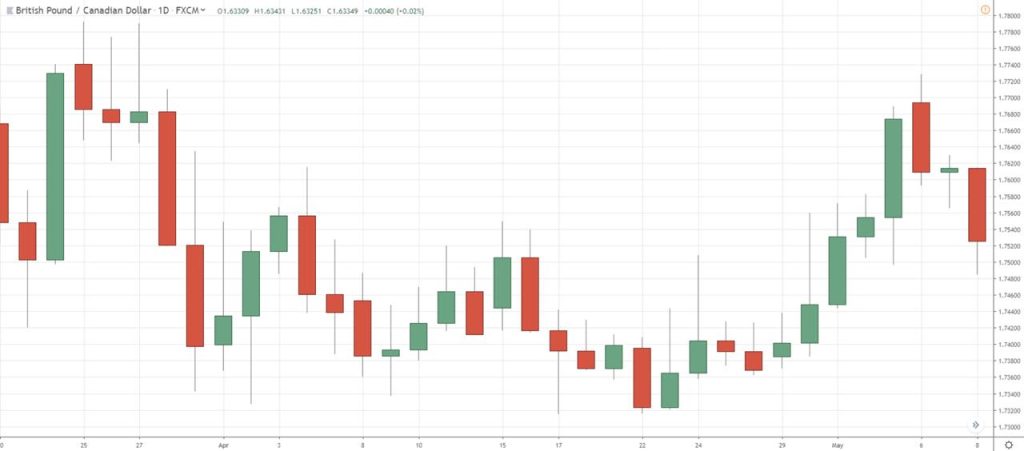
Typically, people new to forex trading learn about basic forex concepts such as pips, spreads, trend lines, and price chart patterns and how they impact the price of currencies; they do not have to think about any of that as a complex topic to begin trading successfully. By studying and mastering these concepts, they can learn to analyze the movements on the charts to understand what they are doing when deciding to purchase or sell any currency.
Why Do Currency Prices Change?
Many factors combine to influence currency valuations just as they influence the way an economy is performing or will be in the future. Among these factors are:
1. Economic Performance
A country that has a strong economy is going to have a strong currency. If a country has shown positive GDP growth and stable inflation with a high level of employment, then investors will likely invest in it because of its strong economic performance.
2. The Time and Place of Interest Rates
Interest rate changes by central banks (eg: US Federal Reserve, European Central Bank) affect the economy, and the economy affects the currency market. A strong interest rate will generally lead to an increase in demand for the currency.
3. The Time and Place of Political Stability
Financial market volatility is driven by uncertainty. The outcome of major political events (e.g., elections, wars, and changes in government policy) often results in rapid fluctuations in the values of currencies in either positive or negative ways.
4. The Market is a Sentiment Game
The market often moves based on the belief of traders that something will happen. Speculation and emotion play huge parts in how traders operate in the market.
5. The Impact of Global Events
Global events such as pandemics, natural disasters, international trade treaties and announcements impact your currency value.
An understanding of these external factors doesn’t require an economics degree but an easy way to envision how external factors can influence your currency’s value is to think of how a storm can change your plans.. In a similar way, economic or political events can create “storms” in a currency’s valuation.
Who Trades in the Forex Market?
Forex isn’t just for individual traders sitting at a desk. It’s a massive ecosystem full of different participants:
Banks
The vast majority of currency transactions take place on a daily basis at major Banks to facilitate International Trading and to keep liquidity flowing through the Financial System.
Central Banks and Governments
Central Banks and Governments influence the value of currencies by manipulating Interest Rates and intervening in economic stability.
Corporations
Corporations that are involved in import/export activity will need to exchange currencies in order to send payments to International Suppliers and receive payment from their International Customers.
Funds and Investors
Those who have large amounts of Capital will be able to diversify their Investments by trading currencies as well as Hedge against potential losses.
Retail Traders
Everyday people are able to trade Forex as a result of the Internet and technology, enabling them to trade in the Global Market without requiring large amounts of Capital.
Each of these types has different objectives; nevertheless, all of these types contribute to an Active Foreign Exchange Market.
The Function of Brokers and Trading Platforms
If you wish to trade Forex, you need to utilize a Broker. The Broker acts as your Entry Point to the Global Market by providing you with the different tools, charts and features that allow you to conduct your transactions.
Most brokers offer platforms like:
MetaTrader 4 (MT4)
MetaTrader 5 (MT5)
cTrader
Their own custom-built apps
These trading platforms provide real-time price charts, ongoing price action analysis, and current event updates to give the trader all the tools needed to effectively trade currencies through their trading software, regardless of the trader’s experience level.
An ideal broker should be fully regulated and have transparency in fees and charge a reasonable amount as compared to the rest of the brokers in their market. Trading Forex becomes easier when using a broker that is reliable, has clear pricing, and makes for a more efficient Forex trading experience.
How Traders Analyze the Market
Traders rely on two major types of analysis:
1. Technical Analysis
Using indicators, price behaviour and chart patterns, technical analysis studies the past price movement and how those movements can help predict future market activity. Use technical analysis like a trail of footsteps in the sand to determine where the next steps may lead.
Some common tools include:
Moving averages
Support and resistance levels
Trendlines
RSI or MACD indicators
These help traders understand momentum and potential turning points.
2. Fundamental Analysis
This looks at economic news, interest rate decisions, and financial reports. If a central bank raises interest rates, for example, the country’s currency often strengthens.
Many traders mix these two approaches. They study charts for patterns and watch news for confirmation. Combining the two methods creates a stronger market understanding over time.
‘Leverage: The Double-Edged Sword’
When you use leverage in your forex trading, you can control a lot more with your investment than you could without leverage. For example, you would be able to control $30,000 worth of currency if you deposited $1,000 into your forex account with a margin of 1:30.
The thrill of using leverage is great, however, utilizing it wisely is also very necessary, as it increases your potential gains, as well as your potential losses.
Beginner traders often do not realize just how quickly a market can move and therefore must be especially careful with their risk management techniques.
All traders should utilize leverage as a powerful tool, similar to how one would not use a knife in a careless manner, therefore, one should not use leverage in a careless manner either.
Some Common Things to Avoid as a New Trader:
1. Too Much Leverage
One of the most common mistakes made by new traders is over-trading, meaning they make multiple trades without fully knowing what they are doing. This can lead to extremely large losses.
2. No Thorough Plan
Entering the market without a plan is analogous to going to an unknown destination without any navigational aids. Without a predetermined direction, you may not be able to determine your location when you get there.
3. Failing To Consider Risk And Position Sizing’
Do not invest in anything with money you do not have. Placing trades that have a minimum or maximum position size and not having an appropriate stop loss can result in catastrophic losses should the trade go against you.
4. Chasing the Market
Investing in an unexpected big movement in the market after the fact is an emotional decision, not a strategic one. The market compensates and rewards traders who are prepared and act strategically.
“Lack of Education”
Understanding the fundamentals can make a huge difference. Even learning just the essential “forex basics” can improve your decision-making dramatically.
Tips for Becoming a Smarter Forex Trader
Here are friendly, realistic tips to guide beginners:
Start Small
You don’t need a large account to begin. Focus on learning, not earning.
Use a Demo Account
Practice with virtual money until you feel confident with your strategy.
Keep Emotions in Check
Trading is not just a financial skill—it’s also an emotional one.
Review Your Trades
A journal helps you identify habits, mistakes, and strengths.
Stay Patient
Successful trading is rarely about quick wins. It’s about steady learning and consistent improvement.
Read More: Best Brokers for Demo Accounts
The Appeal of Forex: Why So Many People Try It
Forex attracts people for several reasons. It’s accessible, flexible, and active around the clock. You can trade before work, after work, or during breaks. The low entry barrier also makes it appealing—many brokers allow small starting deposits.
But beyond convenience, forex has a certain charm.The Forex market provides you with insight into the workings of economies and the world at large, as well as the ability to sharpen your decision-making skills. Many traders (even those who do not actively trade) say they find enjoyment in knowing how the currencies move.
While the Forex market can create opportunities to succeed, it also teaches us valuable lessons in discipline and patience. As they say, “Sometimes Forex is all three of these in one day” – the excitement of a great opportunity, the thrill of success, and the pressure of knowing how to react quickly and wisely when we see the market change.
Wrap Up: The Forex Market Is a Journey
To truly understand the Forex market, we should not try to memorize complicated equations and formulas; rather, we need to understand the ways currency interact with one another and what causes price change to occur, along with how we should manage our choice making process wisely and cautiously, no matter if we approach the Forex market casually and for fun (what we refer to as a “hobby”) or as an intense trading interest (what we refer to as a “professional” trader), learning the foundational principles will enable us to proceed in a confident manner.
After viewing a comprehensive overview of the Forex market and reading the major concepts and how the Forex market operates; it has become apparent that the Forex market isn’t nearly as scary as it appears to be at first glance. You’ll begin to see patterns, recognize news stories, and understand how the market acts upon itself.
The Forex market is a global conversation that never ends, and now that you’re familiar with it better than you were before, you are much better equipped to join in!
Share
Hot topics

What is News Trading in Forex? A Complete Guide to Event-Driven Strategy
Introduction If you have ever watched the forex market during a major economic announcement, you know how dramatic it can be. Prices jump within seconds. Spreads widen. Volatility explodes. For...
Read more

Submit comment
Your email address will not be published. Required fields are marked *