What Is a Forex Broker and What Do They Do?
If you’ve ever browsed through financial websites or listened to others discuss currency trading, you’ve probably encountered the term forex broker, which may sound a bit technical, but the truth is it is quite simple. Forex brokers are why average people like you and I can trade currencies on our cell phones and laptops. Forex brokers bridge the gap from average everyday traders to forex, which is a vast and fast-paced market for trading currencies.
But before we get into more details let’s first start with the basics and answer the most asked question of most beginners: what is a broker in forex?
Knowing What a Forex Broker Really Means
In its simplest form, a broker is someone or something that connects two people or sides who want to make a deal. A forex broker does essentially that but in the global currency market. When you buy or sell currencies on the web, you aren’t trading directly with that other person or party somewhere in the world. Rather, your broker is providing the platform, pricing, and technology to make that happen in seconds.
You could think of a forex broker as your personal entry point to forex. Without a forex broker, you wouldn’t have access to the platform and also the pricing data that professional traders have access to every day and that the big banks are using every day.
Using a more technical term for brokerage, the broker meaning in forex is quite straightforward: it is a company that processes your trades on your behalf, frequently provides leverage, spreads, and facilitates multiple currency pairs to access.No matter if you are trading the euro against the dollar (EUR/USD) or an exotic currency pair like the USD/ZAR, you would not be able to facilitate that without the work of a broker.
The Broker Role in Trading: More than a Middleman
A common misconception beginners have about the broker role in trading is that a broker merely serves as a bridge to access the market. This is true, but brokers do much more than connect you to the market. They supply you with live feeds of the market price, they execute your trades immediately on your behalf, and they keep secure connections to liquidity providers (large banks and financial institutions who provide the supply and demand of the currency flow).
If there were no broker, you would have to contact each of these liquidity providers yourself to make a trade. This is neither feasible nor a scalable option for most retail traders. A potentially good broker takes this responsibility off of your hands. A broker will simplify this whole process into a low-cost or sometimes free trading platform such as MetaTrader 4, MetaTrader 5, or cTrader. All you will need to do is place your orders to buy or sell and explore the market analysis that is virtual, or cloud-based.
Some brokers even take it a step further than offering a portal to place up orders, by giving their clients free access to education, free demo accounts, and even providing trading signals for clients to make more informed trading decisions.
Here is a simple analogy you can think of – Your broker is like a travel agent
You could think about it this way: Let’s say you are taking a trip to a foreign country. You could spend whatever time you would like to plan this trip and book the airlines, auto transfer, hotel, and anything else that enters your mind, one at a time, over the next few hours, days or longer if you’d like.However, instead, you list everything you want and take your requests to a travel agent who speaks with all of these companies, makes arrangements, and provides you with quick and easy access to make your travel choices seamless and as painless as possible.
For forex trading, your broker is doing that type of work.They take charge of everything that happens in the background – connecting you with international markets, displaying exchange rates, executing your trade, and making sure everything works out. You still control your decisions, but they arrange the rest.
What Happens When You Place a Trade
To understand what happens when you place a trade, for example. Let’s say you think the euro is going to increase in value against the U.S. dollar. You log in to your trading platform, find EUR/USD, and place a “buy” order. In less than the blink of an eye, your broker’s system sends that order – to either their own internal servers, if it is a market maker, or direct liquidity providers, if it is an ECN or STP broker.
Your position is opened, the chart updates in real time, and you are now participating in the forex market. That swift and seamless process? All thanks to the infrastructure supporting your broker. Execution speed, slippage, and order accuracy are all up to your broker while you plan your strategy and analysis.
Types of Forex Brokers
Just as not every traveler is the same, not every broker operates the same way. There are different styles of forex brokers, and knowing how they differ will help you select one that matches your trading style.
1. Market Makers:
Market makers “make the market” for you. They will not send your order to the interbank market. Rather, they will fill your order internally. Market makers act as the counterparty to your trade. Pros: youPotential conflicts of interest if your trades consistently profit because those would hedge or internally offset positions.
2. ECN-Brokers:
These brokers get you in direct contact with a pool of banks, hedge funds, and other traders. Prices are based on supply and demand. All ECN brokers usually present tighter spreads; however, they often charge a commission for each trade.
3. STP-Brokers:
These brokers are kind of like ECN ones, although not to such a degree. With these brokers, orders pass through straight to liquidity providers without any dealing desk intervention. They are rare, as they often mix fixed and variable spreads according to market conditions.
Each model has its own unique advantages, although which model best suits your trading goals, experience level, and the level of capital will differ
How Do Forex Brokers Make Money?
Brokers are businesses, not charities — so how do they make money? The two biggest ways are spreads and commissions.
A spread is the small difference between the buying price (ask) and the selling price (bid). For instance, if EUR/USD has a bid of 1.1000 and an ask of 1.1002, the 0.0002 difference (or 2 pips) is the broker’s income from that trade.
Some brokers may charge a small commission for each trade — ECN ones are usually the most verbal about offering very tight spreads in exchange.
Also, if you hold trades open overnight, brokers may charge or pay you a swap depending on the interest rate differences between each currency. This swap basically reflects the fee a trader incurs for holding leveraged positions overnight.The Importance of Regulation
When you place money into your trading account, you want to know that it is going to be safe. Regulation is the answer to this problem. If a complicated process of regulation and oversight is in place, a forex broker is subject to the mandates of financial regulators like the Financial Conduct Authority (FCA) in the United Kingdom, the Australian Securities and Investments Commission (ASIC), or the Cyprus Securities and Exchange Corporation (CySEC).
Regulatory requirements include keeping client funds divided from company funds in segregated client accounts, clearing strict capital requirements that maintain sufficient and appropriate operating capital, and providing transparent measures to detect and prevent fraudulent behavior or misappropriation.
Unregulated brokers very often provide brokers who may put forth attractive cumulative client bonuses or offer high leverage, but they hide the questionable or negligent ways they handle client transactions, including sometimes delaying if clients want direct access to their funds or improper trading routing. It seems sensible that as you start out it would be better to trade with a broker who is licensed and know their practices are regulated and overseen.
The Trading Tools and Software They Present
This is the part of trading that makes trading fun. Trading platforms like Metatrader 4 or 5 (MT4 or MT5) which most brokers use are well-known for being reliable, innovative, and providing an easy to follow path to building custom indicators and automated trading functionality.
Good brokers also provide other platforms, apps for mobile platforms, web based platforms, or even trading tools including market analysis, news feeds, and copy-trading options. Being able to use or access each of the different types of mobile trading environment are all geared towards providing the trader a trading environment with facilitation of decision-making for the trader, not to operate as a technical limitation.
For example, you should be able to specify your stop-loss or take-profit conditions in the trading window and even leave the screen and the trading app software would manage your position. You should be able to engage and gain control and confidence in your position or trading.The Human Side of Trading with a Broker
There is a human side behind every trade, and this is often where brokers come into play in an invisible way. For new traders, brokers are often the first educators. They make demo accounts available for traders to practice, offer webinars to explain various concepts, and write articles to help you avoid mistakes.
For more experienced traders, brokers are partners in execution. They help ensure that trades are executed quickly, data is accurate, and that markets remain liquid and order filled even during volatile times.
Think about it like this: if trading was a car race you are the driver, but the broker is the pit crew, providing the car, and real time data to help you stay in the race.
How to Choose the Right Forex Broker
Choosing a broker is like choosing a gym; it should fit your trading goals and personality. Here are a few things to consider before signing up:
Regulation and Safety: Always check their license at their regulator´s website.
Costs: Look into the spread, commission, or swap rates.
Customer Care: A positive, responsive and prompt customer care service is usually a good sign.
Easy Deposit/Withdrawal: Check what their process looks like and if it seems functional for you.
Platform/Tools: Check whether the broker offers platforms your comfortable with.
As always, do a little research by reading reviews, and using the demo account to begin to understand their service before you lose all of your money trading.Frequently Faced Beliefs Concerning Brokers
Many traders tend to start with myths about brokers. A common belief is “brokers collect money only when I am losing money”. While this may be accurate for some market makers, most regulated brokers generate income whether you make money by way of a spread or commission.
Another belief is that brokers intervene in pricing. In reality, trustworthy brokers — including reputable providers like Otet Markets — receive price feeds from multiple liquidity providers to ensure fair and competitive quotes. Sudden changes in price, or “slippage,” are normal during periods of high market volatility and should not be mistaken for manipulation.
Lastly, some traders expect that brokers will produce profits and stop me from losing. That is not the role of a broker. A broker is there to facilitate trades and does not make outcomes, predict or take any influence over the transaction occurring.
The Modern Day Evolution of Brokers
Within the last decade forex brokers have evolved drastically. It once took great capital and specialized access to have access to forex, but now with a laptop or desktop with an internet connection and a small deposit this market is accessible to anyone.
Today’s brokers are showing a commitment to differentiating themselves through fractional trading, lower spreads to compete with fees, education, skills, and prominse social trading —of which you can mimic trades of other successful traders. Many brokers are also starting to utilize AI tools to aid in dissecting relationships, patterns, or even measuring risk.
This access has brought forex to another level of availability and inclusivity than any world’s public market, this is also the point that it requires vigilance to remain informed.
Wrap up Thoughts: The Partner in every Trade
So What is a Broker in Forex? They are your link to a open market that provides you access to the world’s largest financial opportunity. The broker meaning is not where it ends, as it is not just a place to execute, nor is the role just to execute, it’s the technology behind it and trust, and transparency to enable you to trade. Also, the role is supportive the trader’s trade decisions.
Regardless of if you’re new to it or not, a broker is a support system, but ultimately a good broker does not just provide access; they provide their users with the clarity confidence to seriously contend with the constantly moving environment of forex.
In the end, a good broker, with their integrity, earns your much more than access, they earn you the biggest thing that every trader needs, confidence.
Share
Hot topics

What is News Trading in Forex? A Complete Guide to Event-Driven Strategy
Introduction If you have ever watched the forex market during a major economic announcement, you know how dramatic it can be. Prices jump within seconds. Spreads widen. Volatility explodes. For...
Read more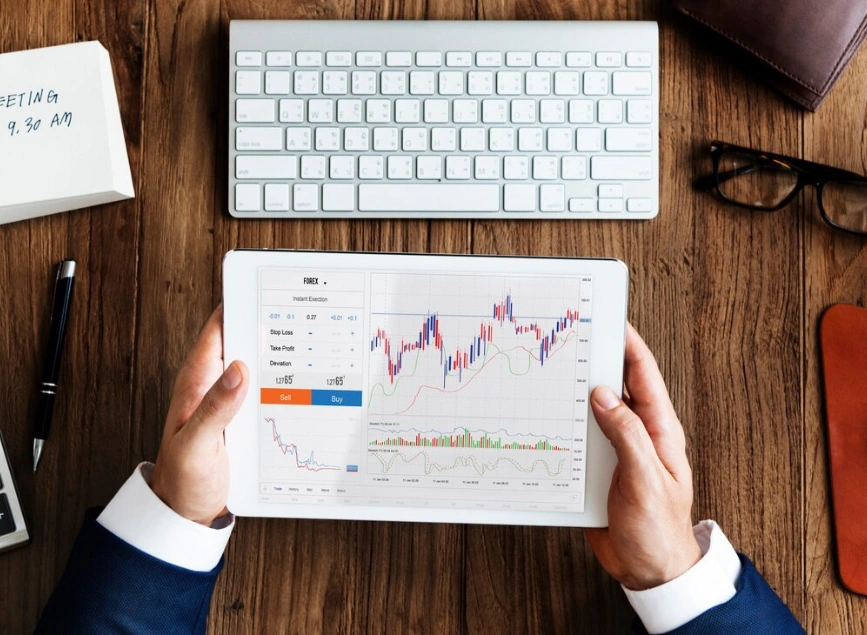



Submit comment
Your email address will not be published. Required fields are marked *