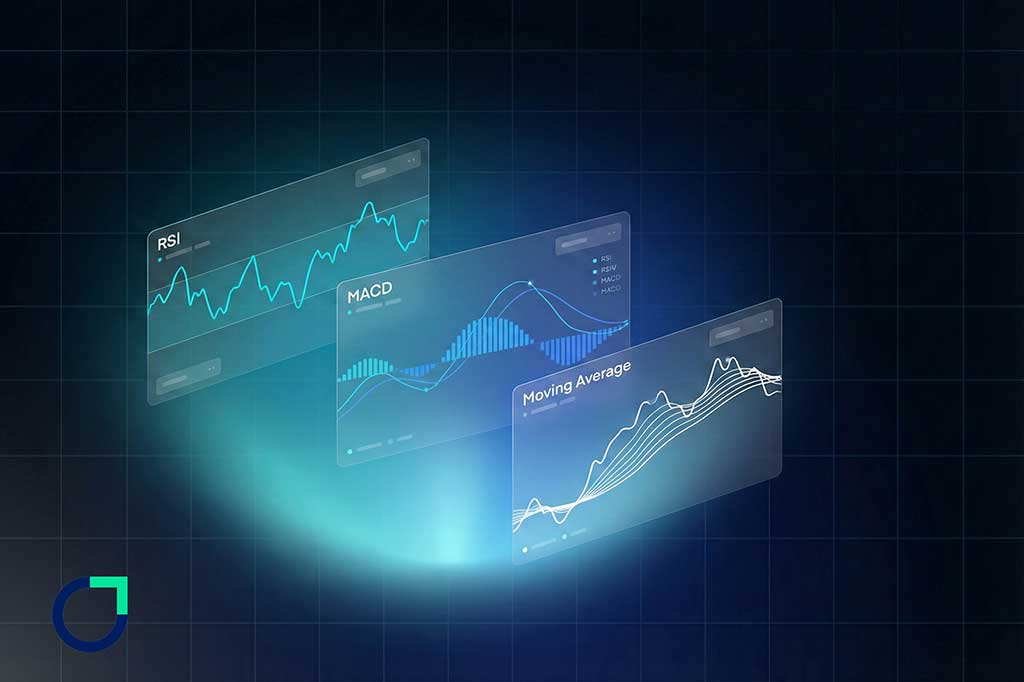
What is an indicator and its types?
If you’ve used a price chart, then you’ve probably seen lines, shapes, or colored areas on top of prices or below the prices. These lines are indicators, which are among the most common tools for traders looking to analyze price movements in the markets.
Indicators are often misunderstood. Some traders see them as magical predictive tools, while others think they don’t offer anything but confusion. The truth is likely somewhere in between.
Before getting deeper here, let’s address a simple question that’s often asked by most new traders, but unfortunately, they’re usually too embarrassed to ask:
What is an indicator
An indicator is a calculation based on price, volume, or time, which can help traders analyze market behavior. In other words, an indicator does not replace the actual price; it provides a different method for evaluating what the market trend might be doing.
Indicators do not provide signals; they are tools for observing market movement. Another basic concept to help you understand indicators is:
What is an Indicator Used For?
Indicators can assist traders in identifying trends, momentum, volatility, and possible reversal points. While they do not provide certainty, when used appropriately, indicators can minimize guesswork in making trades.
When traders have difficulty using indicators, it is typically not because indicators are inaccurate, but rather, they either do not understand how to use an indicator correctly, or they do not know how to interpret the data provided by an indicator.
How Trading Indicators Work
Fundamentally, trading indicators are based on mathematical equations that build on the history of the price action and volume in a specific manner to produce a visual representation (i.e., an indicator chart).
To develop indicators, various types of information can be employed.
The inputs include the following:
- Price (open, high, low, close)
- Volume
- Time
For example, a Moving Average computes the average price over a designated number of periods. A 50-period Moving Average adds the last 50 prices and divides them by 50. As new pricing data comes in, the oldest price data is dropped off, and the calculation is based on the new data.
Read More: How These 3 Key Indicators Improve Your Trading Accuracy
This calculation produces a smoother price trend, allowing traders to see more easily the direction of the trend.
Some indicators are sensitive to changes in the price action and, as such, will respond quicker to price movement; this makes them more useful for short-term trading while simultaneously producing a greater number of false signals. Conversely, slow-moving indicators are steadier.
As a result, no indicator can ever give a perfect result in all situations.
Indicators are divided visually into two categories:
- Those that appear directly on the price chart
- Those that appear in a separate window below the chart
Both the MetaTrader platform and cTrader platforms have indicators that are easy to learn into, customize, and back test.
However, most traders begin developing their understanding of indicators on a demo account offered by brokers such as OTET Markets, where you have the ability to practice and learn without any risk of losing real money.
When you learn how an indicator has been calculated, the more you will be able to make use of it instead of relying upon it blindly.
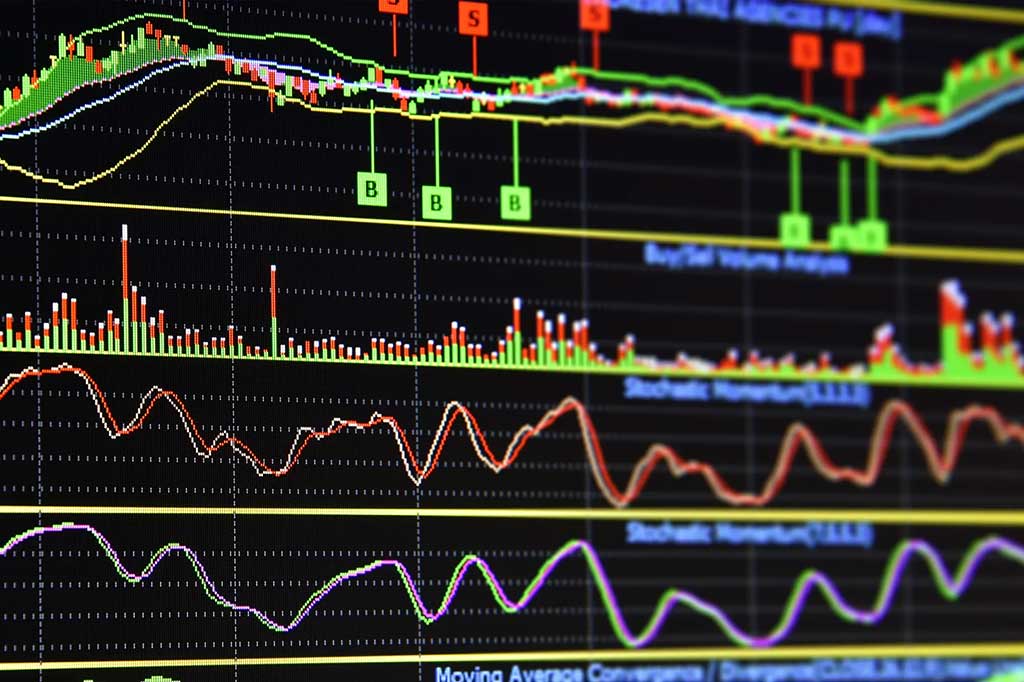
Types of Trading Indicators
Many different kinds of indicators can be used in trading based on what they are measuring. Each type answers a specific question regarding the market condition.
-
Trend Indicators
The main use of trend indicators is to determine the overall trend in the market; the question trend indicators seek to answer is, Is the market moving up, down, or sideways?
Some common trend indicators are:
- Moving Averages
- MACD (Moving Average Convergence Divergence)
- Parabolic SAR
Trend indicators work best during times when the market is trending. In a sideways market, they may provide misleading signals. Trend indicators do not give you an exact indication as to when you should buy & sell. They will help you keep in tune with the overall direction of the market & stay in line with it.
-
Momentum Indicators
Momentum indicators measure the price movement speed. They assist traders in understanding whether a trend is gaining strength or weakening. The most common momentum indicators are:
- RSI (Relative Strength Index)
- Stochastic Oscillator
- CCI (Commodity Channel Index)
These indicators are generally used for identifying overbought or oversold conditions. However, “overbought” doesn’t mean price must fall, and “oversold” doesn’t mean price must rise. Momentum indicators should not be thought of as buy/sell signals but rather as cautionary signs.
-
Volatility Indicators
Indicators of volatility reflect price level changes regardless of their direction, rather than showing which direction prices are moving. Some examples of volatility indicators are:
- Bollinger Bands
- Average True Range (ATR)
- Standard Deviation
Volatility tends to be high during news releases or when the price breaks out of a range whereas volatility is low during consolidation or sideways price movement. Volatility indicators are useful for risk management as they can be used to set stop-loss orders based on price level fluctuations.
-
Volume Indicators
Volume indicators tell you how much trading is occurring; they are used to verify price movement. Common volume indicators include:
- On-Balance Volume (OBV)
- Volume Oscillator
- Accumulation/Distribution
An upward price movement backed by high volume is most likely to be sustainable; a price that increases backed by low volume is at high risk of recession.
Centralized data for volume is not available for all markets; however, volume indicators are commonly used in stocks and futures.
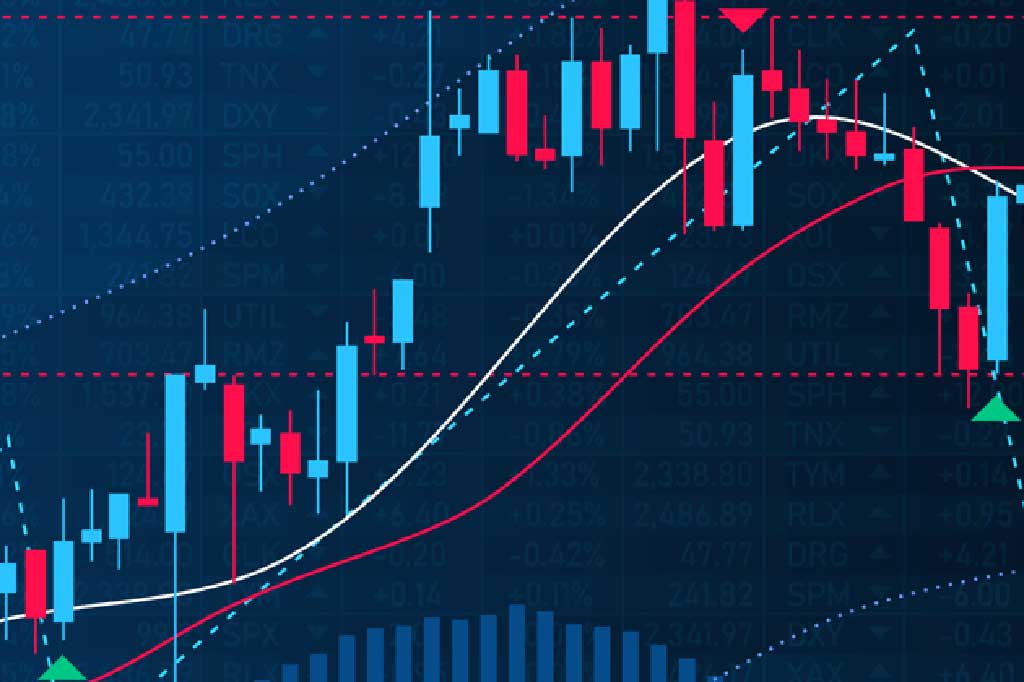
How to Choose the Right Indicator for Your Strategy
Choosing the right indicator is all about what fits your trading style rather than finding the best one.
Start by asking yourself a few questions:
- Do I trade short-term or long-term?
- Do I prefer trending markets or range-bound markets?
- Do I want early signals or more confirmation?
Day traders might prefer momentum indicators that provide fast signals. Swing traders might find the trend indicator appealing. Position traders might rely on slower indicators to avoid market noise.
Another thing to remember is that you should avoid using overload indicators, because this will add confusion and conflicting signals.
A good rule of thumb is:
- One trend indicator
- One momentum or confirmation indicator
- Price action as the foundation
Backtesting of all indicators is also very important. Always test an indicator on historical data prior to using it with actual funds; most platforms allow users to backtest easily.
Remember, indicators do not create profits; your rules, discipline, and risk management do.
Using Indicators in Different Markets (Forex, Stocks, Crypto)
Indicators act differently depending on the market you are trading. Market structure, volatility & trading hours all affect how they behave.
The table below is a practical comparison to show how indicators are usually used in different markets.
| Market | Key Characteristics | Best-Used Indicators | Practical Notes |
| Forex | High liquidity, 24-hour trading | Moving Averages, RSI, ATR | Works well with trend and momentum tools due to smooth price flow |
| Stocks | Session-based trading, volume-driven | Volume indicators, MACD, Bollinger Bands | Gaps and earnings reports can distort indicator signals |
| Crypto | Extreme volatility, news-sensitive | RSI, Bollinger Bands, ATR | Indicators must be adjusted due to sharp swings and thin liquidity |
In the Forex market, indicators tend to run smoothly due to deep liquidity; thus, trend indicators typically operate well on the major currencies.
In the stock market, volume is typically more important than trend. If there is no volume to back a breakout, it will likely fail.
In crypto markets, indicators should be set with wider settings than normal due to volatility. Otherwise, tight parameters may result in receiving many false signals.
Regardless of the market, indicators should always be adapted rather than copied blindly.
Limitations and Common Mistakes with Trading Indicators
Indicators provide a lot of information about the market; however, there are also limitations to what they can indicate. The distinction between successful traders and unsuccessful traders is a trader’s understanding of these limits and why they exist.
The most prominent limitation of an indicator is lag. Most indicators are based on the past (historical) data; therefore, they will only react after the price has already moved.
Another limitation is that many traders view indicators as a way to predict price action rather than see them as a way to describe the current state of the market.
Many traders also tend to be overly optimistic. When a trader adjusts the parameters of the indicator to match their experience, they often feel disappointed in their future trades.
Another common mistake is that many traders overlook the market context of being in a trend or range. For example, the RSI of 70 in a strong trend is not the same as being at 70 in a neutral range.
Finally, many traders depend on indicators too emotionally. Indicators can serve as a useful tool for decision-making, but they should not replace the critical thinking a trader needs to do.
Conclusion
Trading Indicators are neither magical nor useless. They are tools; just like any tool, how well they are used determines their value.
When you learn to read the indicators and have a good understanding of how they work, you can use them to clarify trends in the market, measure momentum, and effectively manage your risk management. Conversely, if you do not have the skill set needed to read the indicator, it can create confusion and give you false confidence in your trades.
Keep it simple! Learn what each of the indicators is measuring. Use fewer indicators (not more). Combine your indicators with price action and good risk management techniques.
It’s also important to remember that indicators improve with experience. Initially, they may seem overwhelming or even conflicting. However, over time, patterns become clearer, and traders learn which tools align best with their decision-making process.
The aim isn’t to react to every signal but to build confidence in interpreting market conditions. When used consistently and patiently, indicators serve as a support system rather than a source of stress.
Most importantly, do not ever forget that INDICATORS assist you in decision-making. They do not make your decisions for you!
FAQ
A trading indicator is a mathematical calculation based on market data, such as price, volume, or time, used to help analyze market behavior and support trading decisions.
The main types include trend, momentum, volatility, and volume indicators. Each type focuses on a different aspect of market movement.
Yes, but it’s best to limit the number. Using one indicator per category usually provides enough information without confusion.
No. Some indicators work better in trending markets, while others perform better in ranging or volatile conditions. Market context is essential.
Choose indicators that match your trading style, timeframe, and market. Test them thoroughly and focus on understanding what they measure, not on chasing signals.
Share
Hot topics

Gold symbol in forex
Introduction If you have ever opened a trading platform and searched for gold, you probably noticed a specific code instead of the word “gold.” In the forex world, assets are...
Read more



Submit comment
Your email address will not be published. Required fields are marked *