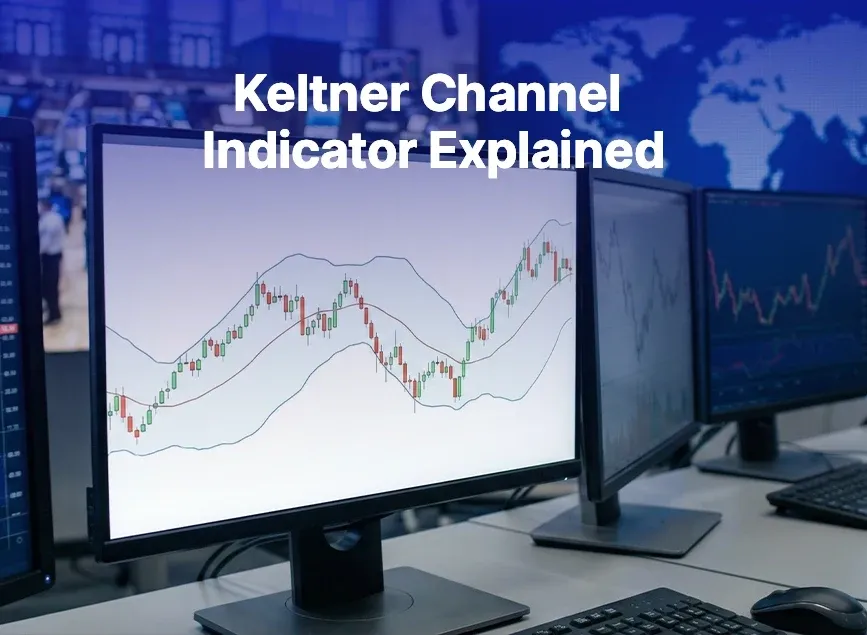
Keltner Channel Indicator Explained
Trading can feel a lot like being in the middle of a busy street. Prices rise and fall, news travels fast, and emotions come into play from all directions. Many traders utilize various types of indicators to help them make sense of the chaos, but the Keltner Channel is one of those indicators created to provide traders with structure where it may not appear to exist.
The Keltner Channel has been around for decades, but it still feels very modern when applied by today’s traders. The Keltner Channel does not attempt to predict where a price will be in the future; rather, it puts price in context – how fast is the price moving, where is the price currently compared to prior highs or lows, and are the current price movements calm or aggressive. This article will provide a detailed, step-by-step examination of the Keltner Channel, presented in an easy-to-understand, practical manner. No heavy maths, no theories that are difficult to follow, just clear illustrations and real-world examples to illustrate how the Keltner Channel can be used in your day-to-day trading.
Read More: Forex Day Trading
A Simple Idea Behind the Keltner Channel
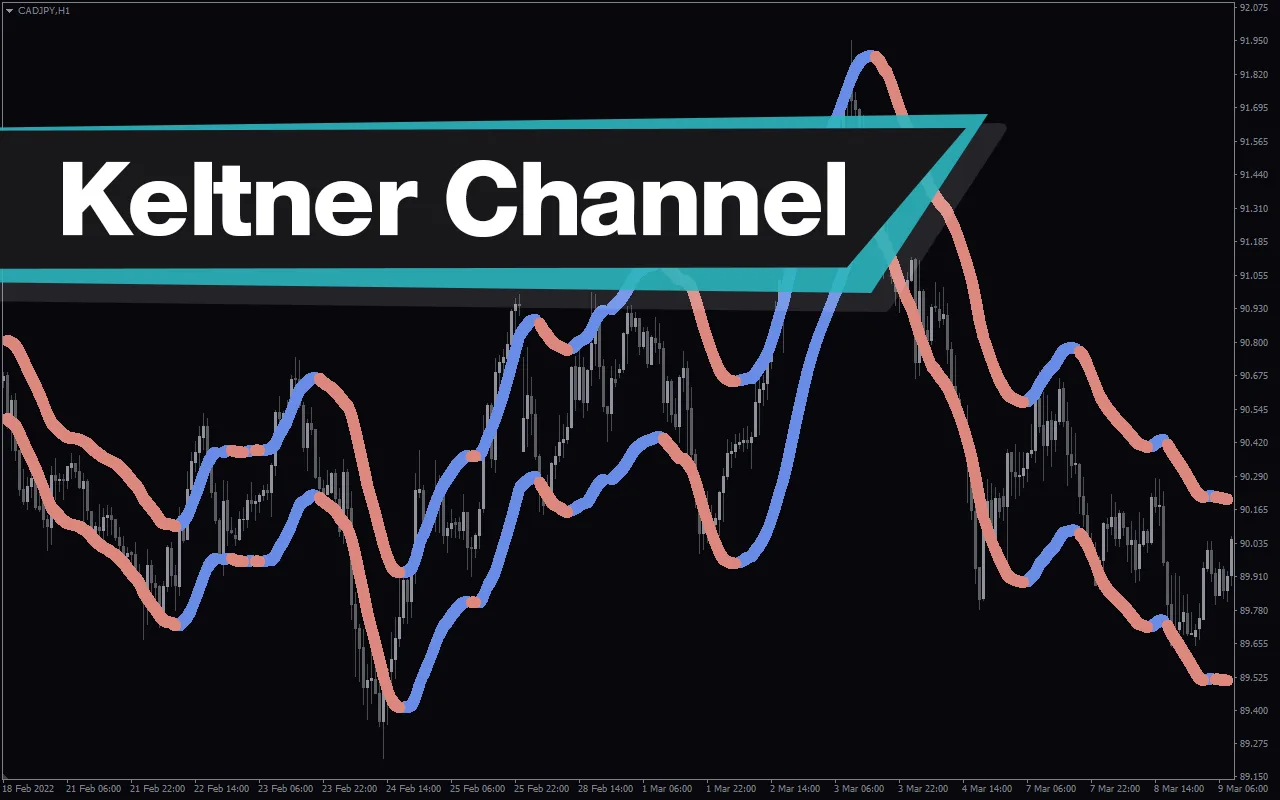
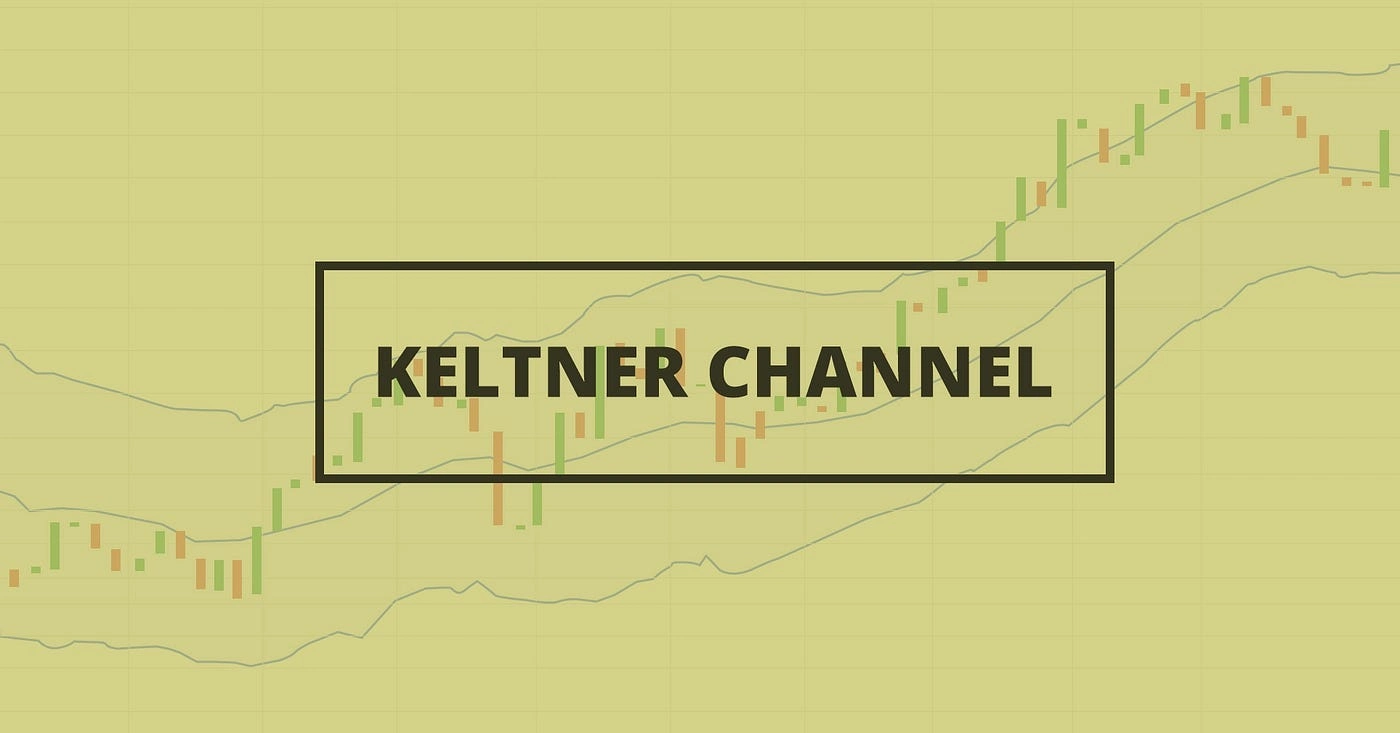
The Keltner Channel is a technical indicator that involves the use of banding a moving average (largely based on an exponential moving average). The Keltner channel has three lines: the middle line and two outer lines, which are dynamic based on how the market moves. Think of it like a flexible road. When traffic is calm, the road is narrow. When traffic gets wild, the road expands. Price travels inside this road most of the time, and when it touches the edges, it tells you something important.
The Keltner Indicator’s simplicity is where it shines. The Keltner Indicator reacts to what is happening in the Market right now rather than simply reacting to what happened several weeks ago. That makes it a valuable tool in both slow and fast market conditions.
Where the Keltner Channel Came From
The Keltner Channel’s concept originated in the early 1960s, created by Chester W. Keltner; originally, the Keltner Channel only used a moving average with a fixed range of prices for the channel. However, the Keltner Channel has undergone multiple changes and refinements throughout the years. The newest version of the Keltner Channel that we use today has integrated the Average True Range (IATR), which allows the channel to move with current market volatility as opposed to a fixed distance.
Today, many traders consider the Keltner Channel a practical volatility channel indicator because it adapts smoothly to changing market conditions. The Keltner Channel is widely used by Forex, stock, cryptocurrency, and commodity traders.
Understanding the Three Main Lines
The middle line is typically a 20-period EMA, showing the general direction of the trend. The upper band is defined as above the middle line, with the calculation based on some multiple of the average true range (ATR) added to the moving average. So, when the price reaches this upper band, it generally indicates that there is momentum that is strong momentum or near-term exhaustion.
The lower band follows the same process and represents an extension to the lower side. Therefore, together the three lines visually define the overall market range for the trader.
Why Traders Use Keltner Channels
The majority of traders do not seek a new, ‘magic’ signal. Instead, they would like to see that things are “clear”. The Keltner Channel provides answers to many basic, yet extremely valuable questions. The Keltner Channel is a useful tool for determining:
Trending/moving sideways market? Trend current strength vs weakness? Proximity to areas of low velocity price action?
The Keltner Channel provides answers to these questions, enabling traders to make more measured responses when deciding what type of action to take. This encourages patience while minimizing emotional reactions to every small price fluctuation.
Keltner Channels and Market Trends
A great application of the Keltner Channel is for determining trend direction. If the price is consistently moving above the middle (median) of the channel and continuously hitting the upper band, this generally indicates that the market is uptrend.
When an asset has a generally downward price trend, the price is usually below the middle (median) of the channel and continues to contact the lower band for support. With the help of this visual representation, traders can take advantage of price trends rather than being opposed to them. New traders tend to enter or sell too soon on strong price moves. The Keltner Channel provides traders with a gentle indication of potential continuation of a strong move for an extended period of time.
Using the Channel in Sideways Markets
Not all markets trend. Sometimes, prices fluctuate within a narrow range. According to these conditions, the Keltner Channel gets tighter and flatter. When you observe this behavior, it is a sign to modify your expectations. Breakout strategies might be more effective than trend-following, choosing to stay out completely.
Learning when not to trade is equally as important as learning when to enter a position in a market, and the Keltner Channels are able to show you when the market is in a period of sideways price action.
Entries: How Traders Use It in Practice
A common strategy is to look for pullbacks within a trend. During an uptrend, traders often wait for prices to dip toward the middle line before entering. This approach sounds more natural than chasing prices at the peak. You’re entering during a pause, not during an exciting moment. In a downtrend, the logic is reversed. Price pulls back toward the middle line, and traders seek signals that the downtrend may resume.
Exits and Risk Control
Exits are often more challenging than entries. The Keltner Channel helps by providing visual reference points. Some will take partial profits when they reach one of the outer bands, while others will utilize the opposite band as a trailing stop. The benefit of these methods is to reduce the amount of guesswork involved in determining when to sell or take profits from an investment.
Instead of asking “Should I close now?” you follow a structured approach. This method promotes discipline over time.
Keltner Channels vs Other Indicators
A commonly asked comparison is Keltner vs Bollinger, since both indicators place adaptive bands around price. The key difference lies in how the bands are calculated. The Bollinger Bands are created using standard deviation from an average, while the Keltner Channel uses an Average True Range. Therefore, the Keltner Channel is usually “smoother” and “not so reactive” to sudden spikes.
Neither of these tools can be considered to be a better choice or tool for every situation. They each provide different perspectives on the behavior of price, and they will offer different insights depending on the trading strategy being used.
Read More: Bollinger Bands Explained
Understanding Channel Width
The width of the Keltner Channel conveys a story. When the channel widens, volatility increases. When it narrows, the market calms down. Paying attention to this variation can improve timing. Narrow channels usually appear before strong moves, while wide channels suggest the move is already in progress. This awareness enables traders to avoid late entries motivated by a fear of missing out.
Combining Keltner Channels with Price Action
The indicator performs its best when combined with basic price action. Candlestick patterns, support and resistance levels, and trendlines all provide useful context.
The bullish engulfing in an uptrend near the mid-line would be considered much more significant than just considering the engulfing alone. Keltner Channels can be thought of as a map. Price action is telling you how to get around Keltner Channels.
Timeframes and Flexibility
The Keltner channel indicator can be used on virtually any timeframe for trading. Day traders often use 5 and 15-minute timeframes, while swing traders tend to use daily timeframes.
The most important thing when using Keltner Channels is to be consistent. Select a timeframe based on your personality, and stick with it. Switching between timeframes too frequently can lead to confusion instead of clarity.
How the Keltner Channel Can Be Used on OTET Markets
Many traders explore technical indicators through widely used trading platforms. OTET Markets users can access the Keltner Channel through the MT5 platform, where the indicator is available as part of standard charting tools. This setup allows traders to apply the Keltner Channel without relying on broker-specific or custom indicators.
Using the Keltner Channel on MT5 can help traders assess trend strength, observe changes in market volatility, and better time entries and exits. When applied consistently, the indicator offers a structured way to stay aligned with broader market direction rather than reacting to short-term price fluctuations. This approach can support more disciplined decision-making and a calmer trading process over time.
Common Mistakes to Avoid
Traders frequently make the mistake of thinking that the Keltner Channel’s outer bands are absolute turning points for price. Just because the price has touched the Keltner Channel upper band doesn’t mean it will fall.
In strong trends, prices can remain within the range for an extended period of time. Fighting that strength often results in unnecessary losses. Traders think that they can improve their chances by adding more technical indicators to their chart; however, for the Keltner Channel to be effective, it needs to be given enough “room” to perform.
Keltner Channels Across Different Markets
Forex traders value the ease of the channel in trending currency pairs. Stock traders utilize the channel for the management of momentum and pullbacks.
Cryptocurrency traders utilize channels in times of extreme volatility when price spikes can happen without notice, and the ATR-based bands perform better than fixed range bands.
The Bigger Picture: Trading Channels
Keltner Channels are part of a broader family of trading channels used to understand price movement. These tools help traders visualize ranges, trends, and volatility in a way that raw price charts often cannot.
Learning one channel deeply is usually more effective than using many at once.
Building a Simple Strategy
A Basic Strategy consists of requiring that all trades be made with the trend direction. Determine the trend direction using the middle line.
Wait for the pullback to the middle line before entering. Additionally, enter with the trend confirmation and manage risk using the opposite band. This simplicity is often more powerful than complex systems.
Practice Before Real Money
As with all tools, you will require time to learn how to use the Keltner Channel effectively. To gain valuable experience in using the Keltner Channel, use either a demo account or replay charts to monitor how the price moves around the bands.
Making note of how trends evolve, stall, and resume, as well as taking note of the times when the Keltner Channel expands or contracts, will help you grow an understanding of how the Keltner Channel works that no article ever could replicate.
Read More: Real vs Demo Forex Accounts
Final Thoughts
Keltner Channels don’t provide predictive capabilities; however, they do provide perspective for traders. The Keltner Channel allows traders to visually see how far prices have moved relative to their previous movements over a recent time frame.
By providing a visual structure for traders to follow, it allows traders to become emotionally balanced during their trading process. Rather than telling traders exactly what actions to take, Keltner Channels act as guiding principles for disciplined decision-making. If you approach it with patience and interest, the Keltner Channel can be a dependable trading companion.
Share
Hot topics
What is Balance in Forex? A Complete Guide for Traders
Introduction When you open a trading account for the first time, one of the first numbers you see on your screen is your balance. It looks simple. It looks clear....
Read more



Submit comment
Your email address will not be published. Required fields are marked *