How to Avoid Overtrading in Forex
Strategies to Prevent Overtrading in Forex
Overtrading is an issue that every trader promises to avoid, but as with many things, most traders eventually overtrade. Typically, it happens when a trader starts to take a few successful trades and feels confident. Then the trader gets a losing trade, and in an attempt to fix that loss, takes another trade without any forethought.
If any of that sounds familiar, you are not alone. Overtrading remains one of the most common issues in forex trading, especially for beginner and intermediate traders.
With that understanding, let’s explore solutions. In this article, we’ll go through everything in a simple, practical way—not too academic, not too technical. Just real guidance you can actually apply.
Why Traders Overtrade in the First Place
Before we discuss the solution, we need to understand and acknowledge the problem itself. Overtrading is not just about opening so many orders or taking too many trades. Sometimes it is a response to something deeper, like emotional, psychological, or even environmental.
Understanding overtrading psychology is essential because many trading decisions are driven by emotions rather than actual market signals.
Platforms like OTET Markets offer built-in tools such as trade-history tracking, risk-management settings, and transparent trading metrics, all of which help traders identify patterns that might lead to overtrading.
The following are the primary causes of over-trading.
1. The Need to Be Busy
Some traders equate activity with productivity. If they don’t open positions, they don’t consider themselves to be “trading.” However, real trading does not include constant action. It’s about waiting—sometimes for longer than is comfortable.
2. Chasing Losses
A trader loses one trade, becomes frustrated, and suddenly seeks payback. One more trade. Then another. And another. Before they know it, they are no longer following a strategy but rather reacting emotionally.
3. Getting High on Wins
Winning might be more dangerous than losing. When traders start winning, they may feel unbeatable. They tend to take larger positions than they normally would, and many times, they forget about their risk management principles.
4. Not Having a Clear Plan
When you have no predetermined structure, it’s much easier to randomly enter trades. Anything appears to be an opportunity when you don’t know what to wait for.
The Cost of Overtrading
The majority of traders don’t realise how damaging overtrading can be. It is not just about losing money, but it is also about emotional drain, confusion and inconsistent behaviour.
Financial Damage
You have to pay commissions or spreads each time you enter the market. These expenses quickly add up as you continue to open trades unnecessarily. Overtrading can cause even profitable traders to go negative.
Mental Fatigue
Your mind may feel overloaded when you open too many trades. Suddenly, you have positions to manage, stop-losses to adjust, and charts to monitor.
Emotional Instability
Most people who overtrade or take many positions experience some level of emotional instability from doing so. Those emotions may include anxiety, excitement, anger, desperation or some combination thereof.
Signs You Might Be Overtrading
Many traders don’t recognise overtrading as one of the most common forex mistakes, especially when they’re still developing discipline and risk awareness.
Here are a few signs to watch out for:
- You feel uncomfortable not having an active trade.
- You keep entering trades right after a win or loss (i.e. as soon as you close a positive position, you add a new position, or vice versa).
- You take setups that don’t fully match your strategy (you only trade based on the momentum or ‘trend rather than your strategy).
- You increase your position size impulsively.
- You open trades out of boredom.
- You check charts excessively throughout the day.
Using a reliable Platform can help monitor your trades effectively and avoid overtrading.
If any of these statements resonate with you, there is a good chance you may be struggling to some degree with regard to overtrading.
How to Stop Overtrading: Practical, Real-World Methods
In this section of this article, we will discuss the main topic or core of our article, which is how to quit overtrading effectively. No complicated rules, no unreasonable advice. Just simple, practical tactics.
1. Create a Clear Trading Plan (And Actually Follow It)
When creating a solid trading plan, you should outline a detailed one that includes: Your preferred trading conditions, your entry point, your exit point, your tolerable losses per trade, and your maximum daily or weekly trade.
Consider your trading strategy as a recipe. You can’t expect the meal to turn out well if you don’t follow it. Although many traders may have plans, only a few will stay consistent in following those plans.
Random trades will automatically be reduced when you stick to a plan. You are much less likely to enter the market aimlessly because you know what you’re waiting for.
2. Set a Trade Limit Per Day or Week
A great way that works effectively to reduce impulsive trades is to pre-determine how many trades you are going to make. Decide in advance:
I’ll take a maximum of 8 trades per week Or I’ll only take 2 trades per day.
You’re done, once you have hit that predetermined number, STOP! No exceptions!
You won’t believe how much this improves your concentration. You select only the best setups when you are aware that your trade options are limited.
3. Embrace Trading Discipline
Here is when trading discipline comes in. Discipline is not something you’re born with. It’s something you train, almost like a muscle.
Try this simple challenge:
For one week, trade using your trading plan as you created it. Absolutely no exceptions, no emotional trades.
During this week, your focus should be on having consistent trading behaviour and not making a huge amount of profit. By the end of the week, you will have created a major positive shift in your mindset.
4. Understand Your Emotions and Their Triggers
Overtrading is often an emotional behaviour among traders. Here are some questions to ask yourself:
Do I trade more after losing a trade?
Do I trade more because I am bored with my current position?
Do I trade more because I am excited about making a profit and feeling overconfident?
Once you understand your emotions and know what specifically triggers those emotions, you will be able to form new habits and take control of your emotions.
For instance:
- If boredom triggers you, set strict chart-checking times.
- If losses trigger you, take a 10-minute break after every losing trade.
- If wins trigger overconfidence, step away from the screen for a moment.
This simple concept may help you break the cycle of overtrading altogether.
5. Use Higher Timeframes
The best way to reduce overtrading is to switch to longer timeframes. If you look at 1 or 5-minute charts, there will always be moving averages. The temptation is to put on a trade every time the price moves slightly.
By changing to 1-hour or 4-hour charts, the good setups will appear less frequently, but they are usually much more reliable. Because there will be fewer trades, you will naturally impulse less.
6. Stop Trading When You Feel Emotional
Sometimes you don’t need to battle your emotions—you just need to stop trading.
If you are feeling:
- Frustrated
- Impatient
- Too Excited
- Stressed
- Sleep Deprived
Take a break. Even a short break can reset your mind and decisions completely.
Many successful traders treat trading like driving:
If you’re too emotional, you shouldn’t be behind the wheel.
7. Review Your Trades Weekly
Many traders avoid reviewing their trades because they don’t want to face their mistakes. However, reviewing your trades is one of the most powerful ways to avoid or prevent yourself from overtrading.
While reviewing your trades, ask yourself:
- Did I trade according to my plan?
- What was the reason for entering each trade?
- Was my decision based on a systematic analysis or based on my emotions?
- How many trades did I take that weren’t part of the plan?
Seeing the answers on paper hits differently. It highlights the problem clearly and helps you correct it faster.
8. Use Alerts Instead of Staring at Charts
When you are day trading, one of the main reasons traders have unnecessary trades is staring at charts for too long. You do not need to be glued to your computer or phone screen watching every tick of the market 24/5. You can set price alerts on your computer or mobile device.
Alerts will alert you when prices approach significant levels, so you can only look at the charts when needed. Setting price alerts will not only reduce unnecessary trades but also allow you to have a more productive trading day.
9. Stop Trying to Catch Every Move
One of the largest driving forces behind traders’ overtrading is the fear of missing out. Traders panic when they see a big move forming in the market, and they say, “If I don’t get in on this now, I’ll miss out!”
But the market is open 24 hours a day, five days a week. Thousands of opportunities appear every year. Missing one trade is not important in the long run.
Focus on becoming a more consistently profitable trader, not on trying to catch every move in the market.
10. Build Confidence Slowly
Confidence does not come from trading more; it comes from trading well using your trading plan. The more disciplined and consistent you become, the more confident you naturally feel. You will no longer have to worry about making random trades because you will have confidence that your strategy provides clarity. Over time, you learn to trust your rules, and the impulse to overtrade fades away.
Read More: Avoid These 3 Seasonal Forex Mistakes
Many traders eventually discover that success has less to do with how often they trade and far more to do with how intentionally they trade. When you approach the market with patience, a clear plan, and emotional awareness, the number of trades you take naturally decreases — but the quality of those trades improves.
For example, some traders click into the market constantly, reacting to every price movement and believing that more activity equals more opportunity. But over time, this creates exhaustion, confusion, and inconsistent results.
Others take their time. They wait for setups that match their strategy, enter fewer trades, and focus on quality over quantity. Their growth may look slower at first, but it becomes far more stable and sustainable.
The difference between these two approaches isn’t intelligence or talent — it’s patience, structure, and emotional control.
Accept That Trading Isn’t About Constant Action
This is one of the hardest lessons to accept. Trading is not like a regular job. You don’t earn more by doing more. In fact, in the trading world:
Doing less—when done correctly—often leads to earning more.
Your job as a trader is simple:
- Identify high-quality opportunities
- Manage risk
- Protect your capital
- Avoid unnecessary decisions
That’s it. There’s no reward for taking more trades than needed. The market doesn’t pay you for activity—it pays you for accuracy.
Build a Mindset That Supports Long-Term Success
Fixing Over-Trading is not simply a matter of having the best Trading Rules and Trading Tools – it is also about creating the right mindset. The following are important mindset characteristics to have: You’re okay with waiting, you don’t chase every move, you don’t feel pressured to trade every day, you value capital preservation as much as profit, and you understand that discipline is the real skill in trading.
When you can think in a way consistent with the responsibilities outlined above, your actions will naturally follow your thought pattern.
Final Thoughts: Overtrading Can Be Fixed — One Habit at a Time
If you have ever struggled with the effects of over-trading, don’t judge yourself too harshly. Almost all successful traders have experienced similar conditions and growth in their careers.
Start small: Limit your trades, stick to a plan, take breaks, review your trades every week, and recognise your emotional triggers.
With time, patience and strategy, you will notice the change. You will take fewer trades, but you will take better ones with a calmer and more confident attitude. Ultimately, you will have eliminated over-trading from your trading routine.
Trading isn’t about doing more. It’s about doing the right things consistently. If you can master that, you’re already miles ahead of most traders.
Share
Hot topics
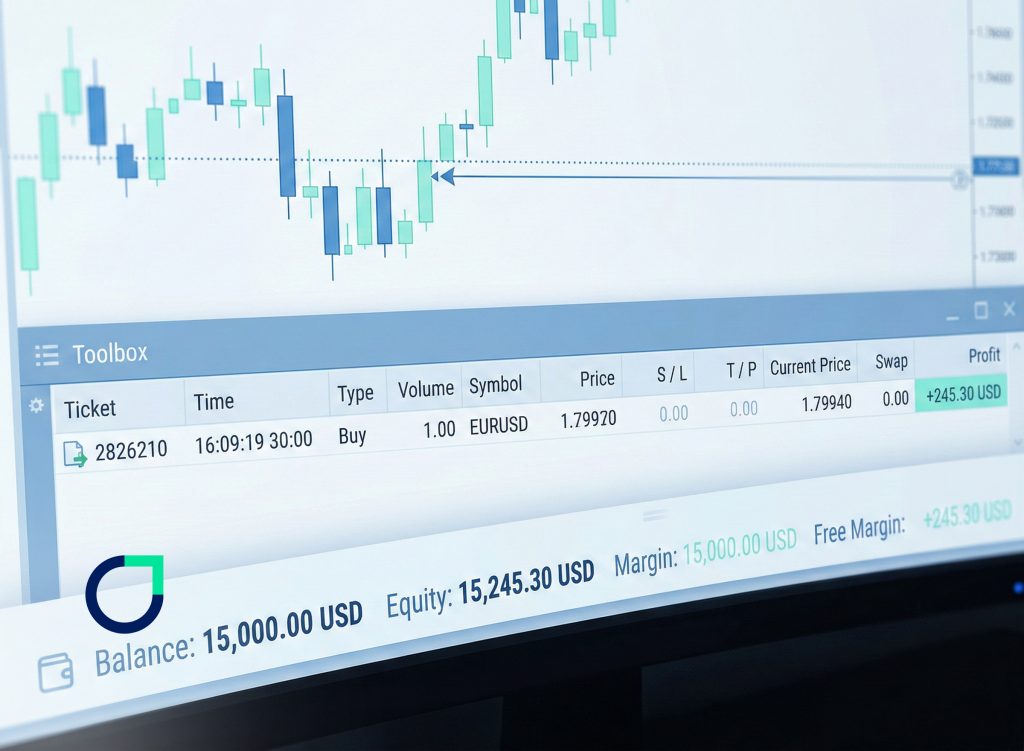
What is Balance in Forex? A Complete Guide for Traders
Introduction When you open a trading account for the first time, one of the first numbers you see on your screen is your balance. It looks simple. It looks clear....
Read more




Submit comment
Your email address will not be published. Required fields are marked *