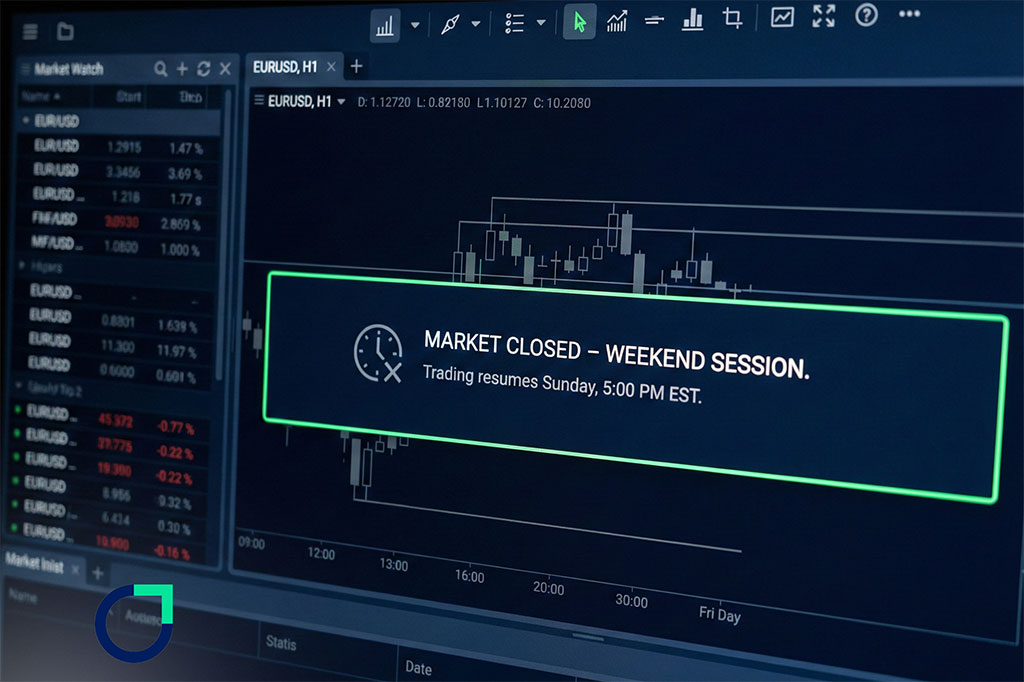
Forex Holidays | When the forex market is closed
Every trader who has opened their trading platform on a weekday and seen slow price movement, wider spreads, or even partial market closures has experienced the effects of forex holidays. Many traders focus primarily on strategy, indicators, and risk management; however, they often overlook one important detail: the calendar.
Imagine placing what looks like a perfect breakout trade, only to watch the price barely move for hours because half the global banks are closed. It’s frustrating and completely avoidable.
The forex market is known for being open 24 hours a day, five days a week; however, this doesn’t mean that trading will be active at all times. Certain global events, national holidays, and financial observances can significantly impact liquidity and trading conditions, and these events can substantially affect the execution of trades.
A single forex market holiday can quietly change spreads, execution speed, and volatility without most retail traders even realizing it. Once you understand the basic mechanics behind it, you will be able to avoid unnecessary losses and plan for smarter trades. This guide will highlight the basic mechanics in a way that you will understand how to trade with confidence, not confusion, during a holiday.
When Is the Forex Market Closed?
The forex market is a 24-hour market, which means that trading can take place at any time of day. But the Forex market is closed every Friday at 22:00 GMT and reopens Sunday at 22:00 GMT, which is the only time the entire Forex market closes completely.
Although the forex market does not close during weekdays, there are exceptions on major global holidays. While the market rarely closes entirely on weekdays, liquidity decreases significantly when major financial centers are closed for holidays.
For example, if the banks in New York or London are closed, trading volume decreases considerably. The market might still technically allow for you to trade on your trading platform, but the trading experience will differ significantly. Therefore, while the forex market is open for most weekdays, not all days of the week are equal in regard to trading activity or volume.
Understanding Forex Market Hours and Global Trading Sessions
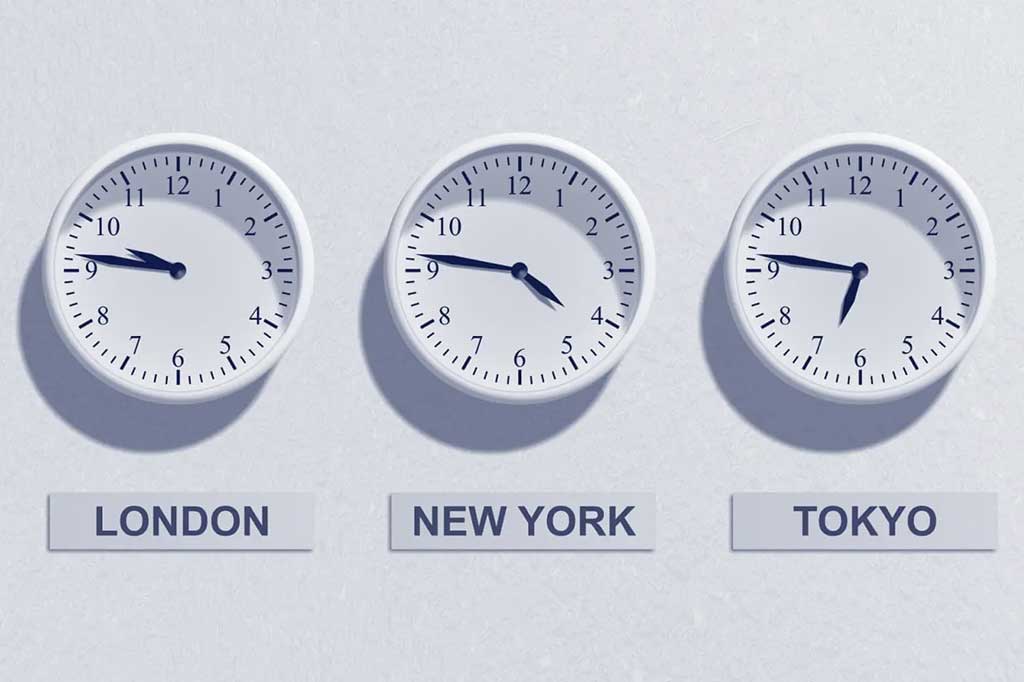
The forex market operates through four major trading sessions:
- Sydney Session
- Tokyo Session
- London Session
- New York Session
The London Session overlaps with the New York Session and typically has higher liquidity, better spreads, and more volume.
For traders researching the Best Forex Trading Hours for Iranian Traders, be aware that the London and New York sessions are best with strong volatility and better spreads.
The dynamic changes when one of these major markets is on holiday. For example, if London is closed, then the European flow is cut off. If the U.S. is closed for a holiday, then any trading periods with USD pairs will be expected to have very low volume.
Understanding when each of the trading sessions opens and closes will help you expect the changes instead of reacting emotionally to unexpected price movements.
Read More: Best Forex Trading Hours for Iranian Traders
Major Global Forex Market Holidays
The list below contains the global holidays that can impact forex liquidity and trading activities.
- New Year’s Day (January 1)
Global banking systems are closed. Liquidity is extremely low.
- Good Friday
Many Western markets are closed. Volatility can be thin or unpredictable.
- Easter Monday
European markets often remain closed, reducing EUR-related activity.
- U.S. Independence Day (July 4)
USD pairs often see reduced volume.
- Thanksgiving (U.S.)
Liquidity drops sharply during the second half of the week.
- Christmas Day (December 25)
Global closures. Very low participation.
- Boxing Day (December 26)
UK and Commonwealth markets remain closed.
These are classic examples of a forex holiday causing significant changes in liquidity. Therefore, even if your broker remains open, there will still be an important difference because the banks and institutions that provide the actual quotes will normally not be present for the remainder of that transaction day.
National Holidays in Major Financial Hubs and Their Impact
Holidays can be global or regional. Despite that, regional holidays can still have a significant impact on the financial markets based on the size of the country’s economy or the size of the market.
-
United States Market Holidays
When U.S. banks close, USD liquidity weakens.
Important U.S. holidays include:
- Independence Day
- Thanksgiving
- Labor Day
- Christmas
During these days, spreads on USD pairs can widen. News releases are often limited.
-
United Kingdom Bank Holidays
London is one of the largest forex hubs in the world.
UK bank holidays include:
- Early May Bank Holiday
- Summer Bank Holiday
- Boxing Day
When London is closed, the EUR and GBP pairs may show slower movement.
-
Japan Public Holidays
Japan affects JPY pairs heavily.
Major Japanese holidays include:
- Golden Week
- Coming of Age Day
- Emperor’s Birthday
If Tokyo banks close, Asian session volatility drops.
-
European Union Bank Closures
Although the entire EU does not close on the same day, great economies such as Germany and France observe major public holidays.
When these economies close for public holidays and pause financial activity, the amount of EUR liquidity diminishes significantly.
Easter Trading Hours Explained
The Easter trading period is commonly misinterpreted. Most Western countries get some or all of their markets closed on Good Friday. Depending on whether or not the Easter Monday holiday is observed, that will result in European markets closing while other markets reopen.
This split schedule can create uneven volatility. For example, USD pairs might move while EUR pairs remain quiet.
Additionally, many traders underestimate the nature of the Easter trading environment and expect to see normal conditions in their trading; however, this can lead them to take poor trades.
Christmas, Boxing Day & Year-End Trading Conditions
December’s last two weeks are different.
Liquidity becomes very low after mid-December as institutional traders close their books, hedge funds lower their exposure on trades, or take on significantly less risk.
After Christmas Day, most markets are closed. Boxing Day has limited participation from retailers and other institutions, especially in the UK.
The markets do not always behave normally during this period, as the low-liquidity creates an environment where there can be large price spikes or swings due to low order books.
For many professional traders, this is a time to significantly reduce risk.
Why Liquidity Drops During Forex Holidays
The liquidity of the forex market relies heavily on the banks, hedge funds, corporations, and other institutions participating in the market. When these institutions are closed for national or religious holidays, the volume of large orders being placed into the market is significantly decreased.
Retail traders cannot create deep liquidity by themselves in the market.
As a result of this lack of volume from these institutions, there can be periods of time when prices move more slowly, and there can also be times when there are large, unexpected price spikes.
For this reason, it is critical for all traders to be familiar with forex market holidays as part of their risk management strategy. Professional traders plan ahead for forex market holidays because they understand that lower institutional participation changes market structure.
How Low Liquidity Affects Spreads and Volatility
There are many ways that low liquidity will affect trading conditions:
- Spreads widen
- Slippage increases
- Stop-loss orders trigger unexpectedly.
- Price gaps become more common.
If you trade via MetaTrader platform, expect to see spreads widen during times of low liquidity. This is not manipulation; rather, it reflects less competition available for your orders.
Risks of Trading During Holiday Periods
Trading during low-volume periods carries specific risks:
- False breakouts
- Irregular candle patterns
- Increased broker spread adjustments
- Difficulty exiting large positions
Many newer traders mistake this slow movement for a consolidation setup, enter aggressively, and then get caught in sudden spikes caused by thin liquidity. Because of this, experienced traders usually lower their exposure.
Strategic Tips for Trading During Forex Holidays
Holiday trading isn’t forbidden. It simply requires caution.
Here are practical strategies:
-
Reduce Position Size
Lower your lot size. Reducing exposure shields you from unexpected spikes.
-
Avoid Holding Trades Over Weekends
Weekend gaps may occur following important announcements. If Friday falls before a major holiday, closing positions may be safer.
-
Use Demo Accounts to Test Market Behavior
A demo account allows you to examine how prices move during forex holidays without incurring financial risk. Testing under different liquidity conditions helps to acquire experience safely.
-
Monitor Economic News Closely
Holiday weeks sometimes compress economic announcements into fewer days.
Watch the calendar carefully.
Even if markets are slow, unexpected data releases can trigger sharp moves.
How Brokers Adjust Trading Hours During Holidays
Typically, brokers will publish amended trading calendars prior to major holidays. Adjustments may include:
- Early Friday closure
- Delayed Sunday open
- Temporary leverage reductions
- Increased margin requirements
Many brokers, such as Otet, notify customers of the changes in advance by email or on their client portals.
When trading through the MetaTrader platform, always check your broker’s official holiday trading notice before placing positions.
If you are interested in Using MetaTrader for Cryptocurrency Trading, remember that cryptocurrency markets operate 24/7 globally, but your broker’s CFD conditions may still change during holidays.
Forex Market Holiday Calendar in 2026
| Date | Holiday | Region Impact | Expected Liquidity |
| Jan 1, 2026 | New Year’s Day | Global | Very Low |
| Apr 3, 2026 | Good Friday | US, UK, EU | Low |
| Apr 6, 2026 | Easter Monday | EU, UK | Moderate–Low |
| Jul 4, 2026 | US Independence Day | USA | Low |
| Nov 26, 2026 | Thanksgiving | USA | Low |
| Dec 25, 2026 | Christmas Day | Global | Very Low |
| Dec 26, 2026 | Boxing Day | UK, EU | Low |
Always confirm with your broker’s official calendar before trading.
One simple habit many experienced traders develop is checking the economic calendar alongside the holiday calendar at the start of every week. This small routine takes less than five minutes but can prevent unnecessary exposure during thin market conditions. Consistency in preparation often makes a bigger difference than aggressive execution.
Conclusion
Trading is not just about charts and indicators, but timing is a big part of the trading process too. This means that you have to understand how the calendar works.
Forex holidays don’t mean you can’t trade, but you need to manage your expectations (and therefore change the way you trade) because you will have less liquidity than usual and higher spreads. The level of volatility in the market can be very hard to predict as well.
If you take the time necessary to get prepared, limit your risk with stop-losses on your trades, and monitor broker announcements, you can avoid the holiday trading problems that many other traders do every year.
Being aware of the holiday calendar is part of being a professional discipline. Markets reward preparation over reaction. The traders who survive long-term are rarely the ones who trade the most they are the ones who understand when not to trade.
FAQ
No. The market is usually open unless it’s the weekend. However, liquidity can drop significantly when major financial centers are closed.
Late Friday, after the New York session slows down, is often the least active period.
Yes, it’s generally safer. Lower liquidity can create unpredictable conditions that are harder to manage.
Some brokers temporarily reduce leverage or increase margin requirements to manage risk during low-liquidity periods. Always check your broker’s announcements in advance.
Share
Hot topics

What Is Liquidity in Trading Strategy?
Liquidity plays a role in price execution when trading. You may have noticed the price came in worse than you expected and have already experienced liquidity at work without realizing...
Read more



Submit comment
Your email address will not be published. Required fields are marked *