What Is Forex Fundamental Analysis?
Forex trading can seem confusing from the outside. Charts move quickly, prices change every second, and traders talk about pips (the smallest unit of price movement), spreads (the difference between buying and selling prices), and indicators. But beneath all that movement, currencies respond to real-world events. This is where fundamental analysis in forex becomes important. Forex fundamental analysis provides reliable evidence of what has occurred within an economy prior to the movement of the price, involving the study of economic conditions, financial data, political events, and central bank decisions. Forex Fundamental Analysis helps determine where a price will likely go next in the future and does a thorough job of providing reasons for price movements.
If you have ever witnessed a high-interest-rate announcement followed by a sudden increase in currency prices or economic weakness or a significant decrease in currency prices, you have actually seen a form of Forex fundamental analysis in action. In this article from otetmarkets, we will examine Forex fundamental analysis in ways that we have all experienced, and we will leave aside a lot of the complicated theory and terminology.
Our aim is not to overwhelm you, but to help you understand that currency price movements occur for numerous reasons. It’ll benefit traders by giving them the real perspective of how real events in the economy impact the forex markets.
Why Forex Prices Are Driven by Real Life
Forex prices don’t move at random; they are influenced by government, corporate, and consumer operating choices. The forex market is forward-looking; therefore, it uses recent economic performance to determine the expected future economic activity. When a country’s economy is reasonably sound and developing, it becomes an attractive location for foreign direct investment (FDI). This is through the purchase of foreign exchange (currency exchange). The investor buys a currency to invest in the nation’s bonds, stocks, and business opportunities. Conversely, once confidence has been lost, there is an outflow of capital, thus leading to a weaker foreign exchange value.
The price movement in the FX Market is based on expectations, and, therefore, it is essential to understand the market’s motivating forces behind the price movement. By doing a fundamental analysis of the market, which involves studying economic indicators and financial statements, you can identify the market forces such as support levels (prices where a stock tends to stop falling) and resistance levels (prices where a stock tends to stop rising), and make informed investment decisions. The emotions connected to price fluctuations should not be taken into consideration in your decision-making.
The Basic Idea Behind Forex Fundamental Analysis
Forex fundamental analysis is about comparing countries’ economies. Since you trade currencies in pairs, you are always measuring one economy against another. For instance, when you are trading EUR/USD, you would be measuring the economy of the Eurozone against the economy of the US. When the economic outlook of the US improves at a faster pace than Europe’s, the U.S. The dollar would appreciate against the Euro.
The comparison process of these two economies is ongoing and dynamic. The release of new Economic data will change the expectations. Understanding the relation between comparing economies through the forex market movements will give you a logical insight into forex fundamentals.
Fundamental Analysis vs Technical Analysis
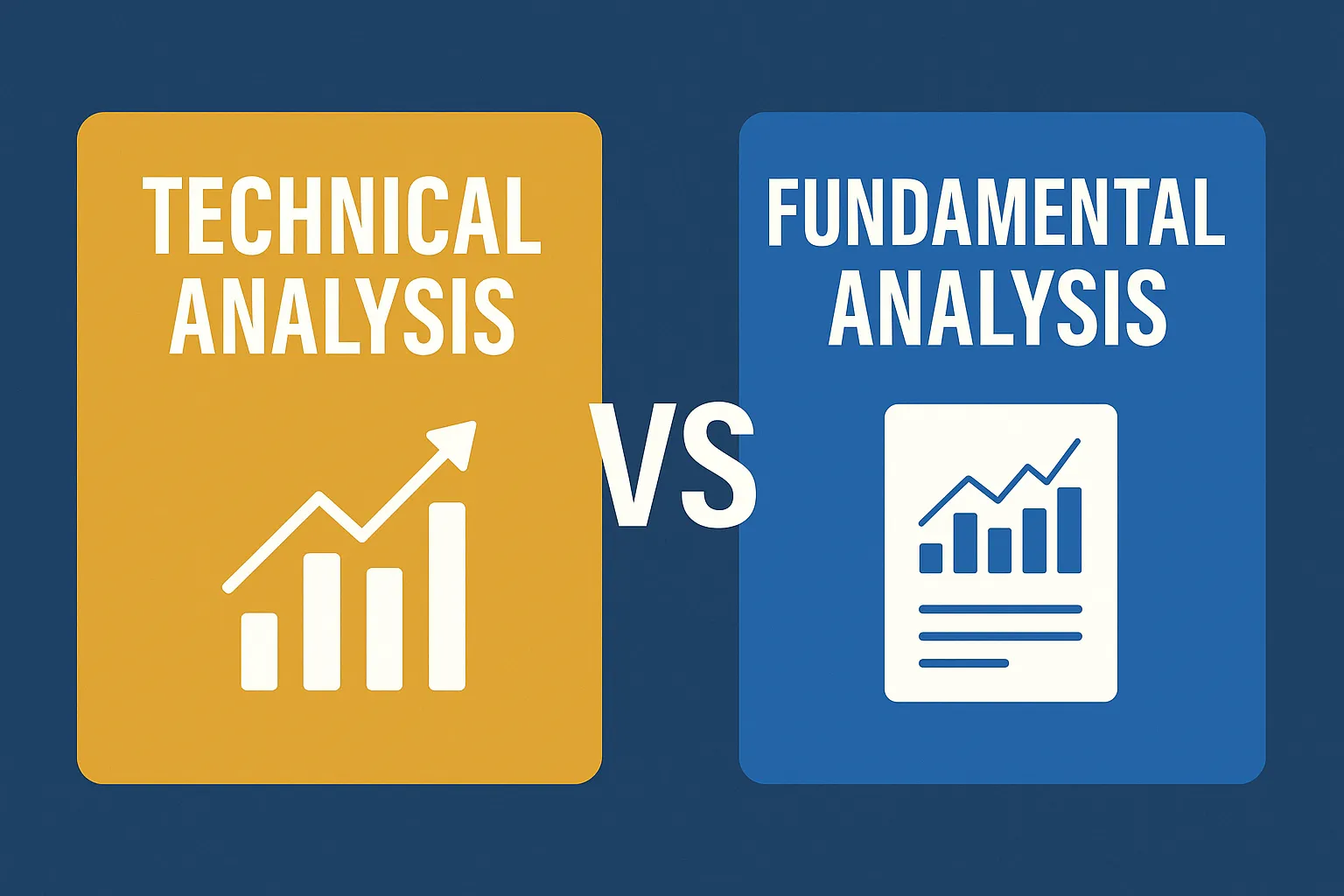
Traders often feel compelled to choose between using technical or fundamental analysis, yet both techniques answer different types of questions. Technical analysis looks at how the market behaves by looking at price action over time. An example of this is using technical analysis to determine where the market has trended in the past, as well as support and resistance levels and areas that provide possible entry points. Fundamental Analysis provides the reasons why a trend has started, continues, or reverses.
Read More: The Power of Moving Averages in Technical Analysis
Traders have different approaches to how they use these two analyses. Some traders use charts primarily to help them determine where to enter a trade, while others rely on economic events as a basis for establishing their trading strategy. Most traders who achieve profitability are able to integrate both fundamentals and technicals into their overall trading approach. Technicals are used to determine timing, while fundamentals are used for direction.
The Role of Economic Data in Forex
Forex analysis relies on economic data to help with economic predictions. The practice of Forex Analysis involves measuring how an economy performs. Regularly scheduled releases of information on economic data are available and closely monitored by traders worldwide.
It’s important to note that it’s not just about whether the information released is positive or negative; it’s more about whether the information released meets or falls short of the expectations of the market. Whenever reality is different from what was predicted in advance, it’s common for the financial markets to react violently to that difference. This process is often referred to as economic analysis forex, where traders study macroeconomic indicators to understand currency strength and weakness.
Read More: Fundamental Analysis in Trading: Economic News and Data
Interest Rates: The Most Powerful Driver
The most significant factor affecting currency values is interest rates. When a country has a high interest rate, it attracts foreign investment (capital), as investors want to earn as much return as possible from their investments(currency).
Although the central bank has control over interest rates, the market will sometimes price in the change before it occurs. So if traders expect a change in rates, the currency may increase in value before the announcement is made. After the announcement of a change in interest rates, the reaction of the currency to the announcement depends on whether the actual announcement is unexpected or anticipated. Interest rate expectations will be one of the major components in forex fundamental analysis.
Central Banks and Their Influence
Forex markets revolve around central banks. The Federal Reserve, Bank of England, and ECB are institutions that direct the flow of money through their central bank policies. Central banks do not simply announce their interest rate decisions; central banks have an impact on trader sentiment through their comments, speeches, and forward guidance.
A slight change in wording can cause big moves in the market, and simply hinting at future increases or decreases in interest rates can create volatility. Understanding how a central bank communicates can help you identify potential future shifts, rather than reacting too late.
Inflation and Currency Value
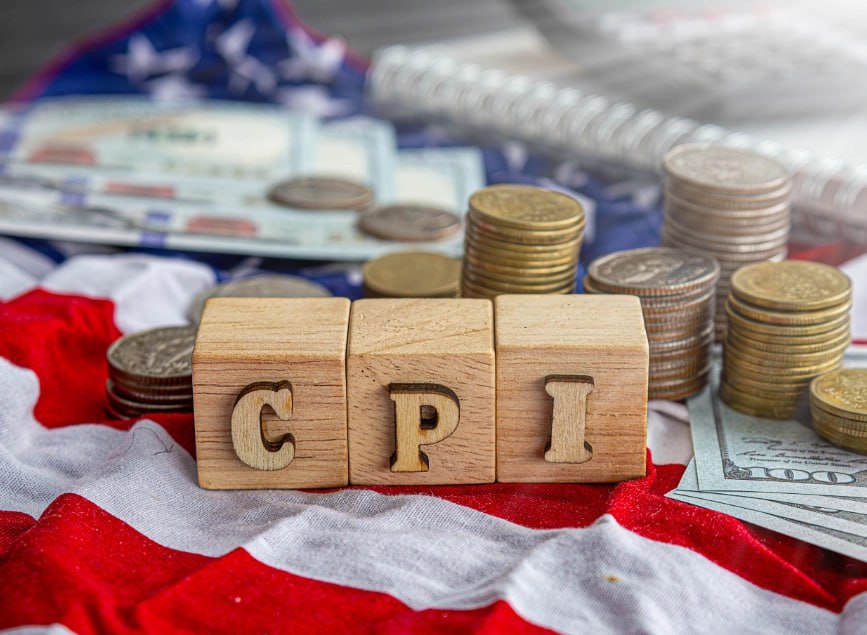
The term “inflation” means that prices are rising over time. In general, the natural trend of inflation remains low; however, very high or very uneven levels of inflation can lead to people losing confidence in the economy. When the inflation rate rises too fast, Central Banking institutions usually tend to increase the interest rates to control it. This can support the currency.
Continued high inflation with declining growth in an economy will result in a decreasing currency value because of fear and uncertainty surrounding inflation. Traders who work in the forex market are very interested in the inflation data because it helps to determine the decisions made by government entities, which will influence their future policy-making.
Employment Data and Economic Strength
Employment reports indicate the overall health of an economy. Strong job growth points to increasing income and consumer spending. Weak employment numbers may reflect a decrease in economic growth or the potential risk of economic recession.
While the headline number in an employment report is one of the important factors in determining an economy’s health, several variables like wage growth, workforce participation rates, and the revisions also matter. In addition, employment data often creates volatility over the short term in the financial markets, particularly with currencies.
Gross Domestic Product (GDP)
Gross Domestic Product (GDP) is the total economic output defined by the overall monetary value of all goods and services produced by an economy within a calendar year. GDP increases lead to a stronger currency, and GDP decreases can exert downward pressure on the currency.
As with other economic indicators, GDP is often a lagging indicator — meaning that the market does not generally react as strongly to this indicator unless there is a significant difference between actual results and what had been anticipated. GDP is most useful when used in conjunction with other sets of indicators.
Read More: What Is GDP?
Trade Balance and Capital Flows
A country’s trade balance shows whether the country is exporting more or less than it imports over the long term. A trade surplus benefits a currency’s long-term strength, while continued trade deficits will weaken a country’s exchange rate over the longer term.
While trade and capital investments are both important, an increase in foreign capital investment into a nation also increases the demand for that nation’s currency. The foreign exchange markets assess the most recent data concerning trade and capital investment continually, and thus, both of these variables must be carefully balanced.
Political Events and Policy Decisions
There is a strong correlation between economics and politics. Political activity (such as elections) and policy changes affect investor confidence. Currency will be weak if there is political instability. Economic Stability attracts investors.
Political events (such as elections and policy changes) may also produce sudden changes in a currency’s value. Basic traders (or speculators) closely follow political developments in addition to economic indicators.
Global Risk Sentiment
The forex market responds rapidly to global risk sentiment. During times of uncertainty, you will see a trend where people will invest in safe-haven currency, while at times of optimism, people will invest in currencies with greater potential for increased return.
Therefore, it follows that during a time of crisis, there will be currencies that increase in value and others that decrease. Operating within this framework of risk sentiment will give you a good understanding of the overall direction of the market in addition to the performance of individual currencies.
How News Shapes the Forex Market
There are scheduled and unexpected news events, which will affect the market. Scheduled news will be priced in before its release. Unexpected news should cause sudden movements or fluctuations in the market.
Many traders concentrate on news trading, which allows them to enter trades as price spikes immediately after news announcements. News trading requires experience and discipline with respect to risk management and will create increasing volatility and fast price moves after news has been released. For many traders, observing how the price reacts to news will provide education and training.
Long-Term Fundamental Trading
Long-term fundamental traders usually keep their positions for weeks/months at a time. They base their trades on trends, cyclical interest rate changes, and structural or economic growth patterns. While fundamental trading styles are slower and require a high level of patience, they also allow long-term traders to avoid the distraction of rapid short-term noise. Long-term fundamental trading has many similarities to macroeconomic thinking and operates very similarly.
Short-Term Fundamental Trading
Short-term traders might trade on individual data releases or on changing expectations. Instead, they respond to surprise changes instead of longer-term changes.
Short-term trading requires a strict system of discipline, fast decision-making, and an effective risk control system. Both longer-term and shorter-term trading approaches are based on the same fundamental concepts.
Fundamental Trading and Real-World Logic
Fundamental trading mirrors how businesses and governments make decisions. Companies will generally invest in an area where there are favorable conditions. Governments will respond to economic pressures. Central Banks will adjust their policy as needed to promote economic stability.
Looking at the forex market this way, there is less randomness associated with trading. Prices are a reflection of incentives and risks, not just a series of random events.
Building a Simple Fundamental Framework
To start analyzing the current state of the economy, begin with the big picture by following central bank monetary policy decisions, monitoring Inflation & unemployment rates, and determining what themes are affecting the current state of the economy.
Then ask yourself if the economy is growing fast or not fast enough, and how monetary policy impacts that growth – is it easing or tightening? You will gain clarity as you analyze the patterns over time.
Common Beginner Mistakes
One of the misconceptions is that strong data guarantees a stronger currency. Markets want to know what to expect and not just what happened. Poor timing can also affect the success of an idea. Misunderstanding how and when to implement ideas can easily lead to a loss of capital. Continuously monitoring every news release can complicate investment decisions due to confusion caused by volume rather than clarity.
How Fundamentals Support Technical Analysis
Fundamentals are not a substitute for technical charts – rather, they enhance the use of technical analysis. Having an understanding of when major economic news comes out will allow traders to position themselves correctly with respect to that news and not trade without thinking about their trades.
By knowing where trends are going, traders can position themselves with the flow of multiple trades rather than against them, and fundamentals provide another layer of insight into how a technical strategy is put together.
Learning Through Observation
Trading every event will not guarantee success or learning, especially if you do not have the appropriate foundation before entering into trading. Observe trading patterns and analyze data to see how prices respond to the release of key economic information.
Study the expectation and the market reaction to an event (i.e., short-term reaction vs. longer-term response). By observing these things, you are able to develop confidence in your ability to trade and the ability to respond intuitively to future news/events without the danger of losing capital.
Is Forex Fundamental Analysis Difficult?
When starting out, things may seem challenging to understand. However, overtime by practicing, the easier it will become to understand.
An economics degree is not necessary for understanding these concepts; being curious and consistent is what matters.
Pay attention to cause and effect. You will eventually become comfortable with the fundamentals.
Why Fundamentals Matter Even for Beginners
Charts are often the central focus of beginner traders, which leads to them making emotional decisions due to a lack of context.
If beginners become aware of the fundamentals influencing market behaviour, then their fear of making an emotional trade is lessened, as well as overtrading. Also, having a greater understanding helps to build patience.
A Realistic View of Market Expectations
The market tends to move prior to the release of data due to positioning, forecast, and rumour action. For this reason, upside and downside surprises produce higher market volatility than expected after the fact.
You are better served by understanding expectations than attempting to accurately predict future numbers.
Combining Simplicity with Discipline
Keep it simple and avoid information excess. Rely on reliable data and watch for key indicators. Review and update your understanding will improve consistency over complexity.
Final Thoughts: Understanding the Story Behind the Price
The fundamental analysis of Forex focuses on learning the real-world things that affect Forex charts or the economy as a whole, and how those things affect the market movements. You do not need to learn everything at once; begin with a small portion of the material and take your time to learn it. Over time, the fundamental components of forex will change the way that you see the forex market. You will not want to chase after each price movement – you will start to comprehend why the price moved as it did. It is this newfound comprehension that will change your strategy from guessing to making informed trading decisions.
Share
Hot topics

What is News Trading in Forex? A Complete Guide to Event-Driven Strategy
Introduction If you have ever watched the forex market during a major economic announcement, you know how dramatic it can be. Prices jump within seconds. Spreads widen. Volatility explodes. For...
Read more


Submit comment
Your email address will not be published. Required fields are marked *