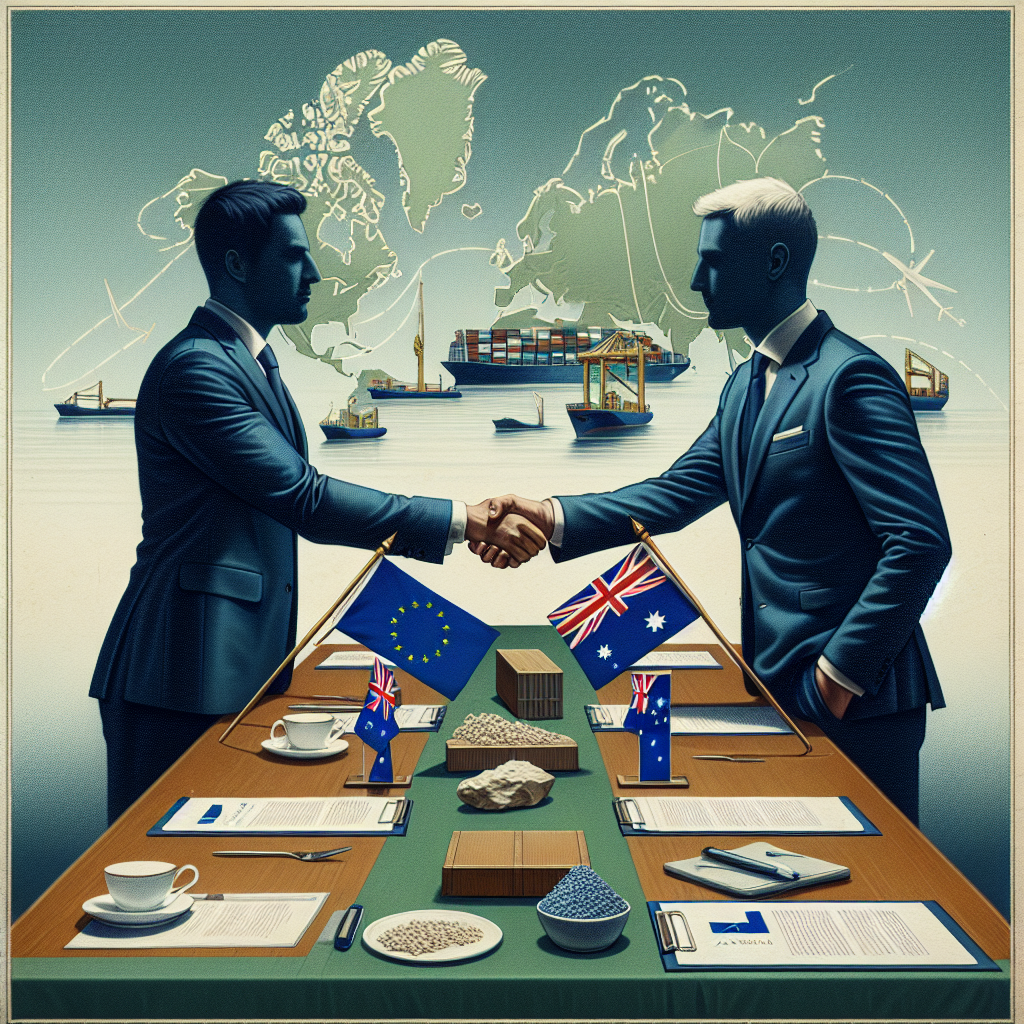
EU and Australia Conclude Sweeping Trade Agreement Covering Tariffs and Critical Minerals
Broad Tariff Reductions After Prolonged Negotiations
The trade agreement, reached following talks that began in 2018, will see the EU eliminate about 98% of its duties on Australian goods exports. This includes products such as wine, dairy, wheat and barley, and seafood. In return, Australia will remove more than 99% of tariffs on EU goods, particularly in sectors including dairy, motor vehicles and chemicals.
Negotiations had stalled in 2023 amid disagreements, with Canberra seeking larger quotas for lamb and beef exports to Europe, while the EU pressed for better access to Australia’s critical minerals and lower tariffs. Both sides later intensified talks against the backdrop of higher U.S. tariffs under the Trump administration.
European Commission chief Ursula von der Leyen and Australian Prime Minister Anthony Albanese met earlier in the week to conclude the long-awaited deal. Von der Leyen described the agreement as a demonstration that “friendship and cooperation” are central in times of turbulence and emphasized the alignment in how the EU and Australia “see the world.”
EU exports to Australia are expected to grow by up to 33% over the next decade, reaching an annual value of €17.7 billion ($20.5 billion). The EU recorded a goods trade surplus of €28 billion with Australia in 2024.
Critical Minerals and Security Cooperation
A central component of the agreement is enhanced EU access to critical raw materials from Australia, including aluminum, lithium and manganese. These materials are described as vital for the EU’s overall economic security, as the bloc seeks to reduce its dependence on China. Beijing has imposed export controls on some key resources, prompting the EU to diversify its supply base.
Beyond trade, the deal includes commitments to deepen cooperation between Australia and the EU on security matters. Areas of focus include crisis management, maritime security and disruptive technologies such as artificial intelligence.
The agreement aligns with the EU’s broader push over the past year to secure new trade, defense and military security partnerships, as concerns grow over the reliability of the United States as a partner. The EU’s strategy reflects responses to U.S. President Donald Trump’s imposition of higher tariffs on allies and unilateral actions in Venezuela and Iran without prior consultation with major partners.
FAQ
What are the main tariff changes in the EU-Australia trade agreement?
The EU will remove around 98% of duties on Australian goods exports, including wine, dairy, wheat and barley, and seafood, while Australia will eliminate over 99% of tariffs on EU goods, notably dairy, motor vehicles and chemicals.
How will EU exports to Australia be affected?
EU exports to Australia are expected to increase by up to 33% over the next decade, with their value rising to €17.7 billion annually.
Why are critical raw materials important in this deal?
The EU will secure supplies of critical raw materials from Australia, such as aluminum, lithium and manganese, which are seen as essential for the EU’s economic security and its efforts to reduce reliance on China.
Does the agreement include security and defense cooperation?
Yes. Australia and the EU committed to deepen cooperation in crisis management, maritime security and disruptive technologies, including artificial intelligence.
Share
Hot topics

What Is a Forex PAMM Account? Complete Guide
Introduction If you’ve ever wanted to invest in Forex but had reservations about doing it alone, you’re not by yourself! Many people are interested in investing in the Forex market...
Read more
Submit comment
Your email address will not be published. Required fields are marked *